In the news
Do GLP-1 drugs like Ozempic help with alcohol use disorder?
A study published July 21, 2026 in BMJ Open found that adults with alcohol use disorder who started newer GLP-1 drugs like Ozempic or Mounjaro had 26 to 32 percent fewer alcohol-related hospitalizations than people on comparison medications. It is promising early evidence. It is also observational, not proof of cause, and no GLP-1 is approved to treat alcohol use disorder. A medication can quiet a craving. It cannot hand you a new identity.
A new study is making headlines: GLP-1 drugs, the same medications millions take for diabetes and weight loss, may be linked to less alcohol-related harm. If you are sober or trying to get there, it is worth understanding what the research actually says, and what it does not.
What did the new GLP-1 and alcohol study find?
Adults with alcohol use disorder who started a newer GLP-1 drug had fewer alcohol-related hospital visits than similar patients on other medications. The study, published July 21, 2026 in BMJ Open, followed 40,703 adults who had alcohol use disorder along with either type 2 diabetes or obesity, and who began treatment between January 2018 and December 2024. Researchers from Truveta, Johns Hopkins, and Duke used a method called target trial emulation to compare people who started semaglutide (Ozempic, Wegovy) or tirzepatide (Mounjaro) against people who started other drugs.
Across four separate comparisons, the newer GLP-1 drugs were tied to a lower risk of alcohol-related hospitalization.
| Comparison group | Population | Lower risk of alcohol-related hospitalization |
|---|---|---|
| Other diabetes medications | AUD + type 2 diabetes | 26% |
| Other obesity medications | AUD + obesity | 32% |
| Alcohol use disorder medications | AUD + type 2 diabetes | 63% |
| Alcohol use disorder medications | AUD + obesity | 65% |
The two largest numbers, the 63 and 65 percent, compared GLP-1 drugs against approved alcohol use disorder medications like naltrexone, acamprosate, and disulfiram. The authors reported by BMJ Group say those two results should be read with the most caution, because the groups likely differed in ways the study could not fully account for.
Does this mean GLP-1 drugs treat alcohol use disorder?
Not yet, and this is the part the headlines tend to skip. This was an observational study built from medical records, not a randomized controlled trial. It can show that GLP-1 use and lower hospitalization rates traveled together. It cannot prove the drug caused the difference. People who can access newer GLP-1 drugs, which are expensive, may be healthier, wealthier, or more engaged with care in ways that also lower their risk.
The researchers say so directly. "Our findings add to a growing body of evidence suggesting that GLP-1 receptor agonists may influence alcohol-related outcomes, while also highlighting the need for randomized clinical trials to determine whether these medications have a causal role in reducing alcohol-related harm," said corresponding author Hemalkumar B. Mehta of the Johns Hopkins Bloomberg School of Public Health.
Independent experts agreed the signal is real but early. Colin Angus, Professor of Alcohol Policy at the University of Sheffield, told the Science Media Centre he would view the study as "adding a little more weight to the emerging evidence, rather than the definitive word on the matter." No GLP-1 drug is approved to treat alcohol use disorder as of July 2026. Whether to start, stop, or change any medication is a decision for you and a medical professional, never something to act on from a news story.
Why does this matter for people in recovery?
Because alcohol use disorder is common and badly undertreated, any credible new lead is worth watching. An estimated 27.9 million people ages 12 and older, or 9.7 percent, had alcohol use disorder in the past year, according to the National Institute on Alcohol Abuse and Alcoholism, and only a small fraction receive any treatment. A tool that quiets cravings could lower the barrier for a lot of people who feel stuck.
GLP-1 receptors sit in brain regions that govern motivation and reward, which is the leading theory for how the drugs might dampen the pull toward alcohol. That is genuinely useful. A smaller craving is easier to walk past. But a smaller craving is not the same thing as a changed life.
If a medication helps, why isn't that enough?
Because a quieter craving is a smaller obstacle, not a new person. This is the core of the Door 24 thesis: abstinence is not enough. The reason most people return to drinking is not a lack of willpower in one hard moment. It is that they are still the same person, just without the substance, and that version of them was built around the drink. Remove the alcohol and the hole is still there.
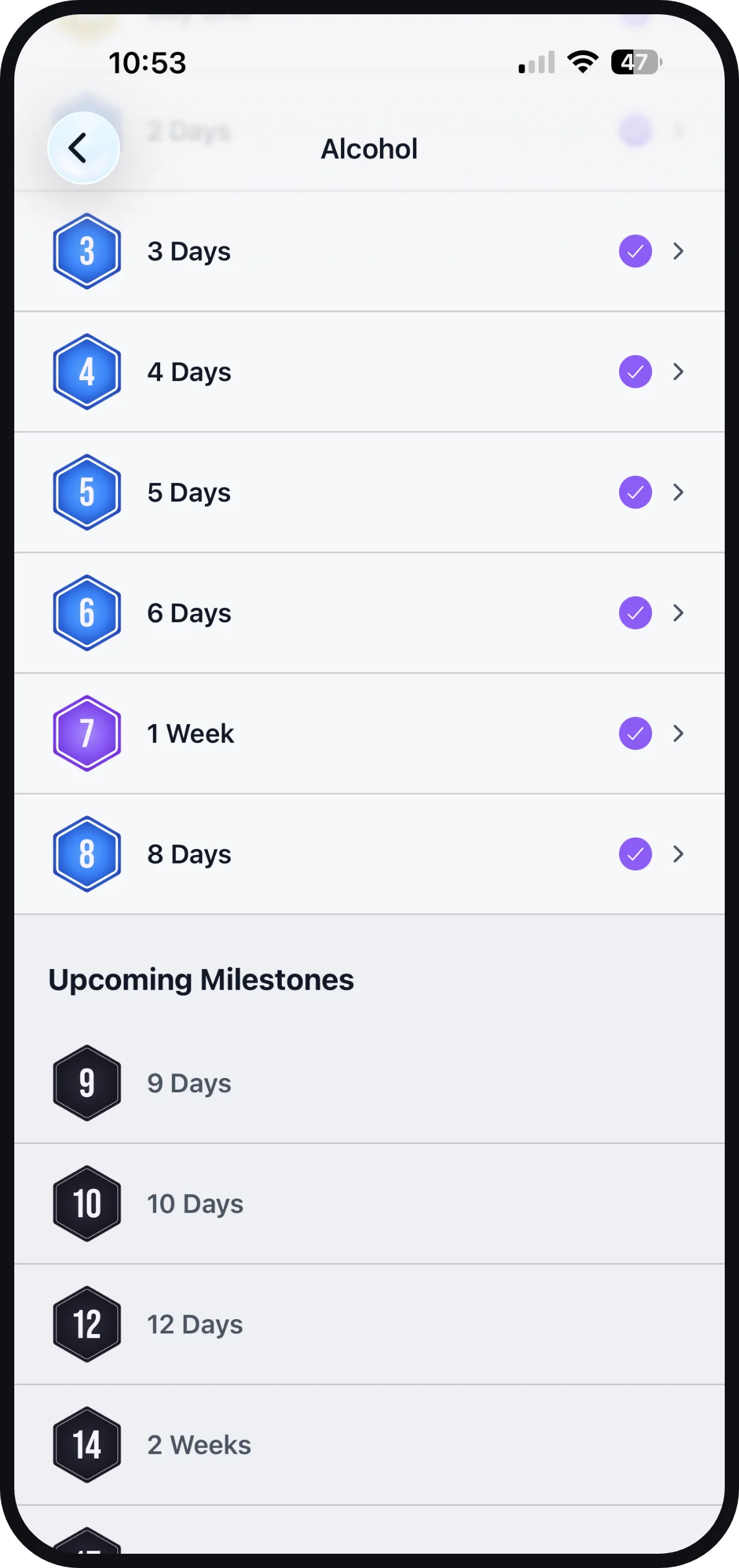
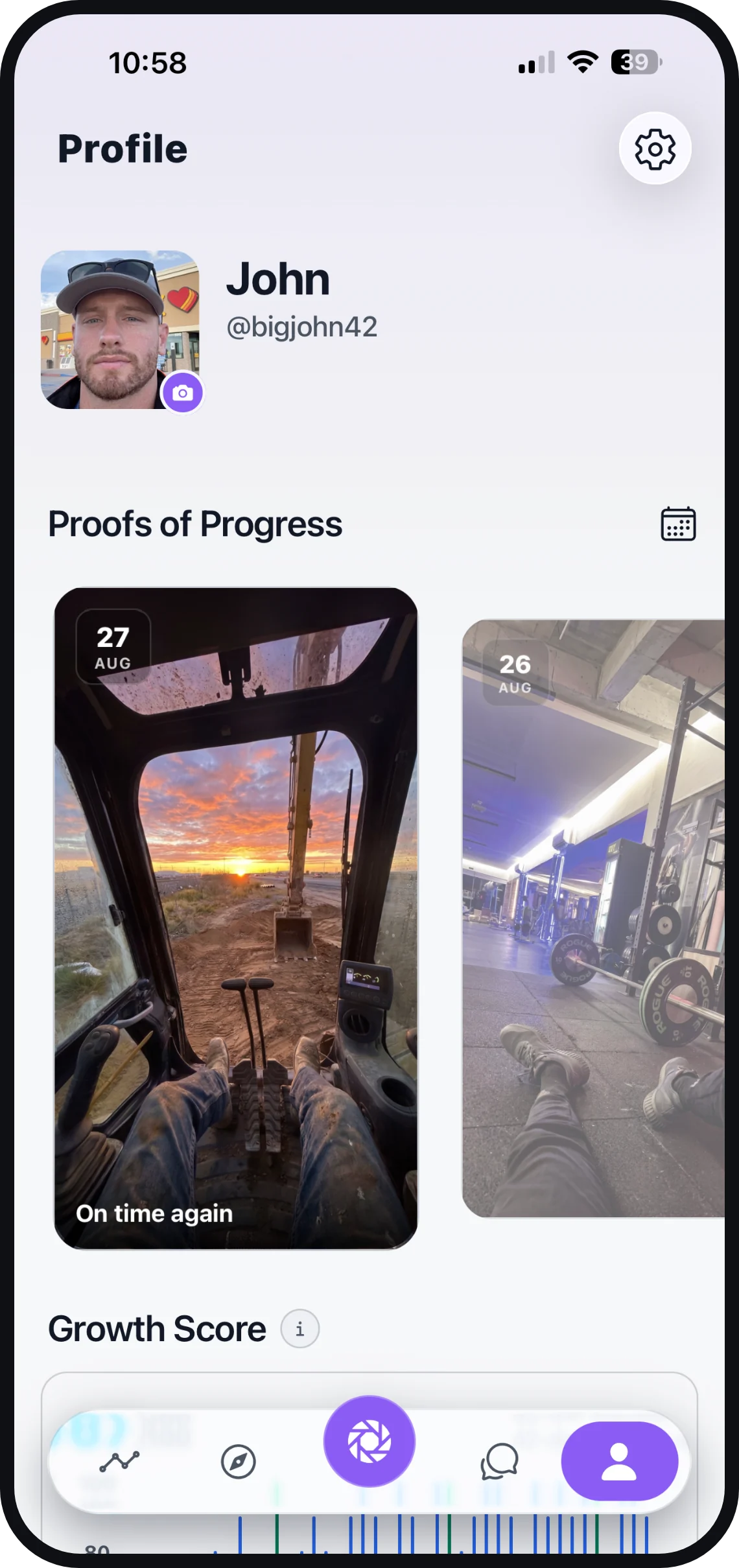
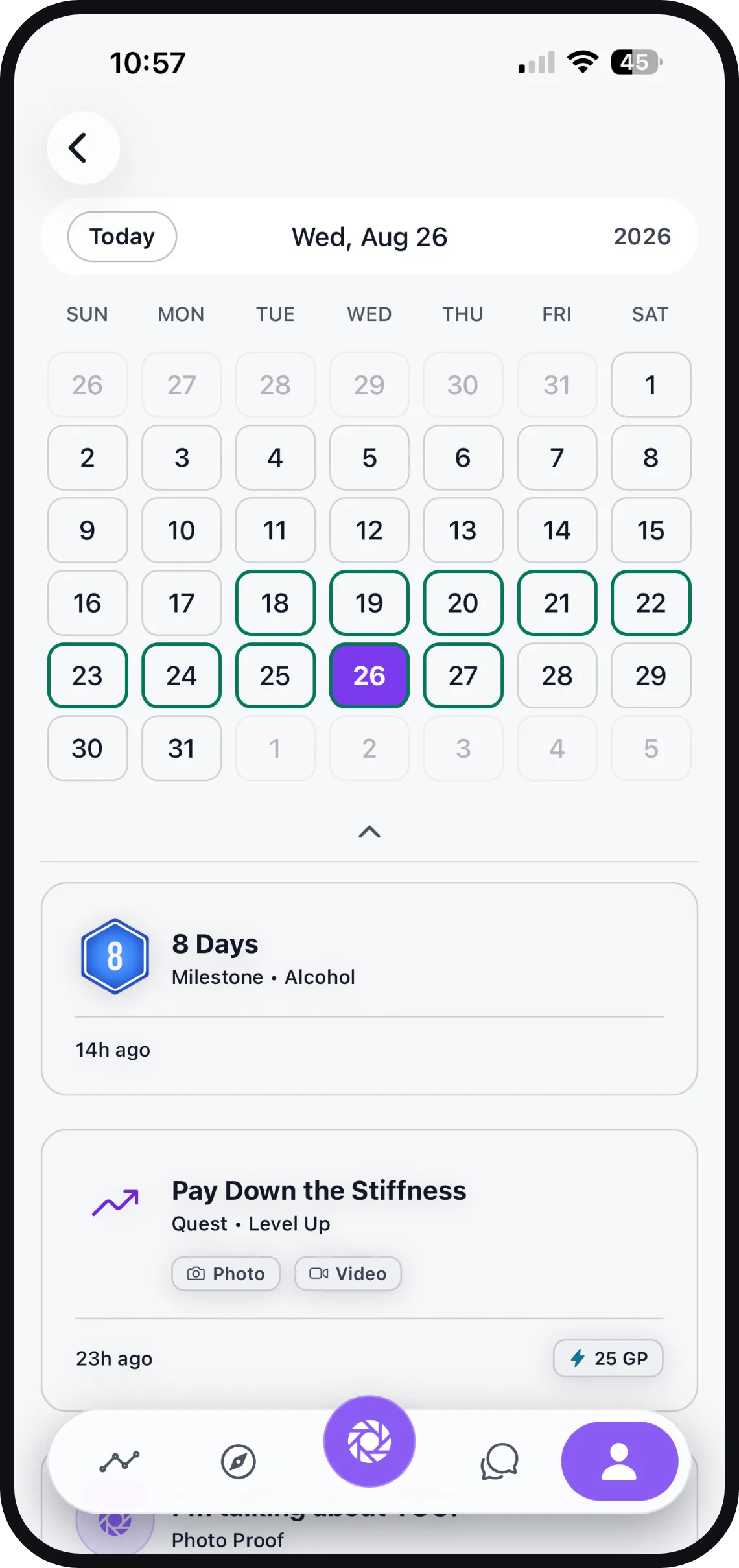
A medication can shrink the craving. It cannot decide who you are becoming. That part is still yours. The work of recovery is building the version of you that does not need the habit, and then stacking evidence that this person is real. That is why Door 24 is built around Proof instead of a counter. Every sober day becomes a Proof you can see, a photo, a voice note, or a journal entry, on a dated timeline. Your Growth Score tracks the trend over a 42-day rolling average, so one hard day bends the line without erasing your work.
Think of it this way. If a GLP-1 drug ever becomes part of someone's recovery, it would be a tool that makes the climb less steep. It would not be the climb. You still have to become the person at the top. Proof is how you prove, to the only person who needs convincing, that you already are.
The takeaway
The July 2026 study is a real, credible signal that GLP-1 drugs deserve serious research as a possible tool for alcohol use disorder. It is not a green light, not a prescription, and not a finished answer. Treat it as one more reason to be hopeful, and keep your focus where the lasting change actually happens: on who you are becoming, and on the proof that you are.
Sources
- Rodriguez PJ, et al. Association between GLP-1 receptor agonists and alcohol-related hospitalisations among adults with alcohol use disorder: multi-target trial emulation study. BMJ Open, July 21, 2026. DOI: 10.1136/bmjopen-2025-109259.
- BMJ Group. Newer obesity drugs linked to fewer alcohol-related hospitalisations for people with alcohol dependence. July 21, 2026.
- Science Media Centre. Expert reaction to a multi-target trial emulation study looking at GLP-1 receptor agonists and alcohol-related hospitalisations. July 21, 2026.
- National Institute on Alcohol Abuse and Alcoholism. Alcohol Use Disorder (AUD) in the United States.
Related reading: Why is it so hard to quit drinking?, How do I get through cravings without relapsing?, and Why isn't abstinence enough to stay sober?. When you are ready to make your days count, open the door.
Frequently asked
Do GLP-1 drugs like Ozempic help with alcohol use disorder?
A July 2026 BMJ Open study found that adults with alcohol use disorder who started semaglutide or tirzepatide had 26 to 32 percent fewer alcohol-related hospitalizations than people on comparison medications. The study is observational, so it shows an association, not proof that the drug caused the drop. No GLP-1 is currently approved to treat alcohol use disorder.
Is Ozempic approved to treat drinking?
No. As of July 2026, GLP-1 receptor agonists like semaglutide and tirzepatide are approved for type 2 diabetes and obesity, not for alcohol use disorder. Researchers say randomized controlled trials are still needed to know whether these drugs reduce alcohol-related harm on their own.
How might a GLP-1 drug reduce alcohol cravings?
GLP-1 receptors sit in brain regions that govern motivation and reward. Early research suggests these medications may blunt the reward signal that drives cravings. That is a plausible mechanism, but the exact effect on alcohol in humans is still being studied.
If a medication helps, is that enough to stay sober?
Medication can lower the volume on a craving. It does not build the identity underneath it. Most people relapse not from a single weak moment but because they are still the same person without the substance. Lasting change comes from becoming someone who no longer needs it, and from proof you can see that you are becoming that person.