Getting sober
How do I quit vaping?
To quit vaping, set a stop date, decide in advance what your hands will do instead, and plan for a first week that is genuinely uncomfortable but short. Nicotine withdrawal peaks within seven days. The ritual takes longer. What predicts success is not willpower, it is having something specific to do at the moment you would normally reach.
Quitting vaping is not one hard decision. It is eighty small ones spread across a day, most of which you never consciously make.
How do I quit vaping?
To quit vaping, pick a stop date within the next week, work out where your device actually lives in your day, and decide in advance what replaces the reach. Nicotine dependence is real, but the reason people restart is rarely the chemistry. It is the gap: the ten minutes waiting for coffee, the walk between buildings, the moment one task ends and the next has not started. Those gaps do not disappear when the device does. If nothing fills them, the device comes back.
The mistake is treating this as a test of resolve. Resolve is a morning resource. By four in the afternoon you are running on habit, and habit needs a replacement, not a lecture.
Who is actually doing this
You are not on the fringe of anything. According to the National Center for Health Statistics, drawing on the 2024 National Health Interview Survey, 7.0 percent of US adults currently use e-cigarettes. Among adults aged 18 to 24 the figure is 14.8 percent, higher than the rate for cigarettes in the same age group, which sits at 3.4 percent. A generation has a nicotine habit that never involved a cigarette.
Why vaping is harder to put down than it looks
Three things make this specific habit stubborn, and none of them are about how much you want it.
The frequency is the problem. This is not an evening habit with one hard hour. It is a hundred small reaches, most of them automatic. A tool built around resisting one moment a day has nothing to say about the other seventy nine.
There is no natural stopping point. No last call, no empty pack. The device is charged, portable and never quite finished, so nothing in the environment tells you where one use ends and the next begins.
Your hands want it back. Half of what you are quitting is a gesture. The break outside, the thing to do while waiting, the punctuation between tasks. The nicotine fades on a known timeline. The ritual outlasts it.
What the first month actually looks like
The mood symptoms have a documented timeline. In a review published in Nicotine and Tobacco Research, John Hughes concluded that anger, anxiety, depression, difficulty concentrating, impatience, insomnia and restlessness are valid withdrawal symptoms that peak within the first week and last two to four weeks. Notably, that review excluded craving from its analysis, so be sceptical of anyone who tells you precisely how long an urge lasts. Nobody has established that number cleanly.
| When | What is usually happening | What helps most |
|---|---|---|
| Days 1 to 3 | The reach is constant and physical. Irritability and poor concentration arrive fast. | Change the geography. Move where you sit, walk a different way, keep your hands occupied. |
| Days 4 to 7 | The peak, according to Hughes. Sleep is often the worst of it. | Plan the three gaps you know are hardest and put something specific in each one. |
| Weeks 2 to 4 | Mood symptoms fade steadily. The ritual urges keep arriving on cue. | Cues, not chemistry. Track which situations trigger the reach and change the situation. |
| Beyond a month | Nicotine is long gone. What remains is an association with specific moments. | Evidence. Look at what you have actually built rather than trusting how today feels. |
What the research says actually helps
Two findings are worth knowing, because both point the same direction.
The first is about structured support. In a randomised trial of 2,588 young adult e-cigarette users published in JAMA Internal Medicine in 2021, Amanda Graham and colleagues found that people assigned to a tailored text message quit programme reached 24.1 percent abstinence at seven months compared with 18.6 percent in the control group, an odds ratio of 1.39 with a 95 percent confidence interval of 1.15 to 1.68. Daily contact with something structured beat being left alone with good intentions.
The second is about medication. In the ORCA-V1 trial published in JAMA Internal Medicine in 2024, led by Nancy Rigotti at Massachusetts General Hospital, 31.8 percent of the 160 participants taking cytisinicline were continuously abstinent through weeks 9 to 12, compared with 15.1 percent on placebo, an odds ratio of 2.64. That is a real effect and worth a conversation with your doctor.
Read those two numbers together and something obvious appears. In the strongest arm of the strongest trial, roughly two thirds of people were still vaping at the end. Both arms of ORCA-V1 also received behavioural support, so nobody in that study was doing it on structure alone or on chemistry alone. Medication moves the odds. It does not do the four o'clock walk to the car for you.
Replace the gesture, not just the nicotine
The practical version of all this is short.
Name the three gaps. Not "I vape a lot", but the specific ones: the first ten minutes in the car, the queue for coffee, the ten seconds after sending an email. Most people have three or four that account for most of it.
Decide the replacement before you need it. A five minute walk, a glass of water drunk standing up, two minutes of something with your hands. The point is that it is chosen in advance, because the moment the urge lands is the worst possible time to invent a plan.
Tell one person. Not an announcement, just one person who will ask how it went on Thursday. A Crew is the same idea with a daily pledge attached, so the asking is not left to chance.
Expect to restart at least once. Most people who stop for good stopped before. That is a description of the process, not a verdict on you.
The problem with counting days
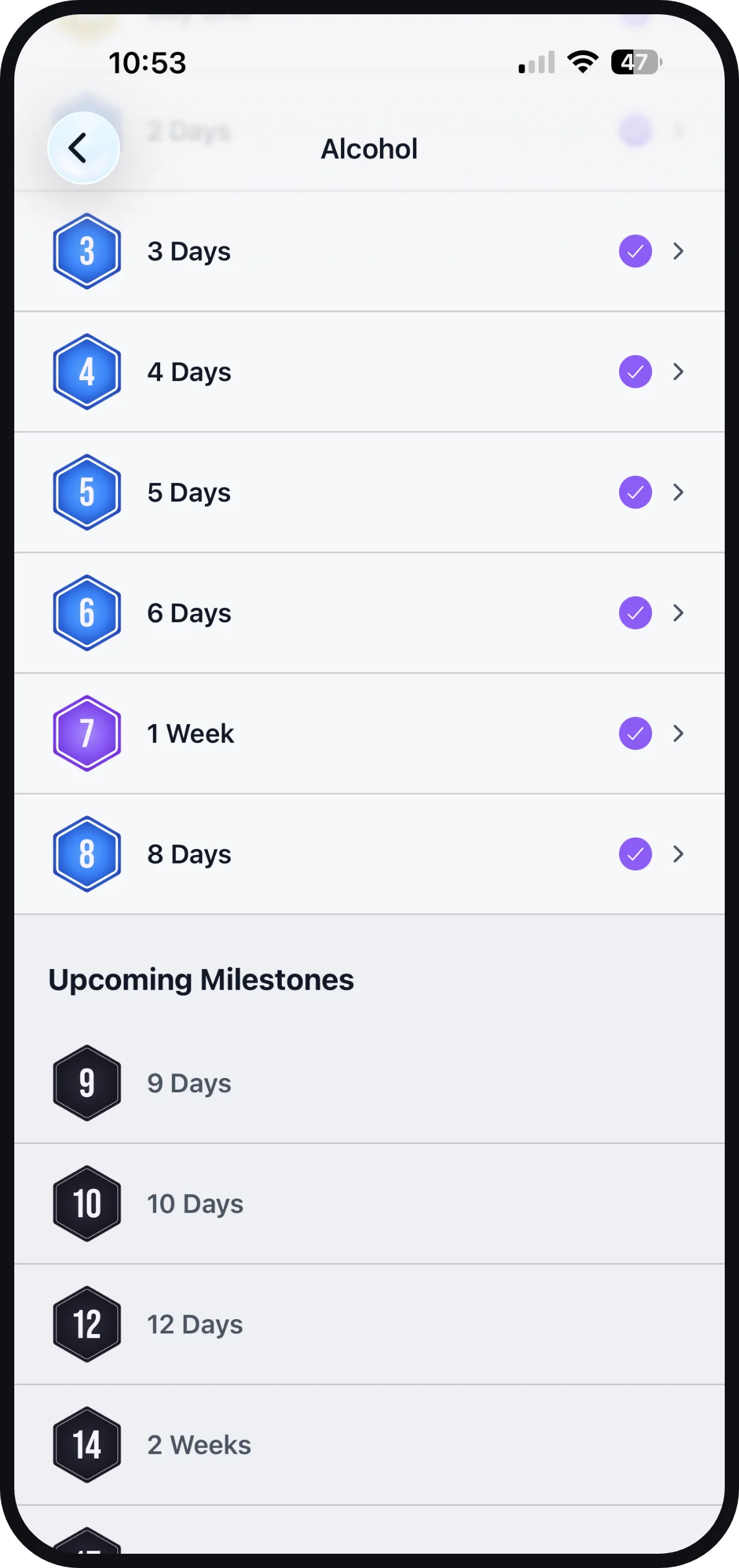
Here is where most quitting tools fail people who are quitting nicotine specifically. A day counter is built on the assumption that a slip erases the work. Quit for thirty one days, vape once at a wedding, and the number says zero. It says the month did not happen.
The month happened. You changed what you do at four o'clock. You got through a fortnight of bad sleep. None of that was undone by one Saturday, and a tool that says otherwise is lying to you at the exact moment you can least afford it.
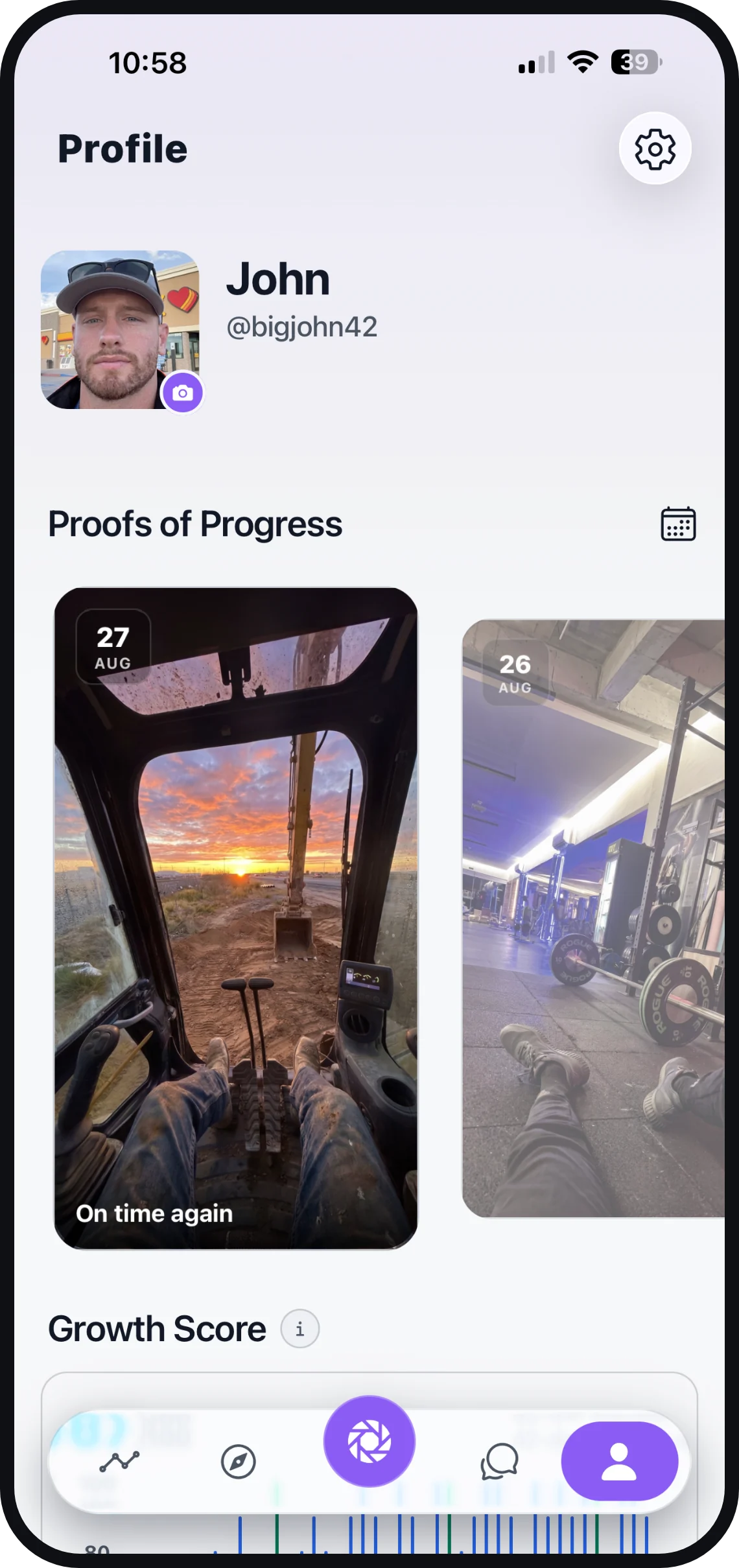
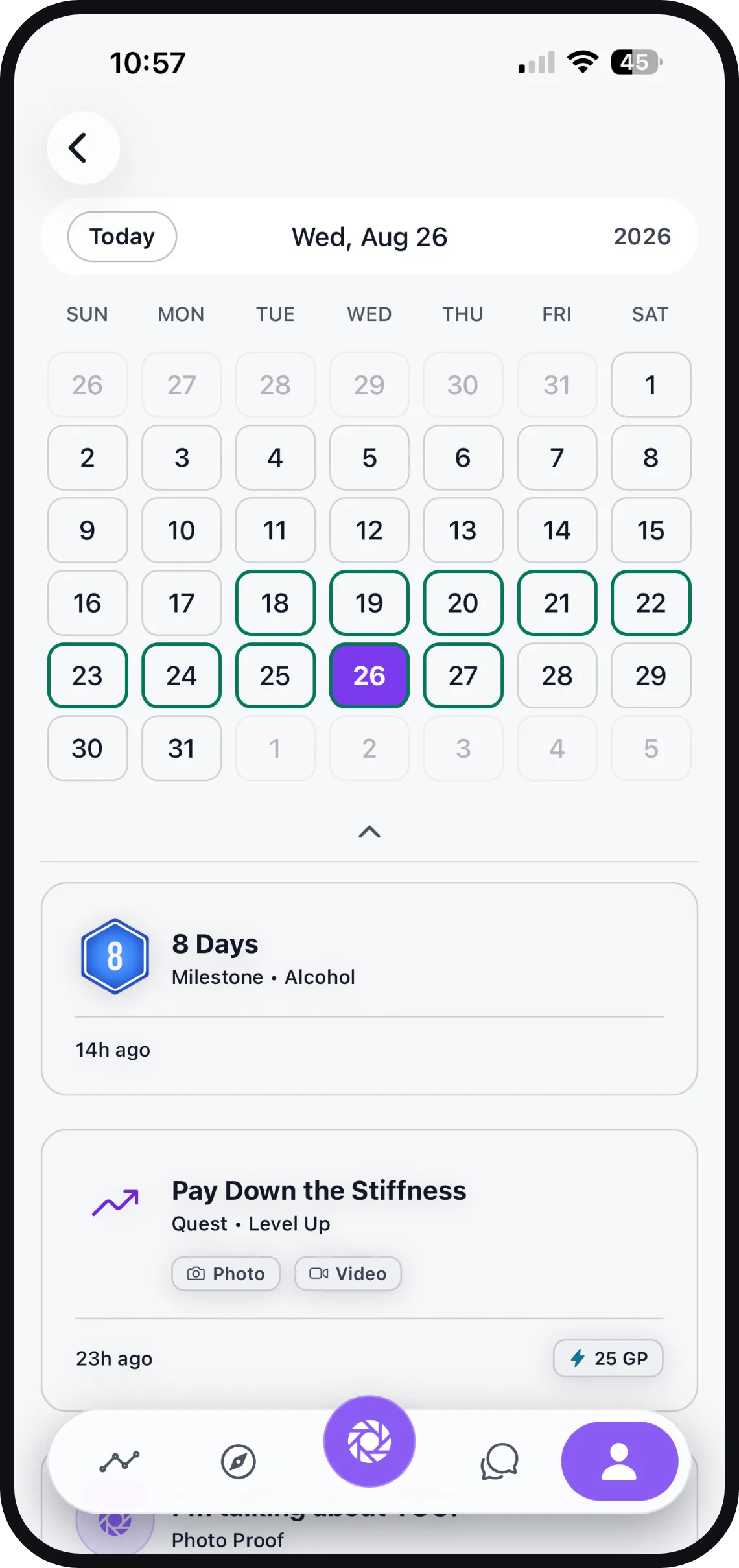
This is the idea Door 24 is built on: progress is proof. Instead of a streak that resets, you capture a Proof, a photo or a voice note or a line of text, timestamped onto a dated timeline. A full morning without reaching. The break you took outside where you just stood there. Your Growth Score is a 42 day rolling average, so a hard day bends the trend instead of deleting it. When you restart, and many people do, you are not back at zero. You are looking at three weeks of evidence that the person who does not reach is real, and you are carrying on from there.
A Daily Quest gives you the five minute action for the gap you would otherwise fill with a vape. The Freedom Ledger totals what the pods or disposables were costing you weekly, and what that comes to over a year you would rather spend on something else.
If you want the shape of the whole thing rather than just the first week, read how to get through cravings without relapsing and how to build sober habits that stick. If you have already restarted once, what to do after a relapse is the more useful page. You can also see how Door 24 handles quitting vaping specifically.
Quitting nicotine is not a character test you either pass or fail. It is a set of specific moments, and every one you get through is evidence you can look at later.
Sources
- National Center for Health Statistics, "Cigarette and Electronic Cigarette Use Among Adults by Urbanization Level: United States, 2024," Health E-Stat 115, 2026.
- Hughes JR, "Effects of Abstinence From Tobacco: Valid Symptoms and Time Course," Nicotine and Tobacco Research, 2007.
- Graham AL et al., "Effectiveness of a Vaping Cessation Text Message Program Among Young Adult e-Cigarette Users: A Randomized Clinical Trial," JAMA Internal Medicine, 2021.
- Rigotti NA et al., "Cytisinicline for Vaping Cessation in Adults Using Nicotine E-Cigarettes: The ORCA-V1 Randomized Clinical Trial," JAMA Internal Medicine, 2024.
Frequently asked
How long does nicotine withdrawal last when you quit vaping?
In a review of the evidence published in Nicotine and Tobacco Research, John Hughes found that anger, anxiety, difficulty concentrating, impatience, insomnia and restlessness peak within the first week of stopping and last two to four weeks. That review deliberately excluded craving from its analysis, so treat any confident claim about how long an individual urge lasts with suspicion. The mood symptoms are the part with a known timeline.
Is quitting vaping harder than quitting cigarettes?
It is different rather than harder. A pack has an end and a cigarette takes a few minutes. A device is always charged, always in a pocket, and never finished, so the habit spreads into gaps in the day instead of clustering into breaks. That is why people often report more separate urges when quitting vaping, even when the total nicotine is similar.
Do I need medication or a nicotine patch to quit vaping?
Not necessarily, and most people who stop do it without a prescription. Medication can move the odds. In the ORCA-V1 trial published in JAMA Internal Medicine in 2024, 31.8 percent of participants taking cytisinicline were abstinent at weeks 9 to 12 compared with 15.1 percent on placebo. Worth noting is that both groups also received behavioural support. Talk to a doctor or pharmacist about what fits you.
What if I have already quit vaping and started again?
That is the normal shape of quitting nicotine, not evidence that you cannot. Most people who stop for good have stopped before. The problem with a day counter is that a restart reads as a total loss, which is both untrue and demoralising. A record that keeps what you built is a more accurate picture of where you actually are.