Cravings & setbacks
How do I get through cravings without relapsing?
A craving is a wave, not a command. It rises, peaks and passes on its own, whether or not you act on it. The goal is not to defeat the urge with force. It is to delay, ride it out, and let it fall. Naming the wave, changing your surroundings, and looking at proof of how far you have come are three of the most reliable ways through.
Cravings are the moments recovery is won or lost, and they are far more manageable once you understand what they are: a temporary surge, not a life sentence. Here is a practical way through a single hard moment.
Understand the wave
An urge to drink behaves like a wave. It builds, crests, and comes back down, and it will do that on its own timeline whether you fight it or not. Research on urge surfing, a mindfulness-based technique, is built on this fact: instead of white-knuckling or feeding the urge, you observe it rise and fall like a wave you are riding rather than drowning in. The wave always breaks.
That single idea changes the job. You are not trying to make the craving disappear instantly. You are trying to still be sober when it passes, usually in under half an hour.
A step-by-step for the moment a craving hits
- Name it. Say to yourself, "This is a craving. It will pass." Naming turns a flood into a thing you are watching.
- Delay. Set a timer for 20 minutes and promise only that. You are not deciding forever, just the next 20 minutes.
- Change your state. Stand up, leave the room, step outside, splash water, call someone. Move your body and your surroundings.
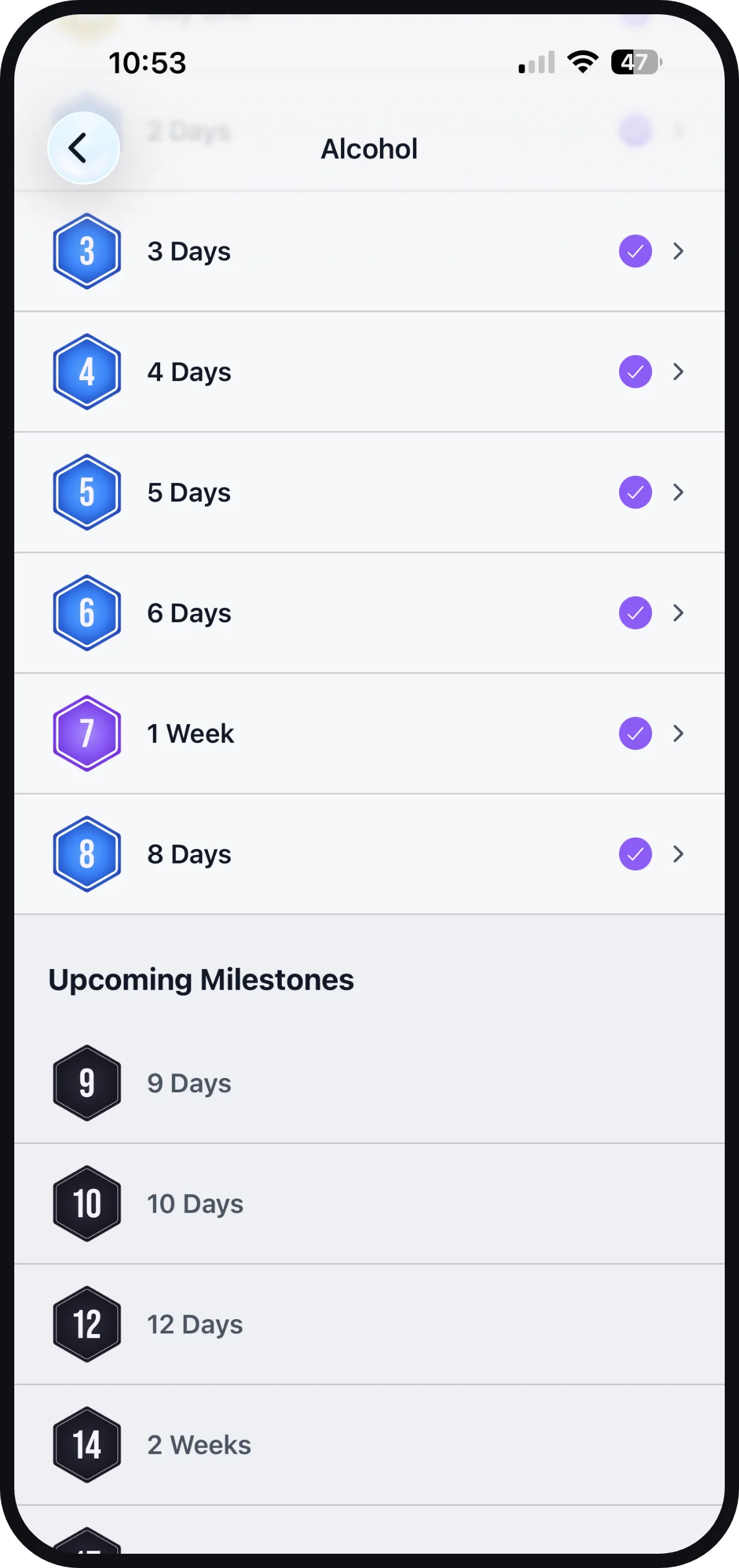
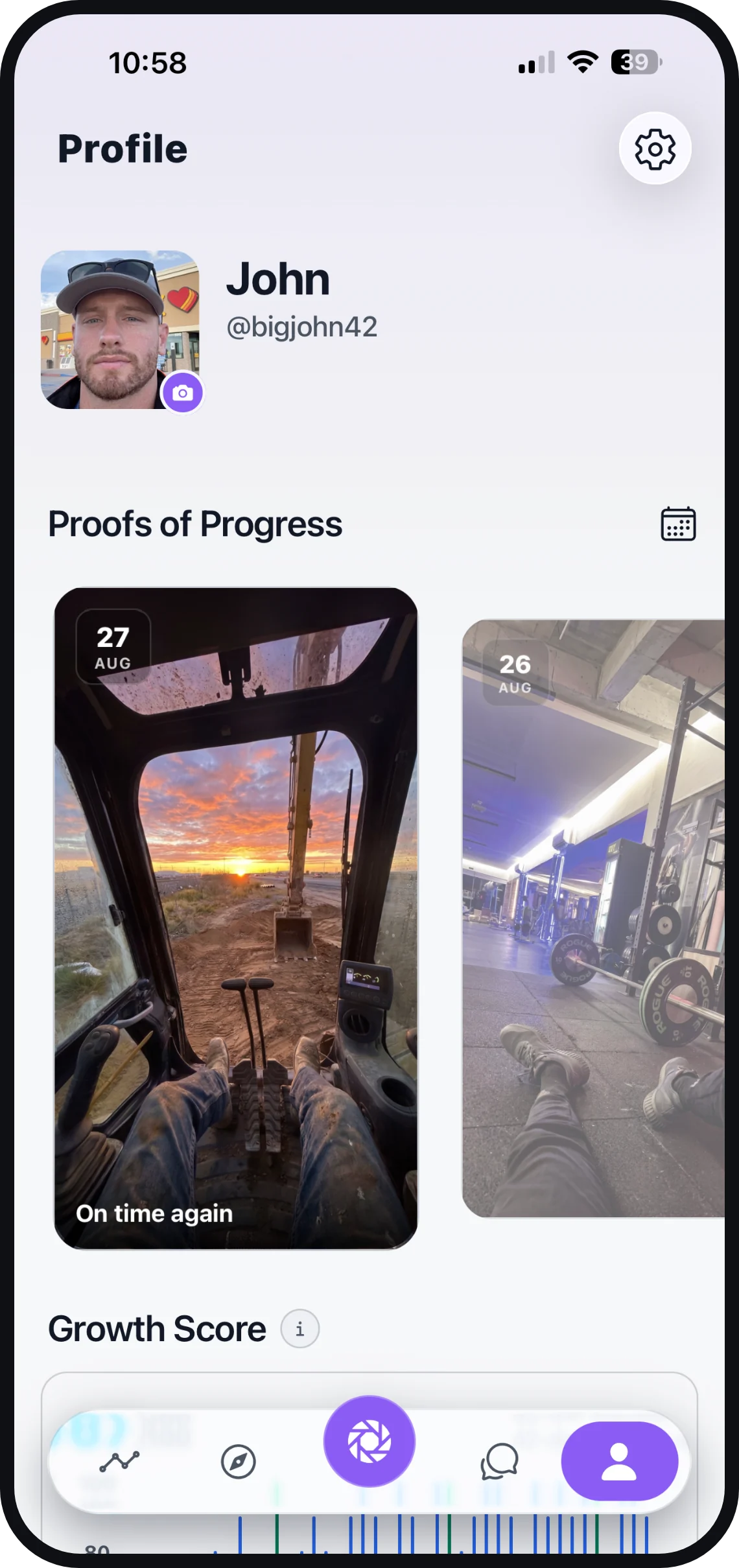
- Look at your proof. Open your record of sober days and let the evidence talk back to the urge.
- Reach out. Text one person. You do not have to sound calm or have the right words.
| Instead of | Try |
|---|---|
| "I have to fight this forever" | "I have to get through the next 20 minutes" |
| Sitting alone with the urge | Changing rooms, moving, or messaging someone |
| "One won't matter" | Looking at the streak that one drink would interrupt |
| Deciding based on how you feel right now | Deciding based on the record of who you are becoming |
Why proof helps in the hardest moment
In a craving, feelings are loud and memory is unreliable. The urge insists that drinking is the fix and that your progress is not real. That is when concrete evidence matters most.
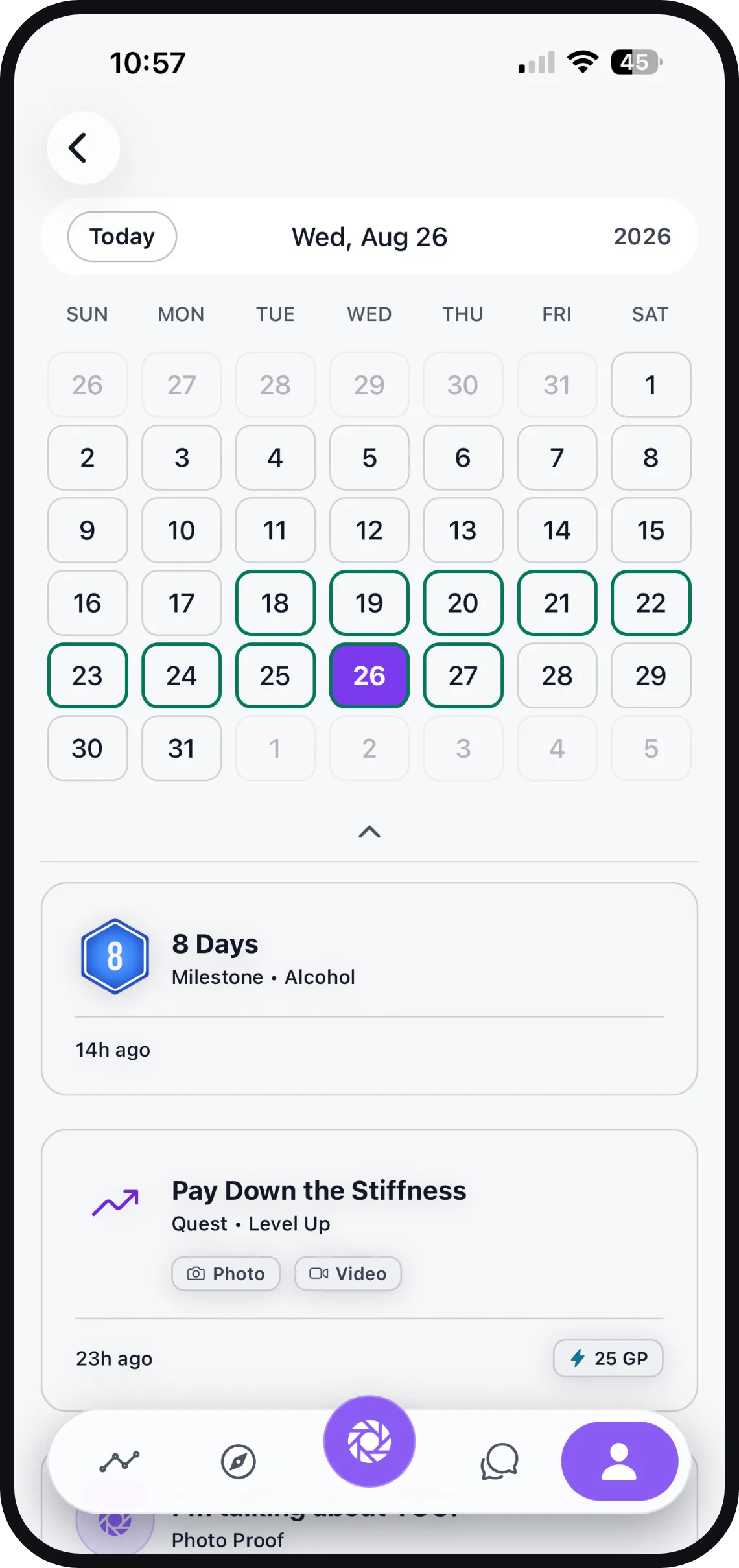
Door 24 is built on the idea that progress is proof. When you have a timestamped record of your sober days, captured as photos, videos, voice notes, or text, a craving is no longer arguing with your willpower alone. It is arguing with a stack of evidence. On a hard night, 30 recorded days is a fact you can hold onto while the wave breaks.
If you want the bigger picture behind that idea, read How do I rebuild my identity in recovery?. If you are early on, What are the first 30 days of sobriety like? maps the terrain.
If you slip
A slip is not the end of your recovery, and it does not delete the days you stayed sober. Treat it as information, not a verdict. Get honest about what led up to it, plan for that trigger next time, look at the evidence of your real progress, and take the next sober step. Recovery is a long line with occasional dips, not a fragile streak that shatters.
Sources
- Bowen, S., and Marlatt, A., "Surfing the Urge: Brief Mindfulness-Based Intervention," Psychology of Addictive Behaviors, 2009.
Frequently asked
How long do cravings last?
Cravings are time-limited. They rise, peak and fall rather than climbing indefinitely, which is the observation urge surfing is built on. You will see a specific figure quoted a lot, usually 20 or 30 minutes, but that number traces to treatment centre guidance rather than to a measured study, so treat it as a rule of thumb and not a clock. What matters is that the wave breaks, and that riding one out teaches your brain you can do it again.
Does distraction actually work for cravings?
Yes, for the acute moment. Changing your environment or activity interrupts the loop long enough for the wave to fall. Distraction is a short-term tool, not a whole plan, so pair it with longer-term support and routine.
I already slipped. Is my progress gone?
No. A slip is one data point, not a reset to zero. What matters most is what you do next. Log it honestly, look at the evidence of the days you did stay sober, and keep going.