Identity & change
How do I rebuild my identity in recovery?
Rebuilding your identity in recovery is the shift from 'I am someone trying to quit' to 'I am someone who does not drink.' It is not a mindset trick. Identity changes through repeated evidence: small actions, witnessed and recorded, until the new story feels truer than the old one. The fastest way to get there is to stop arguing with yourself and start collecting proof.
Recovery is not only about removing a substance. It is about becoming someone for whom that substance no longer fits. That is identity work, and it is one of the most durable foundations for lasting change.
Why identity beats willpower
Willpower treats sobriety as a fight you win moment by moment. That works until you are tired, stressed, or celebrating. Identity works differently. When "I do not drink" becomes part of who you are, the decision is mostly already made, so you spend less energy negotiating with yourself.
Psychologists have a name for part of this. Self-perception theory suggests people infer who they are by watching what they do. Act like a non-drinker often enough, in situations that matter, and the brain updates the self-image to match. The behavior comes first. The belief catches up.
The identity gap in early recovery
Early on there is a painful gap. You have decided to change, but you do not yet feel like a changed person, so every hard moment feels like proof you are still the old you. This gap is where a lot of people give up, not because they failed, but because they could not see themselves succeeding yet.
| Old identity story | New identity story |
|---|---|
| "I am trying not to drink" | "I am someone who does not drink" |
| Relies on motivation and mood | Relies on evidence and routine |
| A slip means "I am back to zero" | A slip is one data point in a long record |
| Progress is invisible and easy to doubt | Progress is captured and undeniable |
Closing that gap is not about thinking harder. It is about making the new story visible.
Make the new identity visible with proof
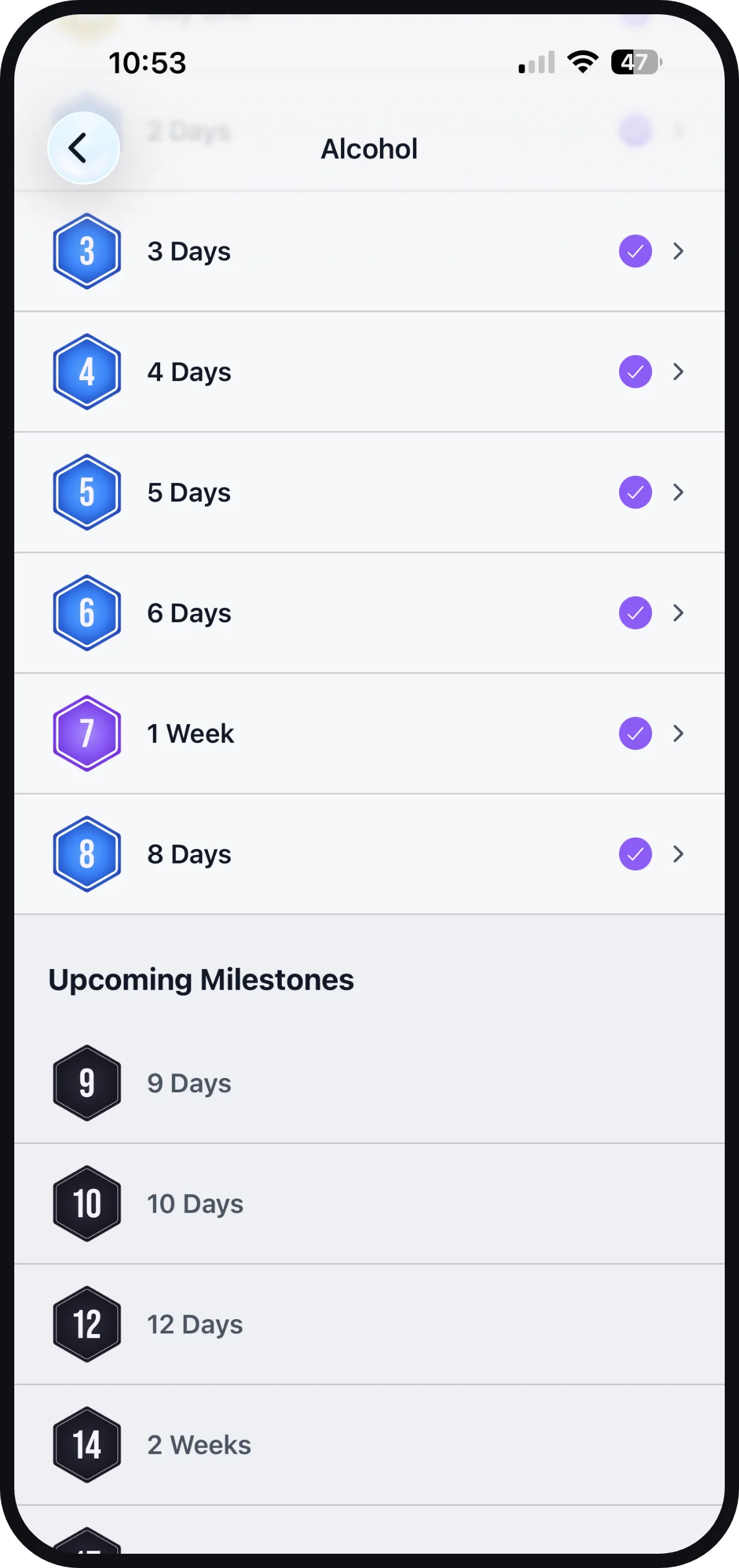
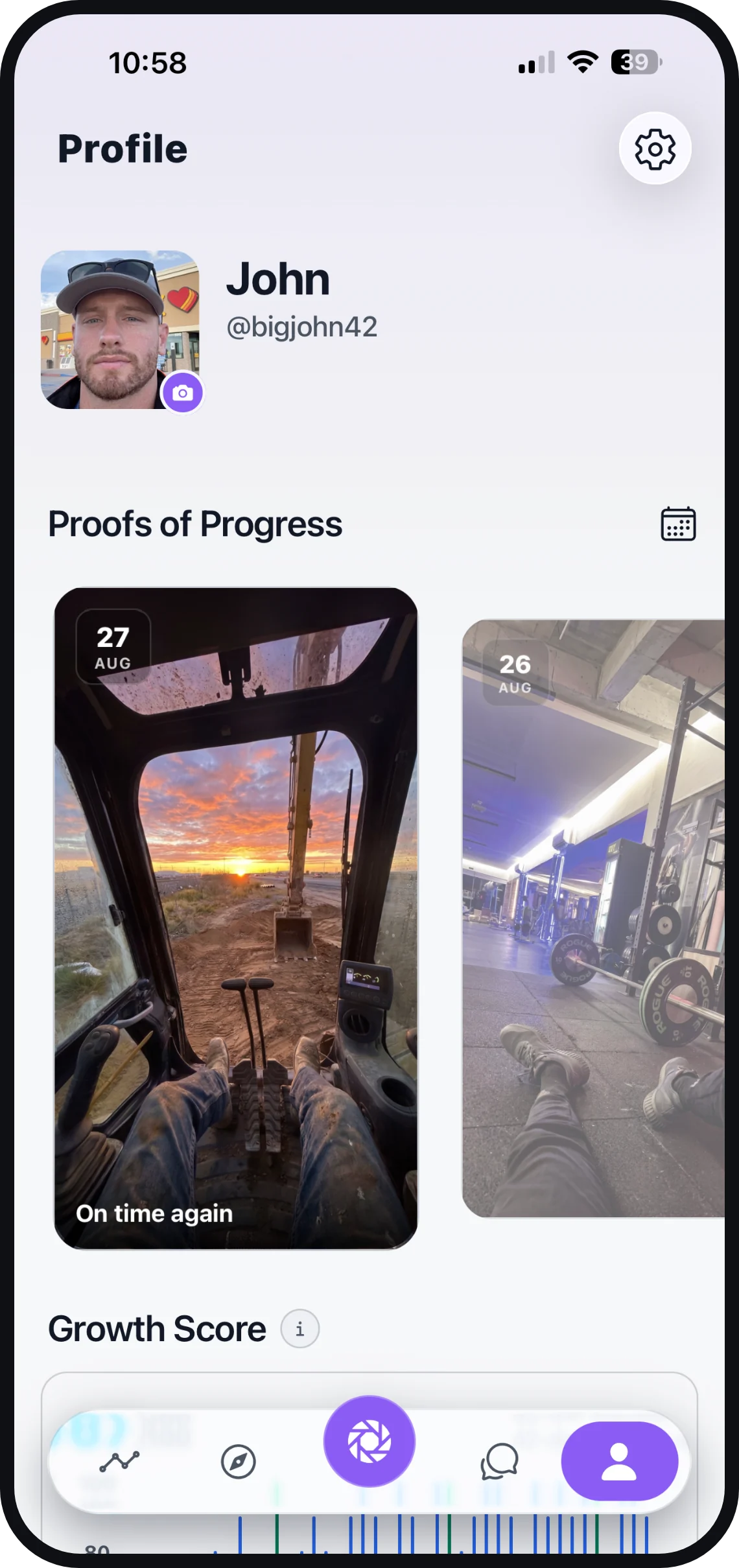
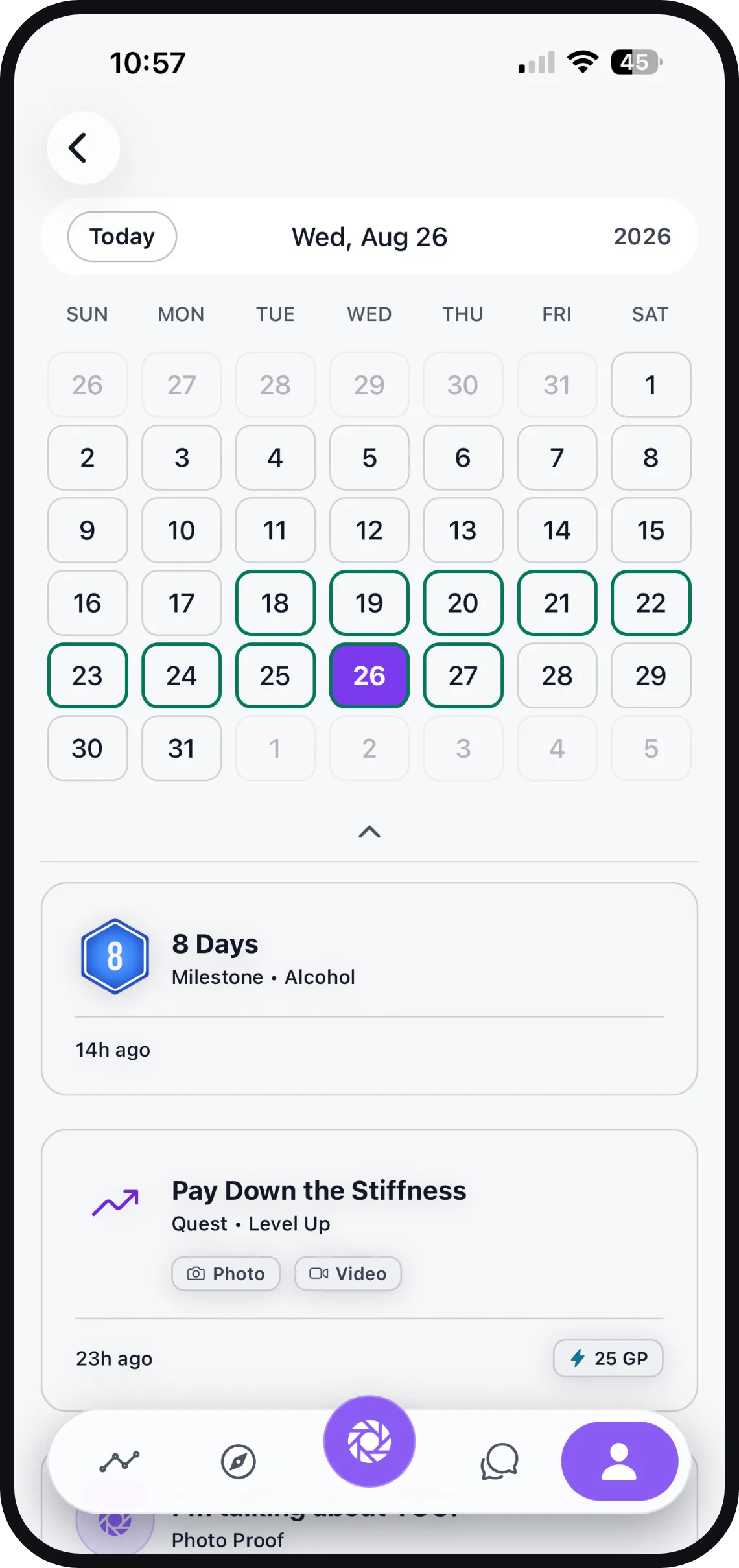
Here is the core of Door 24: progress is proof. Instead of asking you to simply believe you have changed, it helps you build evidence of it. You capture short moments, a photo, a video, a voice note, a line of text, and they become a timestamped record of your growth.
That record does three things for identity. It shows you a version of yourself you might otherwise forget on a hard day. It turns vague progress into something concrete you can point to. And over weeks it becomes a story you can scroll through, one where the main character is clearly not the person you used to be.
If you are still in the raw early stretch, start with What are the first 30 days of sobriety like?. When a specific urge hits, How do I get through cravings without relapsing? walks through a single moment.
A starter practice for identity change
- Name one value you want your sober life to stand for. Steadiness, honesty, presence, whatever fits.
- Choose one small daily action that a person with that value would do.
- Capture one piece of proof each day that you did it. Keep it quick.
- Once a week, look back at your record and read it as a story about who you are becoming.
- When you slip, log it honestly and continue. A single day does not erase a month of evidence.
Sources
- Bem, D. J., "Self-Perception Theory," Advances in Experimental Social Psychology, 1972.
- Substance Abuse and Mental Health Services Administration (SAMHSA), "Recovery and Recovery Support," 2024.
Frequently asked
Why is identity so important in recovery?
Behavior tends to follow identity. When you see yourself as a non-drinker, staying sober stops feeling like constant resistance and starts feeling like being consistent with who you are. Goals get abandoned. Identities get defended.
How long does it take to feel like a different person?
There is no fixed timeline, and it is gradual rather than a single moment. Most people feel the shift build over months as evidence accumulates. Recording your progress makes the change visible sooner, because you can see it instead of only hoping for it.
What if I do not know who I want to become?
You do not need the whole picture. Start with one value and one small action that matches it, then repeat it. Identity is built forward through action, not figured out in advance.