Getting sober
What are the first 30 days of sobriety like?
The first 30 days of sobriety usually move through four stages: the raw first week, a foggy second week, a fragile but clearer third week, and a steadier fourth week where a new routine starts to hold. Cravings are strongest early and come in waves. The single biggest predictor of getting through is not willpower. It is having proof that the days are adding up.
Getting through the first month of sobriety is less about heroic willpower and more about surviving waves, one at a time, and stacking evidence that you are changing. Below is a realistic week-by-week map, plus the mindset that keeps the days adding up.
What the first 30 days of sobriety actually feel like
The first 30 days rarely feel like a steady climb. They feel like weather. Good hours, hard hours, a craving out of nowhere, then calm again. Knowing the rough shape of the month helps you stop reading a bad afternoon as failure.
| Stage | Roughly | What tends to show up | What helps most |
|---|---|---|---|
| Week 1 | Days 1 to 7 | Disrupted sleep, mood swings, strong cravings, restlessness | Remove access, keep days simple, hydrate, rest |
| Week 2 | Days 8 to 14 | Brain fog, low energy, boredom, "was it even that bad" thoughts | A daily anchor habit, one accountable person |
| Week 3 | Days 15 to 21 | Clearer mind, emotions surfacing, some social pressure | Naming feelings, planning risky situations ahead |
| Week 4 | Days 22 to 30 | Steadier sleep, more energy, a routine starting to hold | Reviewing your proof, setting the next 30-day marker |
This table is a general pattern, not a diagnosis. Your month may look different, and that is normal.
Why the early days feel so hard
Early sobriety asks you to feel things you may have numbed for a long time. That is uncomfortable, and discomfort is not the same as danger. The urge to drink tends to peak and then pass within about 20 to 30 minutes whether or not you act on it, which is why riding out a single wave is such a powerful skill. You are not waiting forever. You are waiting out a wave.
There is also a memory problem. As the worst physical symptoms fade, the brain quietly rewrites the story and whispers that it was never really a problem. This is common and it is worth planning for. The best counter to a rewritten memory is a written record.
Make your progress undeniable
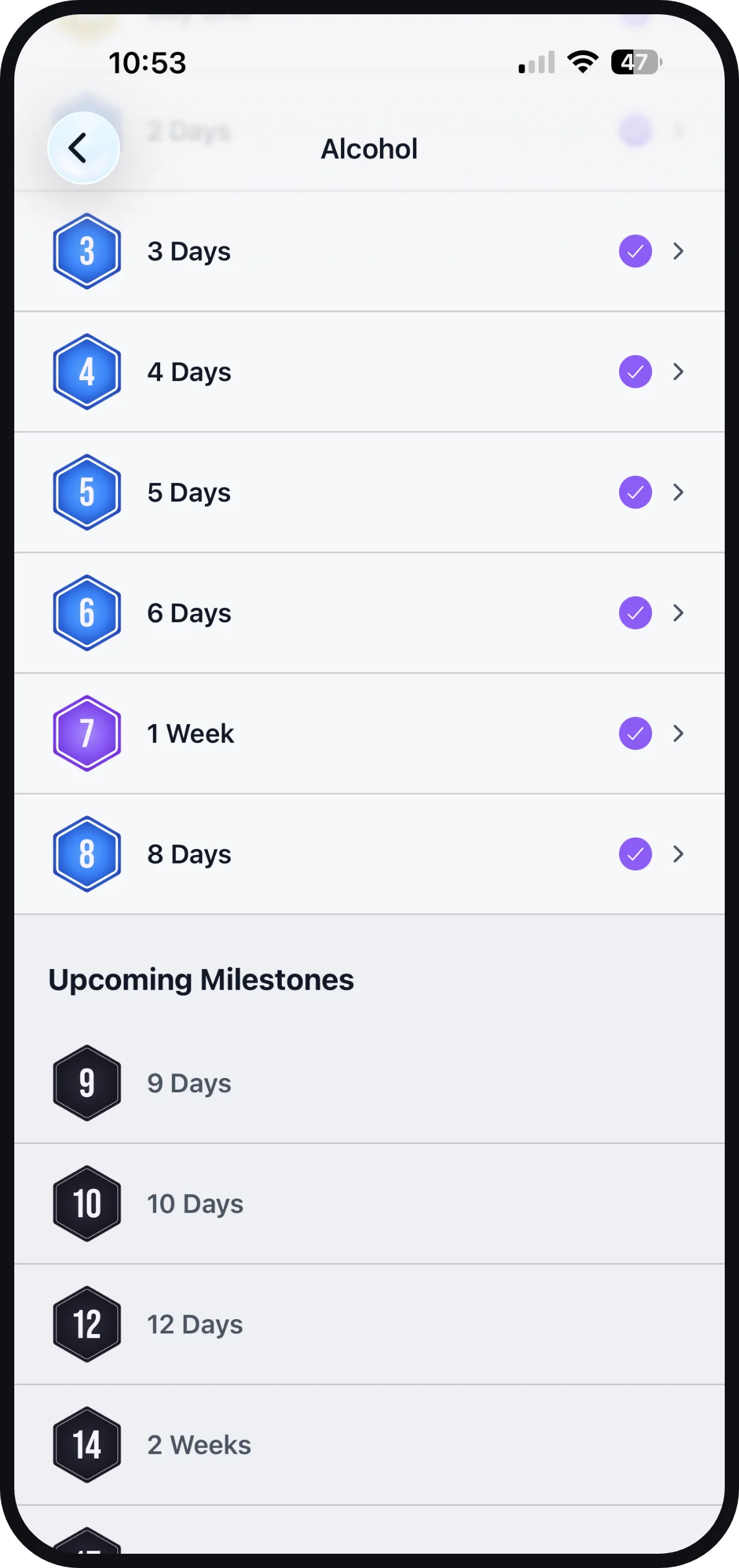
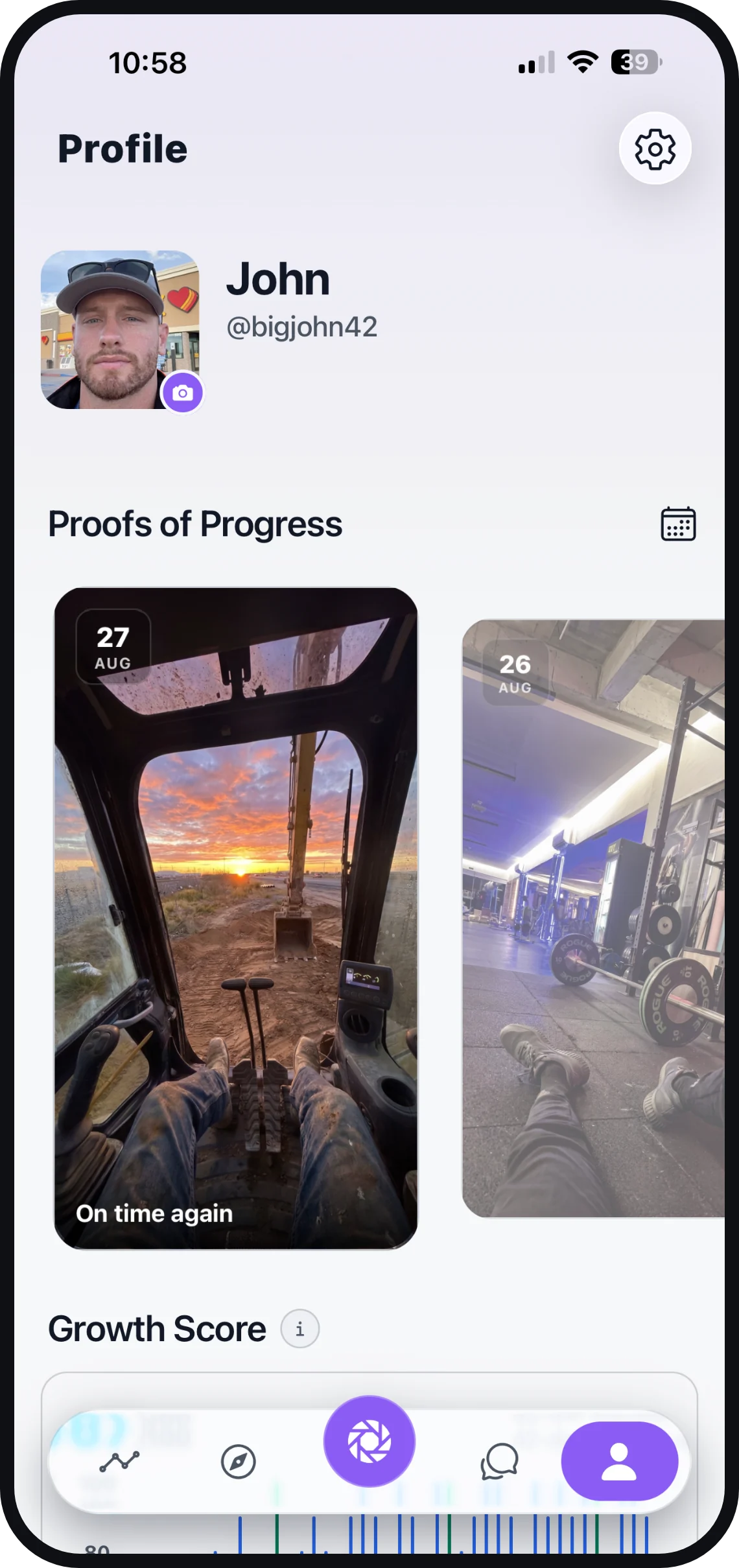
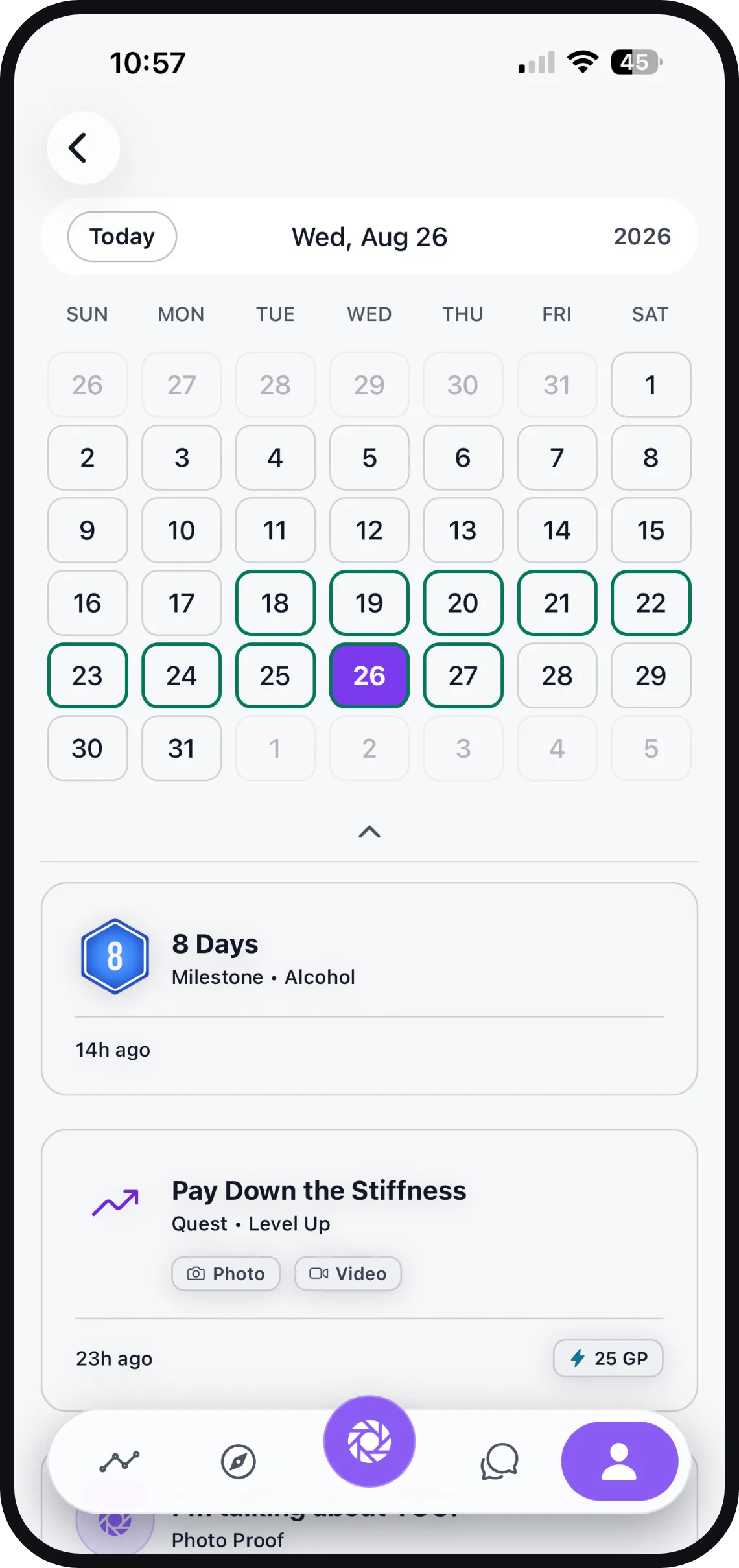
Motivation is unreliable in month one. Evidence is not. Every sober day is a small piece of proof that the person you are becoming is real, and when you can see that proof stacking up, a hard night has something to push against.
This is the core idea behind Door 24. Instead of only counting days, you capture proof of them. A short photo, a video, a voice note, or a line of text becomes a timestamped record of who you are turning into. On day 24, a craving argues with a feeling. A ledger of 23 days argues with a fact.
For a deeper look at building that record, see How do I rebuild my identity in recovery?. For getting through a single hard moment, see How do I get through cravings without relapsing?.
A simple plan for the month
You do not need a perfect system. You need a small one you will actually use.
- Pick one daily anchor. A walk, a made bed, a five-minute check-in. Same time each day.
- Capture one piece of proof a day. Keep it short. The point is the streak of evidence, not the production quality.
- Plan the week's two riskiest moments in advance, before they arrive.
- Tell one person you trust what you are doing.
- Set a marker for day 30, and decide now what day 31 begins.
Sources
- National Institute on Alcohol Abuse and Alcoholism (NIAAA), "Understanding Alcohol Use Disorder," 2023.
Frequently asked
What is the hardest day of sobriety?
For many people the first three to five days feel hardest, when the body is adjusting and cravings are sharpest. There is no universal worst day. Some people find day 3 brutal, others hit a wall around day 10 when the novelty fades. Expect waves, not a straight line.
How long until sobriety feels normal?
Most people notice clearer thinking and steadier sleep somewhere in weeks three to four, though it varies. Thirty days is enough to feel a real shift, not enough to be finished. Think of it as the end of the beginning.
Should I tell people I quit drinking?
Telling even one trusted person makes it easier, because it turns a private intention into an accountable one. You decide who and how much. You do not owe anyone the full story.