The science of recovery
Why is it so hard to quit drinking?
Quitting drinking is hard because alcohol physically changes the brain, not because you lack willpower. Repeated heavy drinking rewires three systems: reward, stress, and the prefrontal self-control you use to stop. Those changes can persist for months after your last drink, which is why the urge to drink outlasts your decision to quit. It is a brain problem, and it has a real path through it.
You decided to quit. You meant it. Then a craving showed up and your resolve felt like paper. That does not mean you are weak. It means alcohol changed the machinery that makes decisions, and the machinery is still catching up to your choice.
Why is it so hard to quit drinking?
It is hard to quit drinking because alcohol physically rewires the brain, so quitting takes more than willpower. The National Institute on Drug Abuse (NIDA) puts it directly in its Understanding Drug Use and Addiction overview: quitting "usually takes more than good intentions or a strong will," because repeated use "can lead to brain changes that challenge an addicted person's self-control and interfere with their ability to resist intense urges." This is common. In 2024, an estimated 27.9 million Americans ages 12 and older (9.7 percent) had alcohol use disorder, according to NIAAA. If quitting were only about wanting it, far fewer people would struggle.
What does alcohol do to the brain's reward system?
It floods and then dulls it. Alcohol and other drugs act on the brain's reward circuit by releasing a surge of dopamine, the chemical messenger tied to pleasure and reinforcement. According to NIDA, those surges teach the brain to repeat the behavior "again and again." Over time the brain adapts by reducing the reward circuit's ability to respond, an effect called tolerance. You need more to feel the same lift, and you get less pleasure from ordinary things you used to enjoy, like food, connection, or rest. The reward you are chasing keeps moving away from you.
Why do stress and cravings get worse before they get better?
Because quitting flips the brain into a stress-driven state. Alcohol use disorder is not one moment. In the neurocircuitry model laid out by Nora Volkow, George Koob, and A. Thomas McLellan in the New England Journal of Medicine (2016), it moves through three stages: binge and intoxication, withdrawal and negative affect, and preoccupation and anticipation. In the withdrawal stage, the brain regions tied to emotion drive low mood and heightened sensitivity to stress. In the preoccupation stage, the prefrontal cortex, your self-control center, works less efficiently, which makes it harder to balance a craving against your longer-term goal. That is why early sobriety can feel like the urge is winning even though you have already decided to quit.
| Stage | What is happening in the brain | What it feels like |
|---|---|---|
| Binge / intoxication | Reward circuit floods with dopamine, cues get linked to drinking | The pull, the ritual, the "just one" |
| Withdrawal / negative affect | Emotion circuits drive low mood and stress sensitivity | Anxiety, irritability, cravings that spike under pressure |
| Preoccupation / anticipation | Prefrontal self-control runs less efficiently | Planning around drinking, resolve that feels thin |
Isn't quitting just a matter of willpower?
No, and the data is clear on this. Genetics account for about half of a person's risk for addiction, per NIDA, and the brain changes involved are physical, not moral. Return to use is also common and not a sign of failure. NIDA reports that relapse rates for substance use disorders run 40 to 60 percent, similar to relapse rates for chronic illnesses like hypertension (50 to 70 percent) and asthma (50 to 70 percent). We treat a return of asthma symptoms as a reason to adjust treatment, not as proof the person is broken. The same logic applies here. A slip is information, not a verdict.
What actually makes quitting stick?
Stopping is the start, not the finish. NIDA is explicit that "stopping drug use is just one part of a long and complex recovery process," and that detoxification alone, without what comes after, "generally leads to resumption of drug use." In plain terms: removing the alcohol is necessary, but it is not enough on its own. The reason so many attempts unravel is that the person is the same, just without the drink. What lasts is becoming someone whose life no longer has a gap the drink used to fill.
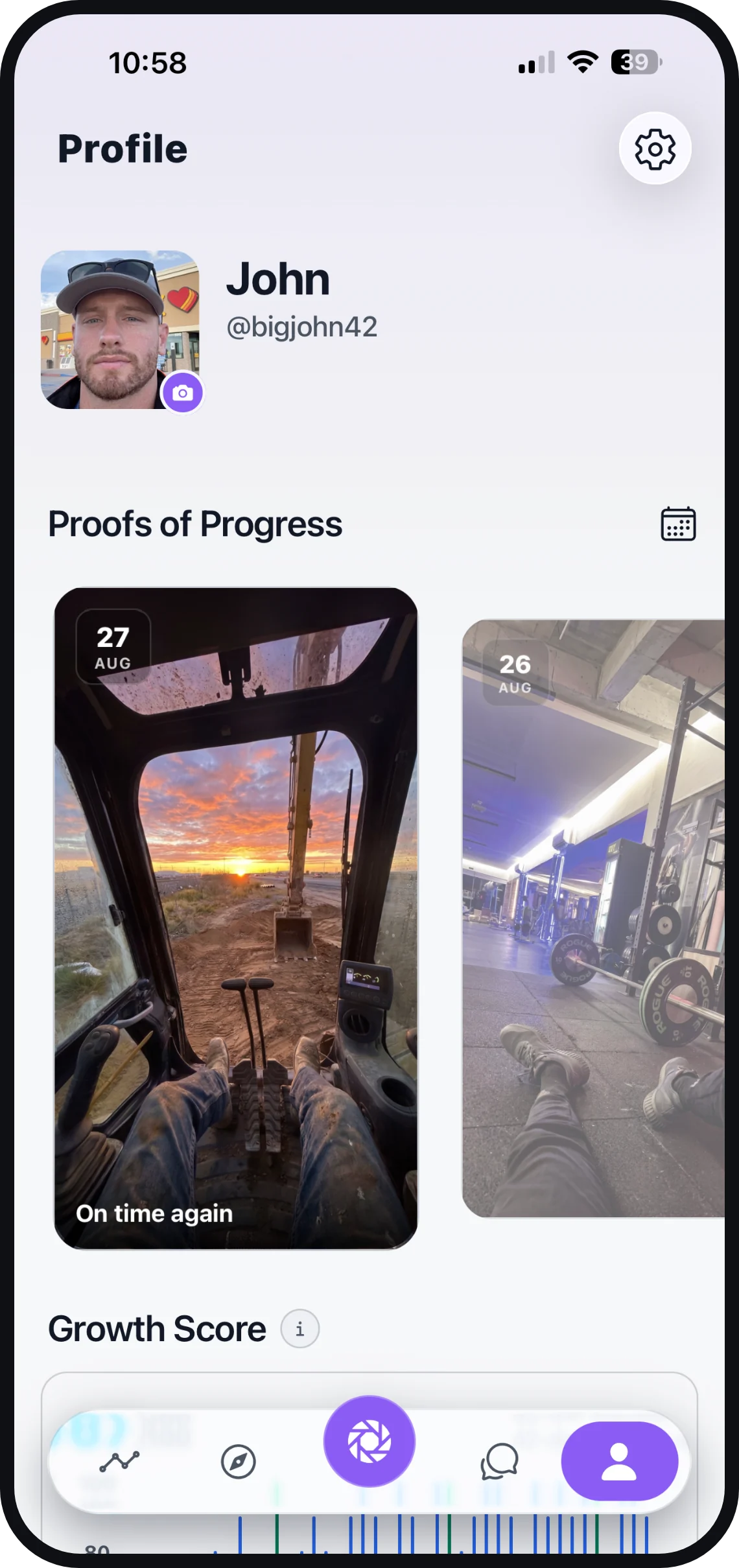
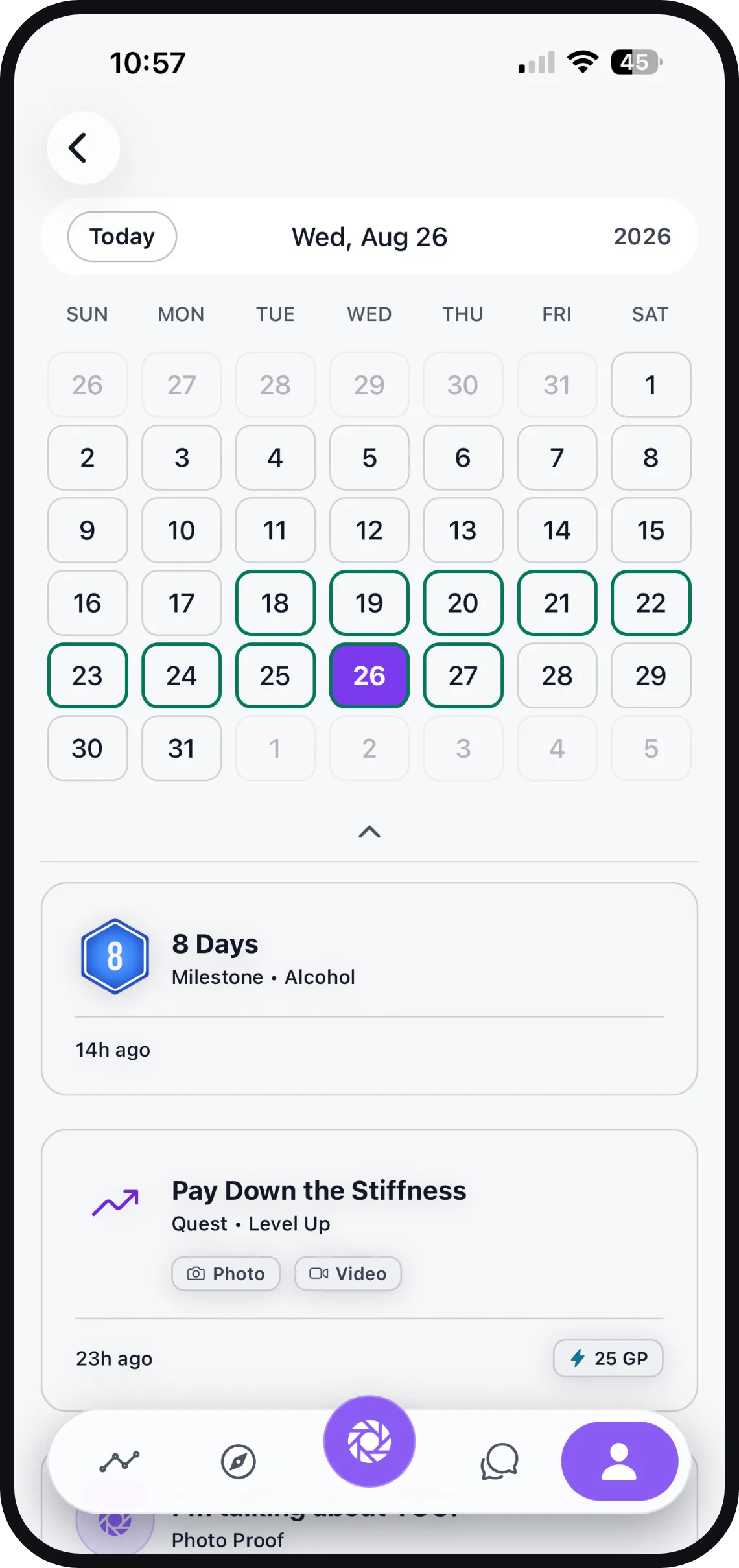
This is the Door 24 idea. Abstinence is not enough. You do not just quit a habit, you become someone who no longer needs it. The problem with becoming is that it is invisible day to day, and invisible progress is easy to abandon on a hard night. So Door 24 makes it visible. You capture Proofs, dated photos, voice notes, or journal entries, that stack on a timeline you can scroll back through. Your Growth Score reads consistency as a 42-day rolling average, not a fragile streak, so one bad day moves the trend without erasing your work. When your brain cannot yet feel the change, the evidence can still show it to you.
Keep going with what happens to your brain when you get sober, why you crave alcohol when you are stressed, and why abstinence alone is not enough to stay sober. When you are ready to make the invisible work visible, start with Door 24.
Sources
- National Institute on Drug Abuse (NIDA), "Understanding Drug Use and Addiction," DrugFacts, updated 2026. https://nida.nih.gov/publications/drugfacts/understanding-drug-use-addiction
- National Institute on Drug Abuse (NIDA), "Treatment and Recovery," Drugs, Brains, and Behavior: The Science of Addiction. https://nida.nih.gov/publications/drugs-brains-behavior-science-addiction/treatment-recovery
- Volkow, N. D., Koob, G. F., McLellan, A. T., "Neurobiologic Advances from the Brain Disease Model of Addiction," New England Journal of Medicine, 2016. https://www.nejm.org/doi/full/10.1056/NEJMra1511480
- National Institute on Alcohol Abuse and Alcoholism (NIAAA), "Alcohol Use Disorder (AUD) in the United States," 2024 NSDUH data. https://www.niaaa.nih.gov/alcohols-effects-health/alcohol-topics/alcohol-facts-and-statistics/alcohol-use-disorder-aud-united-states-age-groups-and-demographic-characteristics
Frequently asked
Is it hard to quit drinking because of a lack of willpower?
No. NIDA states plainly that quitting usually takes more than good intentions or a strong will, because repeated use changes the brain in ways that challenge self-control. Genetics account for about half of a person's risk. Difficulty quitting is a sign of how alcohol acts on the brain, not a character flaw.
Why do cravings get worse after I stop drinking?
Because alcohol shifts the brain into a withdrawal and negative-affect state, raising sensitivity to stress and priming the urge to drink. In the neurocircuitry model described by Volkow, Koob, and McLellan, this stage drives the discomfort that makes early sobriety feel harder before it gets easier.
How long do the brain changes from drinking last?
They can persist for months after your last drink, which is why risk of returning to drinking stays elevated for a long time. The encouraging part is that the brain also has real capacity to recover with sustained abstinence, and much of the early gain comes in the first weeks.
Is quitting alcohol dangerous to do alone?
It can be. For some people, alcohol withdrawal is medically serious. Talk to a doctor before you stop, especially if you drink heavily or daily.