The science of recovery
What happens to your brain when you get sober?
When you get sober, your brain starts to physically rebuild. Gray matter volume increases, and the frontal regions behind focus, planning, and self-control recover fastest. In a longitudinal MRI study, most of the measurable cortical recovery happened in the first month of abstinence. Thinking gets clearer, cravings get easier to resist, and the repair continues for many months.
Early sobriety can feel foggy, then suddenly sharp. That is not just mood. It is your brain physically rebuilding, and the science is genuinely encouraging.
What happens to your brain when you get sober?
It regains volume. In a longitudinal MRI study led by Timothy Durazzo and colleagues in Addiction Biology (2015), participants were scanned at about one week, one month, and seven months of abstinence. Gray matter volume increased significantly across the frontal, parietal, and occipital lobes, and the recovery was front-loaded: 58 percent of the total cortical gray matter recovery occurred in the first month, driven largely by the frontal lobe.
That frontal-first pattern matters. The frontal lobe governs focus, planning, and impulse control, the very functions you lean on to resist a craving. So brain recovery is self-reinforcing: as the region that helps you say no repairs, saying no gets easier.
Why does the brain recover unevenly?
Because repair is not linear and not uniform. The biggest gains come early, then continue more slowly. Some functions bounce back quickly while others take longer, and recovery can be partial rather than complete, especially after years of heavy drinking. That is why sobriety feels like clarity arriving in waves rather than a switch flipping.
| Time abstinent | What the research shows |
|---|---|
| ~1 week | Baseline after acute withdrawal; volumes lowest |
| ~1 month | Majority of measured cortical recovery, frontal-led |
| ~7 months | Continued gains across frontal, parietal, occipital regions |
Your brain is changing where you cannot see it
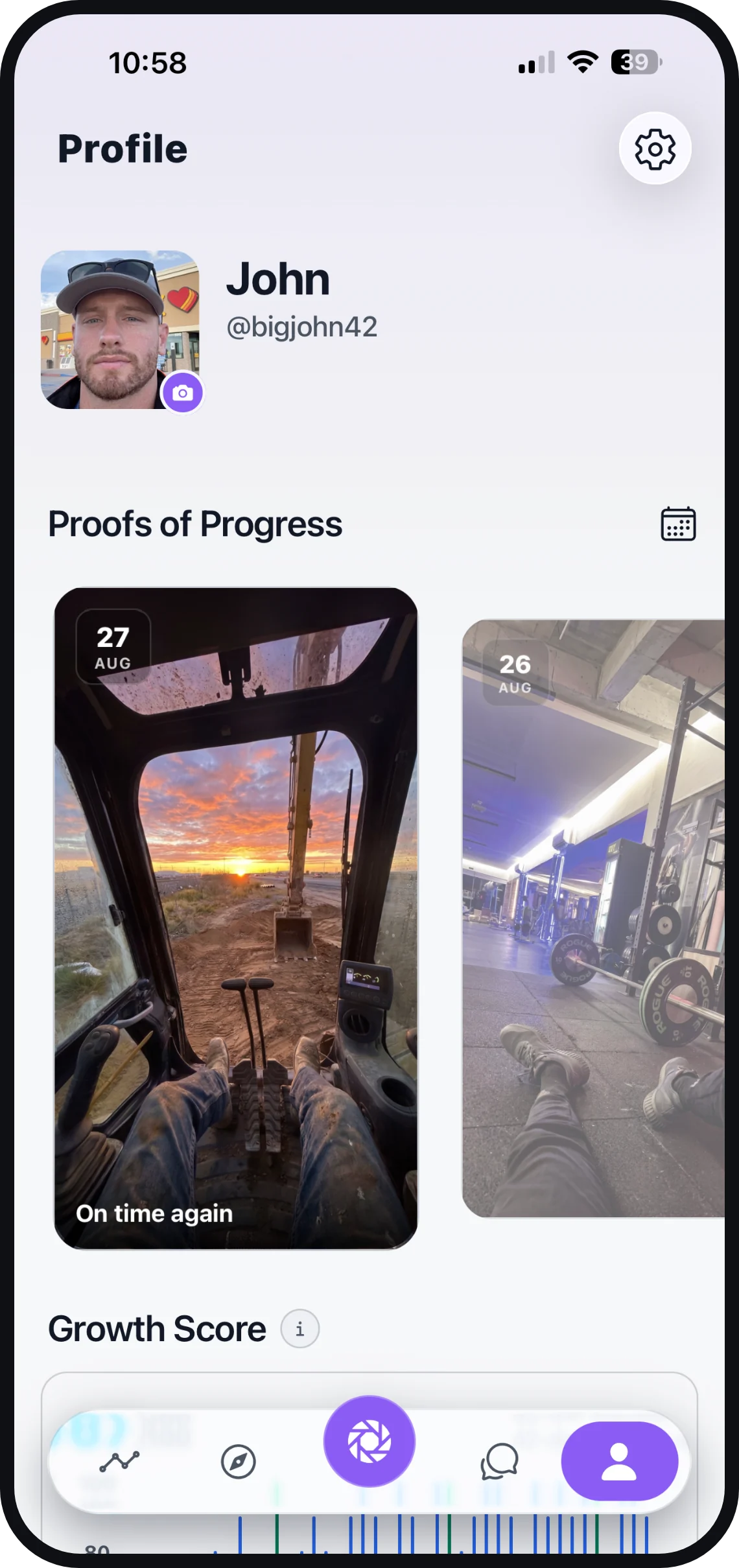
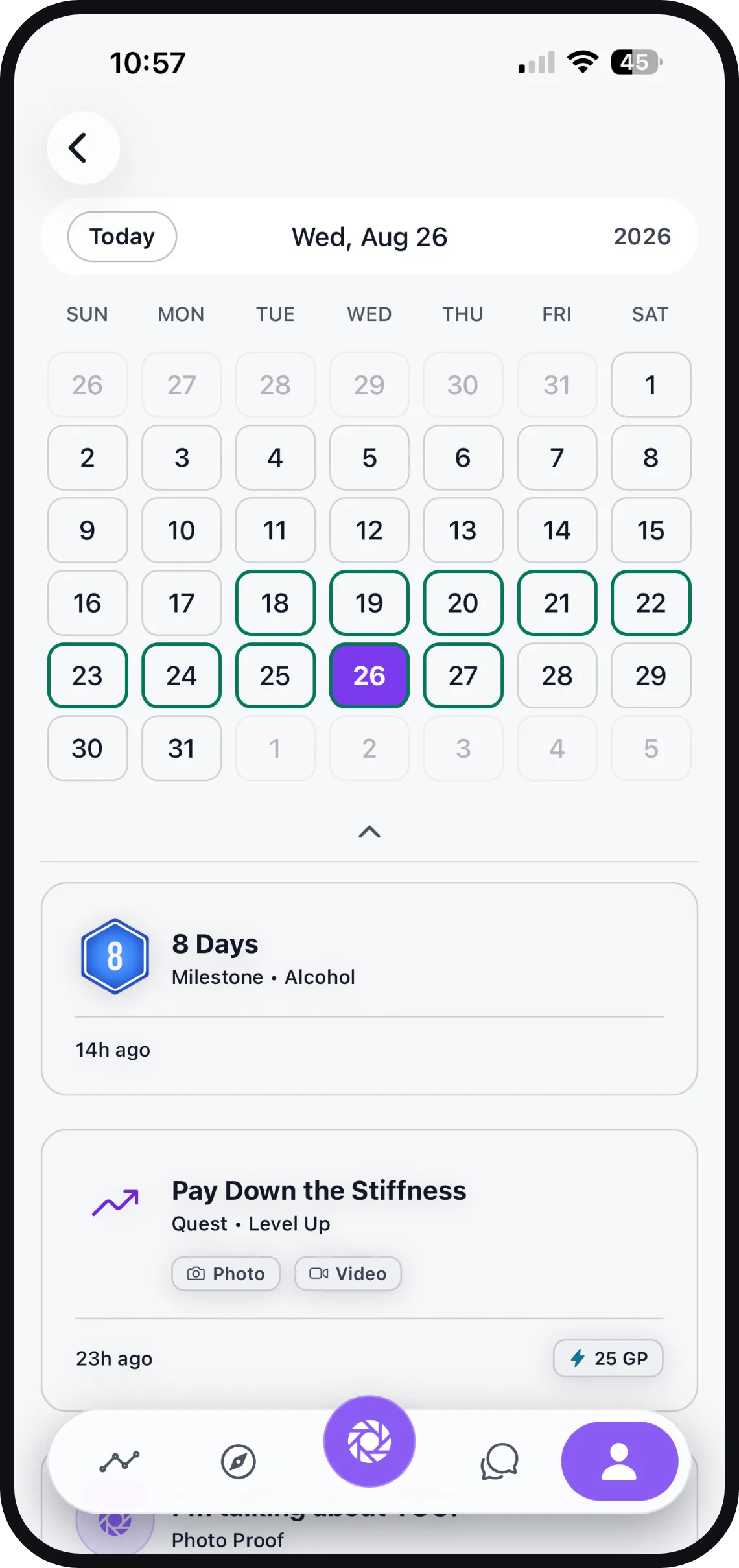
This is the frustrating part of early recovery: the most important repair is invisible. That is the Door 24 idea, progress is proof. You capture Proofs on a dated timeline, so the growth your brain is making quietly gets an external record you can actually see. Your Growth Score tracks consistency as a 42-day rolling average, turning invisible neural repair into a visible trend you can hold onto on a hard day.
Read on with how long the brain takes to recover from alcohol and what happens to your body when you stop drinking. For the identity side, see why getting sober changes you.
Sources
- Durazzo, T. C., et al., "Non-linear regional gray matter volume recovery in abstinent alcohol-dependent individuals," Addiction Biology, 2015.
Frequently asked
Does your brain heal after you stop drinking?
Research shows the brain has real capacity to recover with sustained abstinence. Gray matter volume increases over months, especially in frontal regions. Recovery is often incomplete and varies by person and drinking history, but the direction is clearly toward repair.
How fast does the brain recover from alcohol?
Fastest early. In one longitudinal MRI study, 58 percent of the measured cortical gray matter recovery occurred within the first month of abstinence, with continued gains over roughly seven months.
Why does thinking feel clearer after quitting drinking?
Because the frontal lobe, which handles focus, planning, and impulse control, is among the first regions to recover volume. As it repairs, concentration and decision-making improve, which also makes staying sober easier.