Identity & change
Why does getting sober change who you are?
Getting sober changes you because two things happen at once. Your brain physically repairs, especially the frontal regions behind focus and self-control, and your identity slowly shifts from someone who drinks to someone who does not. The physical change is measurable within months. The identity change builds through repeated proof, until the new version of you feels truer than the old one.
Sobriety is not just subtraction. Removing alcohol clears space, and what grows back is a different, steadier version of you. Here is what actually changes and why.
How does getting sober change you physically?
The brain repairs. In a longitudinal MRI study led by Timothy Durazzo, published in Addiction Biology (2015), gray matter volume rose significantly between one week and roughly seven months of abstinence, and 58% of that cortical recovery occurred in the first month, driven largely by the frontal lobe. That matters because the frontal lobe governs focus, planning, and impulse control, the exact capacities you draw on to stay sober. Recovery compounds: the more you heal, the easier the next choice becomes.
How does getting sober change who you are?
Behavior follows identity. Early on there is a painful gap, you have decided to change but do not yet feel changed, so every hard moment reads as proof you are still the old you. Closing that gap is not about thinking harder. It is about stacking evidence until the new story is undeniable.
| The old story | The new story |
|---|---|
| "I am trying to quit" | "I am someone who does not drink" |
| Runs on motivation and mood | Runs on evidence and routine |
| A slip means "back to zero" | A slip is one data point in a long record |
| Progress is invisible and easy to doubt | Progress is captured and undeniable |
Make the new identity visible
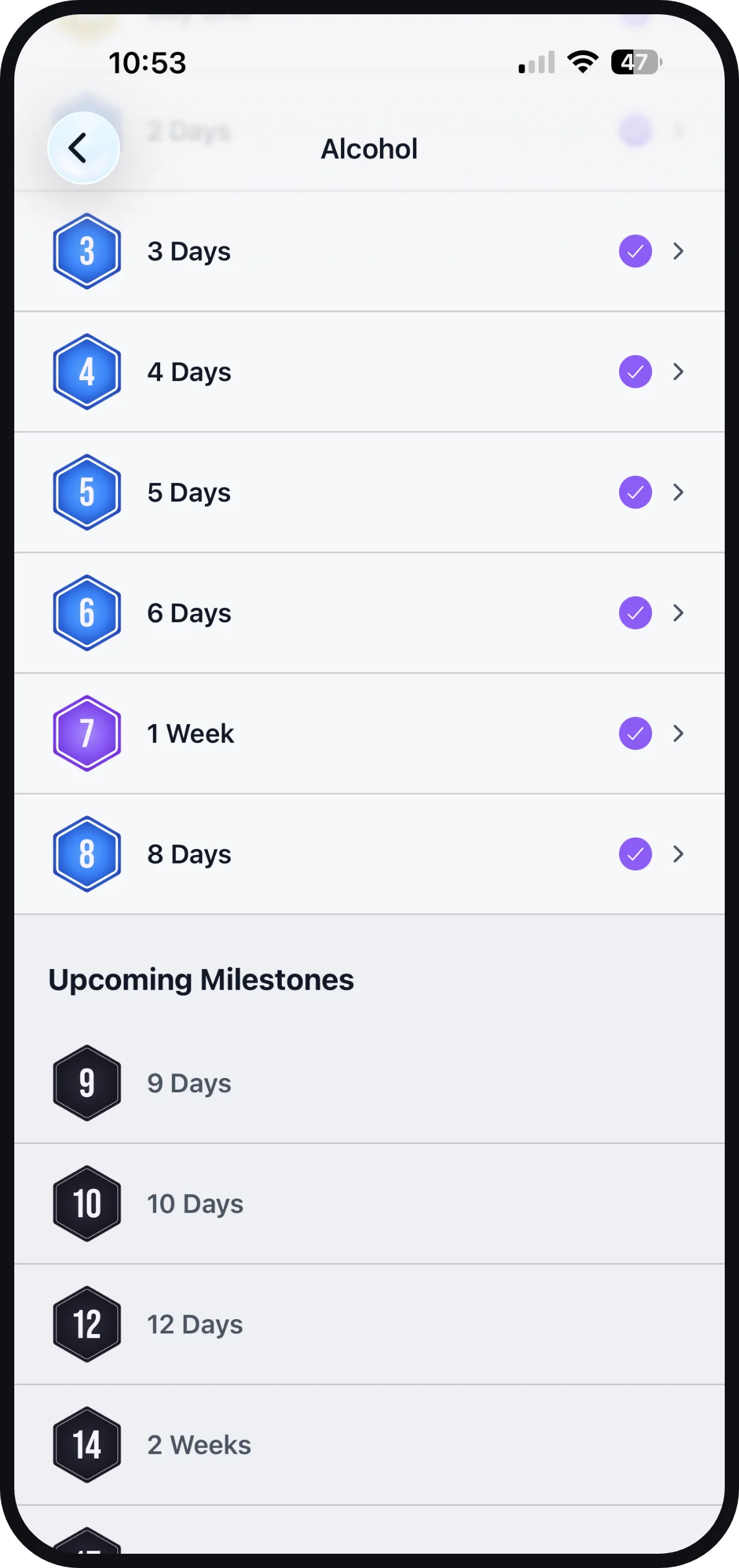
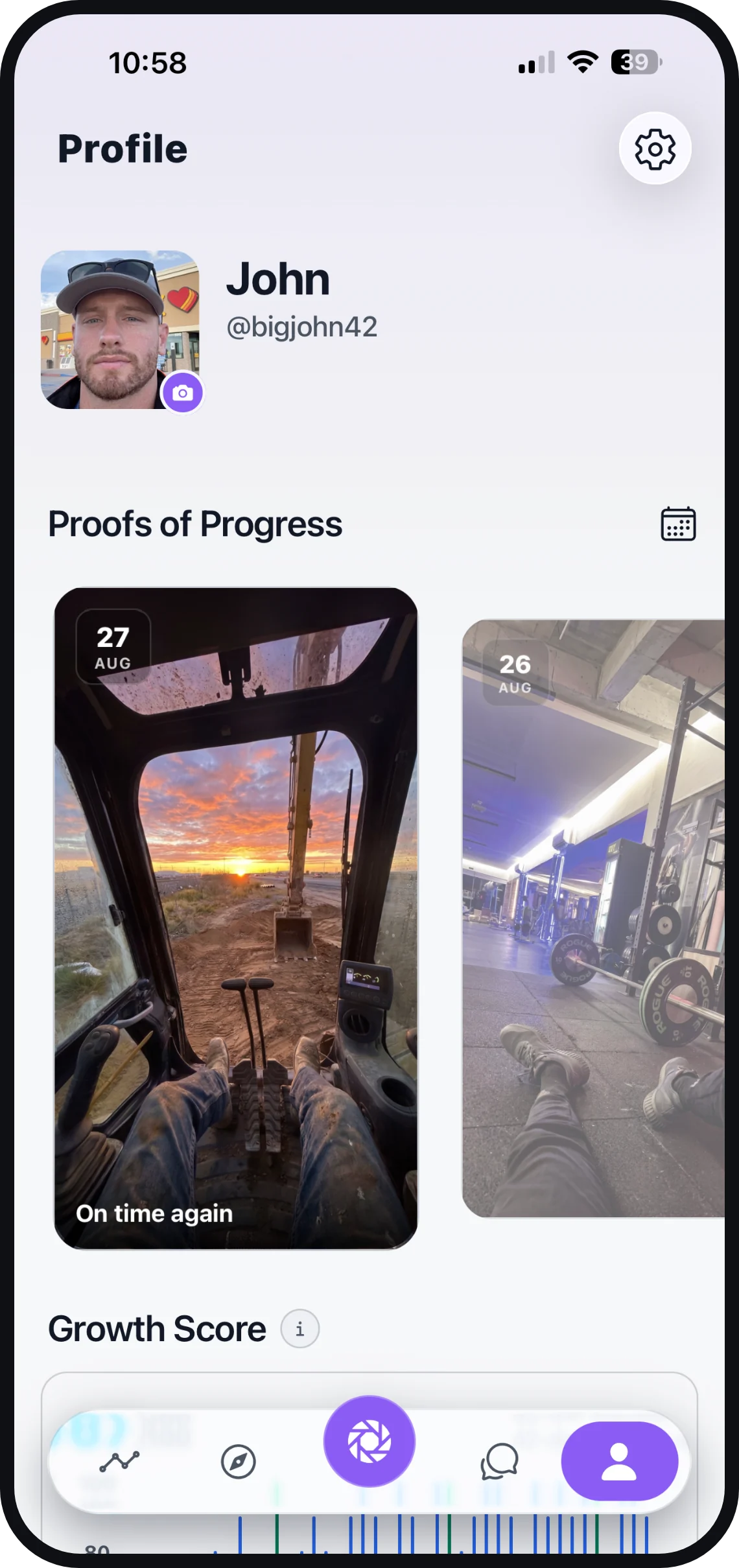
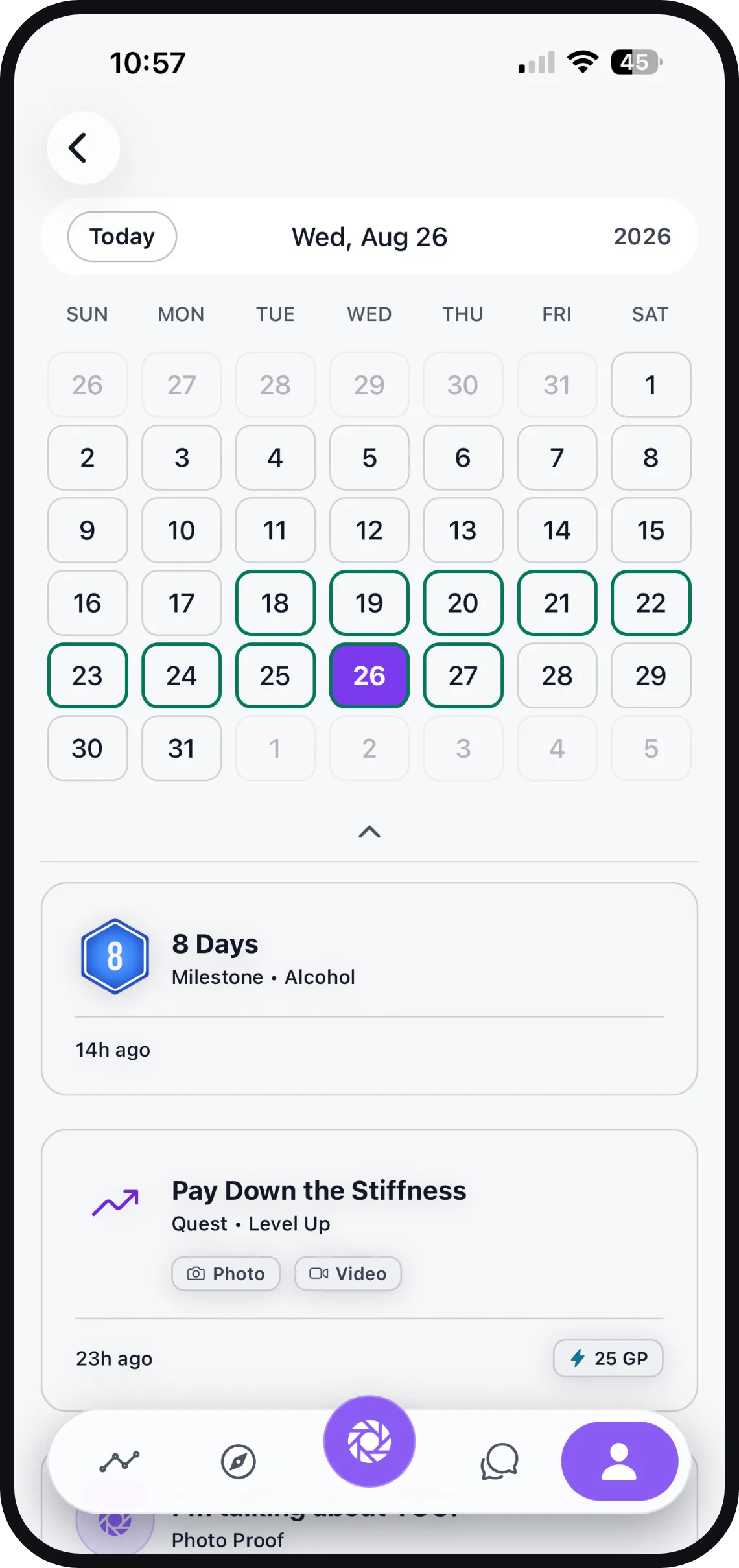
This is the core of Door 24: progress is proof. Instead of asking you to simply believe you have changed, it helps you build evidence of it. You capture Proofs on a dated timeline, and over weeks the record becomes a story where the main character is clearly not who you used to be. Your Growth Score tracks the trend as a 42-day rolling average, so it reflects who you are becoming, not a fragile streak.
Go deeper with how to rebuild your identity in recovery and who am I without alcohol. If you are early on, start with the first 30 days of sobriety.
Sources
- Durazzo, T. C., et al., "Non-linear regional gray matter volume recovery in abstinent alcohol-dependent individuals," Addiction Biology, 2015.
- Substance Abuse and Mental Health Services Administration (SAMHSA), "Recovery and Support," 2024.
Frequently asked
How long until you feel like a different person after quitting drinking?
There is no fixed date, and it is gradual. Many people feel meaningful shifts in clarity and mood within the first month or two, while the deeper sense of a new identity builds over months as evidence accumulates. Recording your progress makes the change visible sooner.
Does your personality change when you get sober?
You do not become a different person, you become more yourself. As the brain's frontal regions recover and you rebuild routines and relationships, traits that alcohol muted, like patience, presence, and follow-through, tend to return.
Why do I feel worse before I feel better?
Early sobriety asks you to feel things you may have numbed. That discomfort is part of the rebalancing, not a sign of failure. It eases as brain chemistry settles and new habits take hold.