Identity & change
Who am I without alcohol?
Feeling like you do not know who you are without alcohol is one of the most common and unsettling parts of early sobriety, and it is a sign of progress, not a problem. Alcohol was woven into how you relaxed, socialized, and coped. Sober, that space feels empty at first. You rebuild the answer by acting on your values, one small choice at a time, until a new identity fills it in.
"Who am I without alcohol" is not a sign something is wrong. It is the question that opens the door to becoming someone new. Here is how to answer it in practice.
Why does sobriety make you feel like you lost yourself?
Because alcohol was doing several jobs at once. It was your social lubricant, your off switch, your reward, your ritual. Remove it and all of those roles come open at the same time, which feels like losing yourself even though you are actually clearing space. Recovery is common ground here, national survey data compiled by SAMHSA show most adults who ever had a problem with alcohol or drugs go on to recover, and nearly all of them pass through this same disorienting stretch.
How do you rebuild who you are?
You build identity forward, through action, not by waiting to feel certain. Psychology calls part of this self-perception, the idea that we infer who we are by watching what we do. Choose one value, act on it repeatedly, and your self-image updates to match.
| Domain alcohol filled | A sober way to reclaim it |
|---|---|
| Unwinding after work | A walk, a shower, a five-minute reset ritual |
| Socializing | Plans built around people, not drinks |
| Managing stress | Naming the feeling, moving your body, reaching out |
| Reward | Something you capture and can look back on |
Let the new self show up as proof
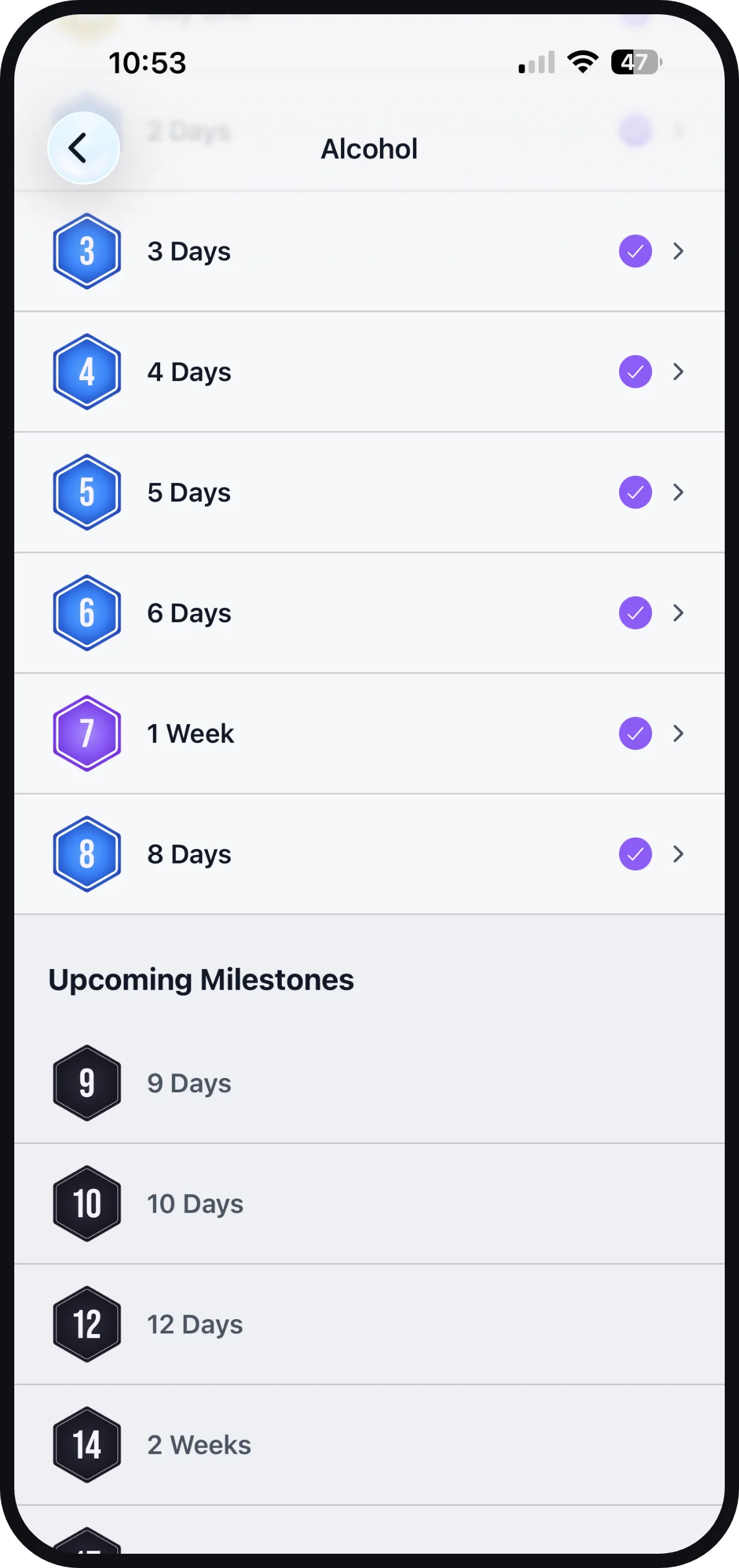
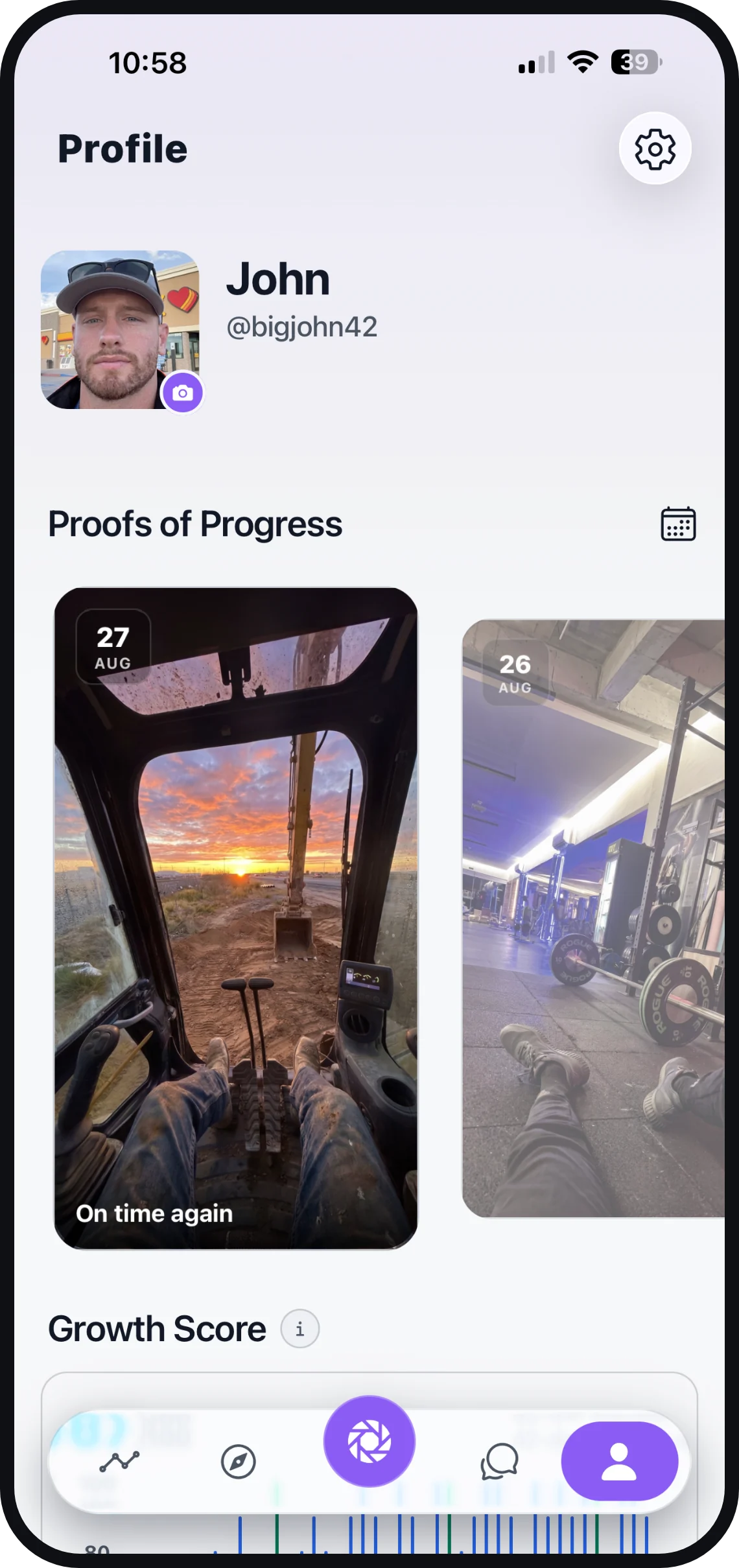
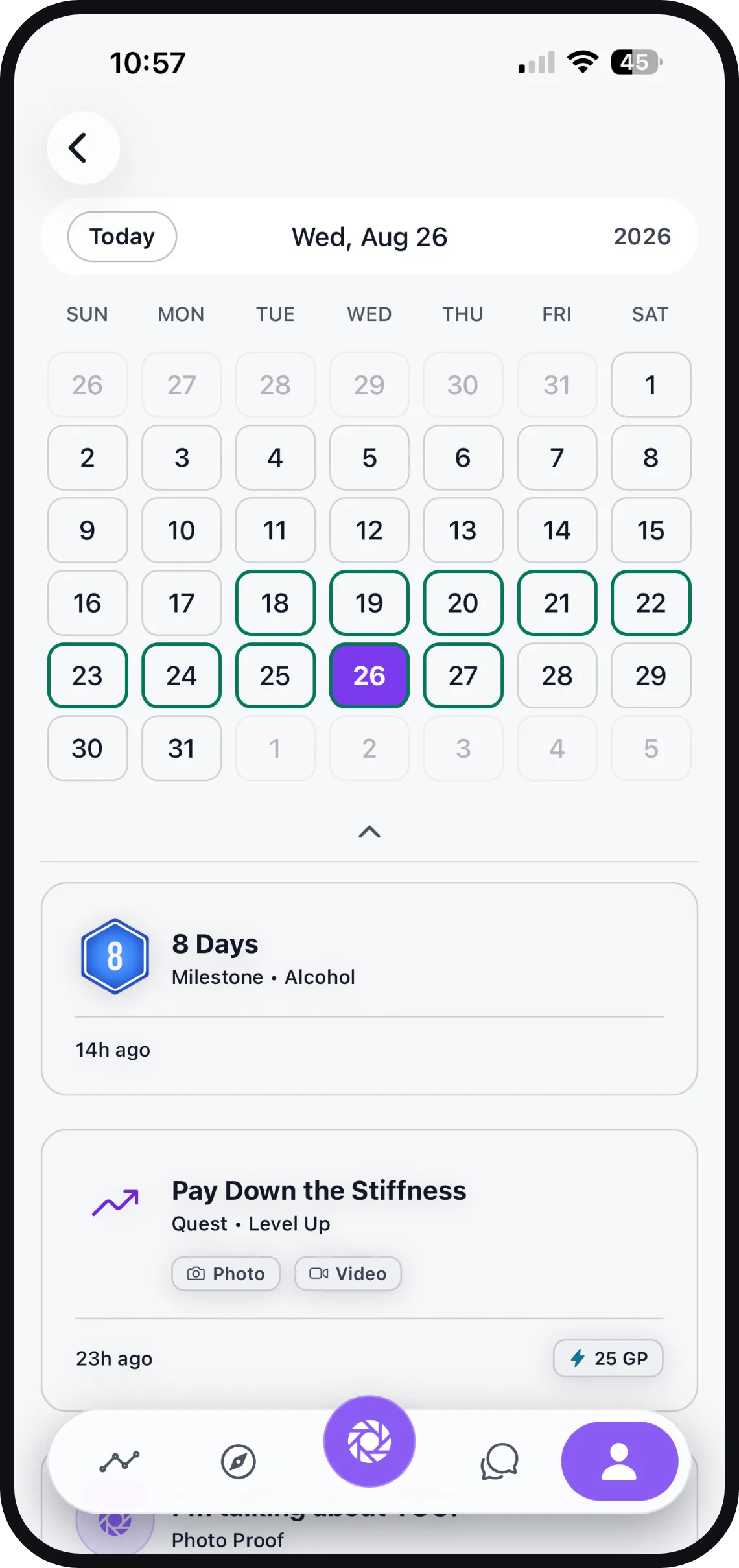
This is the Door 24 approach: progress is proof. Instead of trying to think your way into a new identity, you capture evidence of it. Each Proof, a photo, a voice note, a line of text, is a small receipt that the person you are becoming exists. Over time the timeline becomes a portrait you can scroll through, and your Growth Score reflects the trend as a 42-day rolling average. The Freedom Ledger even shows the time and money you have reclaimed to spend on that new life.
Keep building with how to rebuild your identity in recovery and why getting sober changes you. For daily structure, see what a daily sobriety routine looks like.
Sources
- Substance Abuse and Mental Health Services Administration (SAMHSA), "Recovery and Support," 2024.
- Bem, D. J., "Self-Perception Theory," Advances in Experimental Social Psychology, 1972.
Frequently asked
Is it normal to feel lost after quitting drinking?
Very. Alcohol often occupies your routines, your social life, and your stress relief, so removing it can leave a real sense of emptiness. That gap is space to rebuild, and it fills in as you form new routines and reconnect with what you value.
How do I have fun sober?
Start by separating the activity from the alcohol. Many things you enjoyed still work without a drink, and some feel better with a clear head. Experiment, keep what fits the person you are becoming, and give yourself time for new defaults to form.
How long does it take to find yourself again in recovery?
There is no set timeline, and it is built forward through action rather than figured out in advance. Most people feel a clearer sense of self over months as evidence of the new identity accumulates.