Daily practice
What does a daily sobriety routine look like?
A daily sobriety routine is a simple, repeatable structure that protects your recovery by meeting your needs before cravings can exploit them. The most reliable routines cover the basics that trigger relapse when neglected: food, rest, connection, and stress relief. You do not need a perfect system. You need a small one you will actually follow, anchored to the same times each day.
Willpower is unreliable, especially when you are tired or stressed. A routine is how you make sobriety the default instead of a decision you have to win every few hours.
Why does a daily routine protect your sobriety?
Because it covers the states that most often precede a slip. In his paper in the Yale Journal of Biology and Medicine (2015), addiction physician Steven Melemis describes relapse as a process that begins with emotional strain and poor self-care, captured in the HALT check: hungry, angry, lonely, tired. A routine is simply a system that keeps those four from stacking up. Melemis frames good self-care as a core rule of recovery, and a routine is self-care you do not have to reinvent each day.
What does a simple daily sobriety routine look like?
| Part of day | One anchor action |
|---|---|
| Morning | A grounding start: make the bed, a short walk, or a five-minute plan |
| Midday | Real food and movement, so hunger and restlessness do not build |
| Afternoon | One point of connection: a text, a call, a check-in |
| Evening | A new wind-down ritual to replace the old drinking hour |
| Before bed | Capture one Proof of the day, then protect your sleep |
Keep it small. Four or five anchors you actually repeat beat a perfect plan you abandon by Thursday.
Make the routine visible
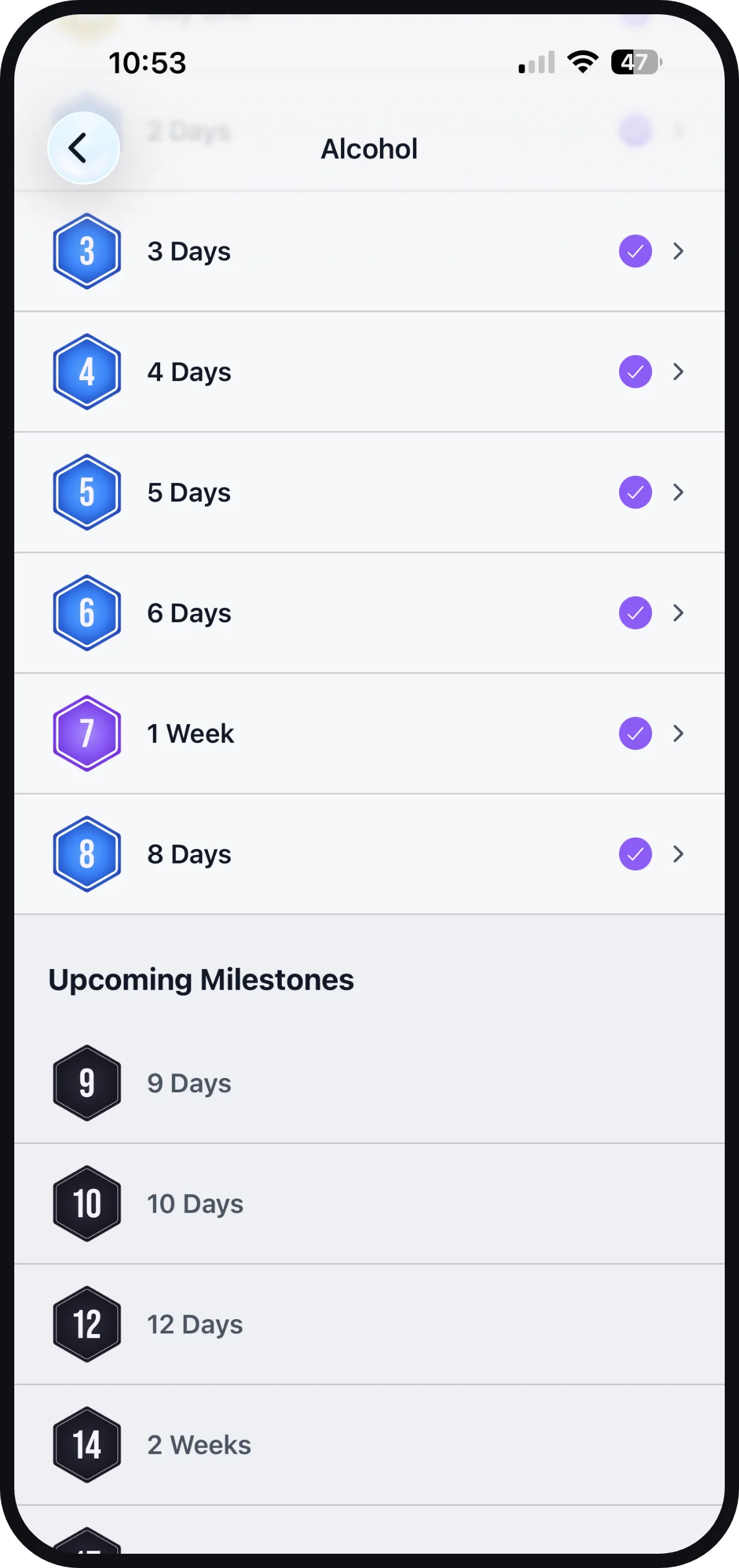
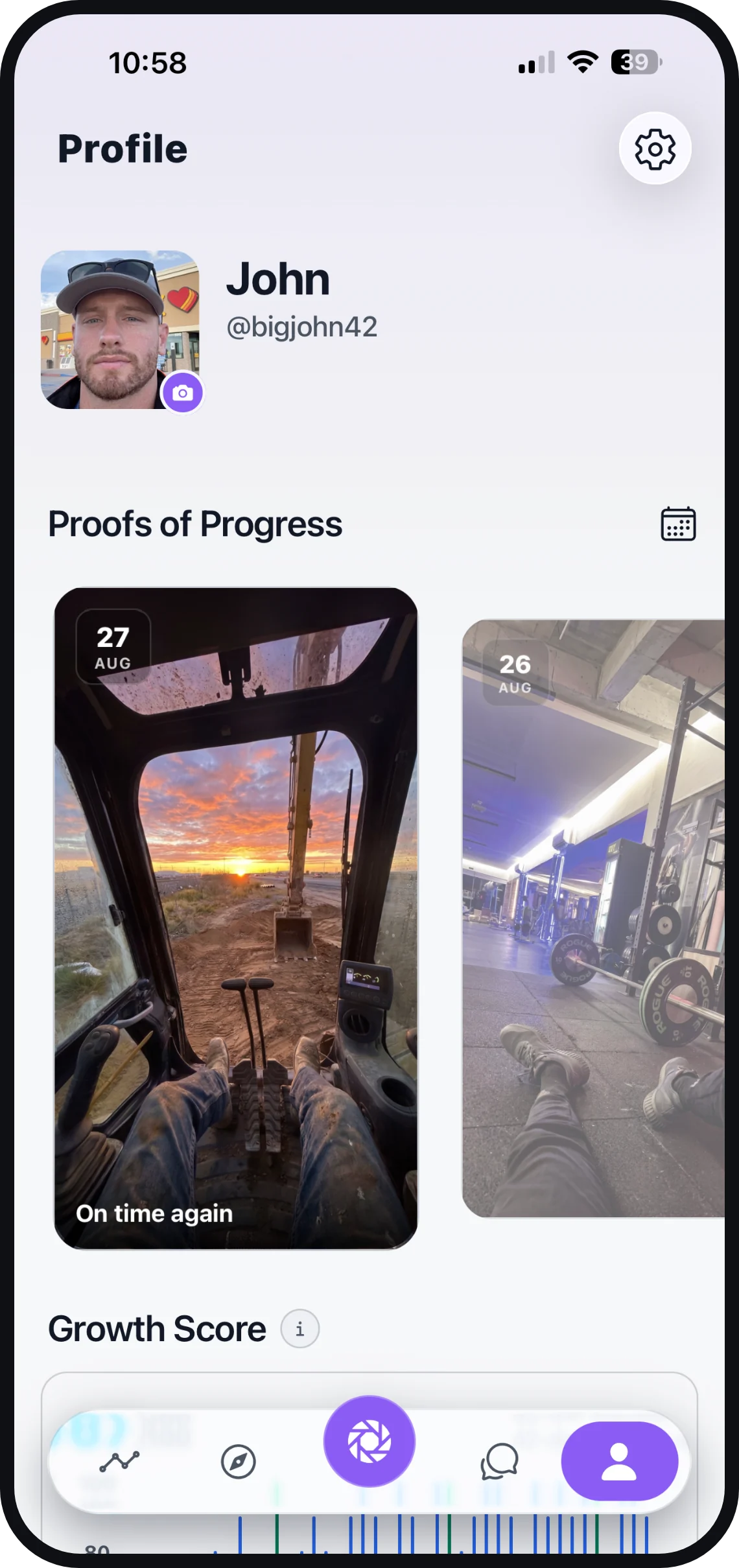
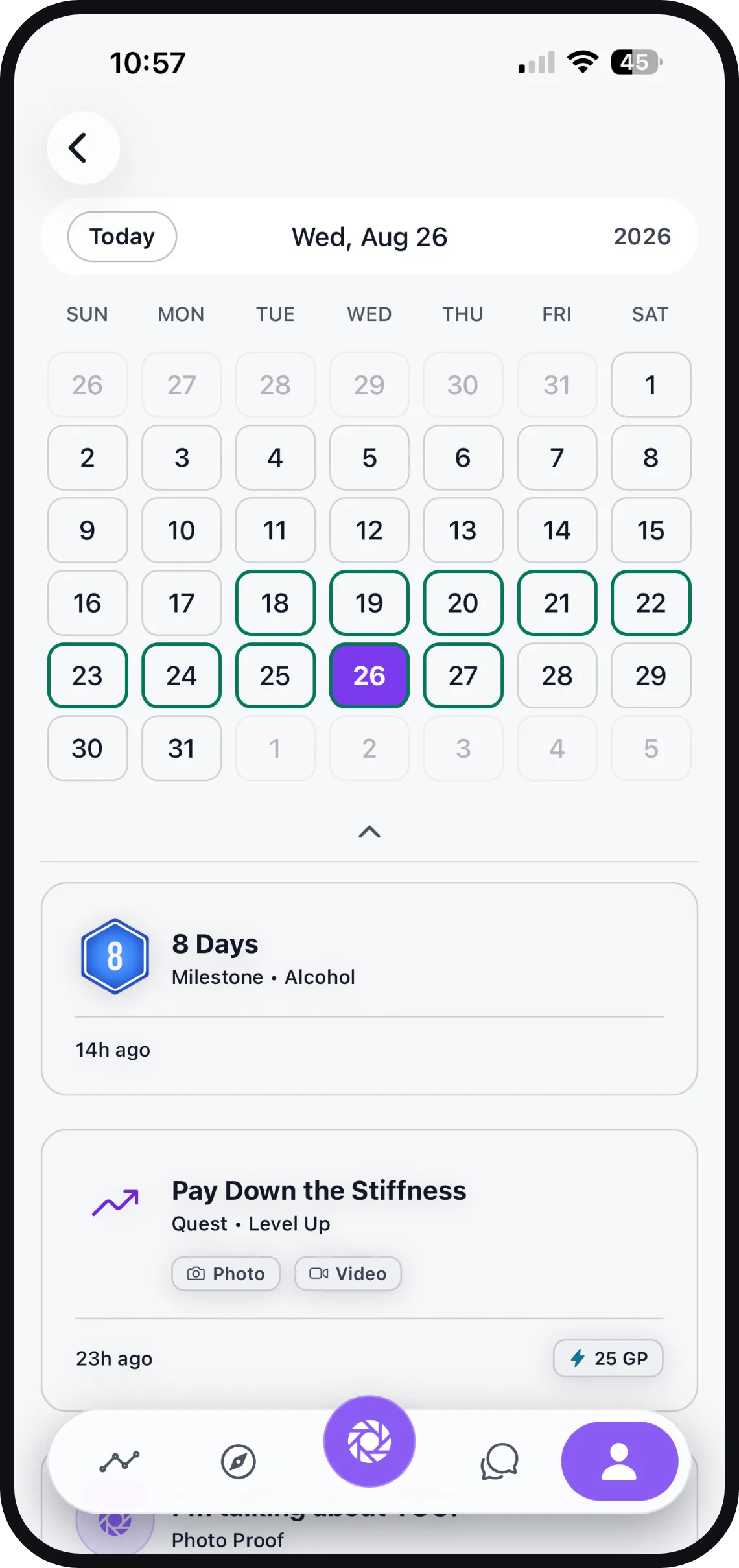
A routine you cannot see is easy to skip. This is the Door 24 idea: progress is proof. The app's Daily Quest gives you one small, identity-building action a day, and you capture a Proof to mark it, so your routine leaves a dated record. Your Growth Score tracks consistency as a 42-day rolling average, which rewards showing up steadily rather than perfectly. A missed day bends the trend, it does not erase it.
Pair a routine with the most common relapse triggers and how to get through cravings without relapsing. To connect the routine to a bigger why, see who am I without alcohol.
Sources
- Melemis, S. M., "Relapse Prevention and the Five Rules of Recovery," Yale Journal of Biology and Medicine, 2015.
Frequently asked
Why is routine important in recovery?
Because most relapses begin with unmet needs and unstructured time. A routine quietly covers the basics, food, rest, connection, and stress relief, so cravings have less to work with. Structure turns staying sober from a series of decisions into a set of habits.
What should I do every day in early recovery?
Keep it simple: one grounding morning action, one form of movement, one point of human connection, and one evening wind-down that replaces the old drinking ritual. Consistency matters more than intensity.
How do I stay sober when I am bored?
Boredom and empty time are common triggers. Plan the risky windows in advance, keep a short list of go-to actions, and give the old drinking hour a new job. Capturing a small daily record also gives idle time a purpose.