Cravings & setbacks
What are the most common relapse triggers?
The most common relapse triggers are stress, negative emotions, and the four states in the HALT check: hungry, angry, lonely, and tired. People, places, and routines tied to old drinking add cue-based triggers on top. The good news is that triggers are predictable. When you know yours in advance, you can plan for each one instead of being ambushed.
Cravings feel random, but relapse triggers rarely are. Most fall into a short list of predictable states and cues, which means you can prepare for them.
What triggers a relapse?
Relapse tends to begin with internal states, not the drink itself. The widely used HALT check, covered in Steven Melemis's paper in the Yale Journal of Biology and Medicine (2015), flags four everyday conditions that quietly erode resistance: Hungry, Angry, Lonely, and Tired. Melemis frames these as shorthand for poor self-care, and notes that a central task of early recovery is learning what self-care actually means. On top of these come cue-based triggers: the bar you passed, the 6pm ritual, the friend you only saw over drinks.
| Trigger type | Examples | The move |
|---|---|---|
| HALT states | Hungry, angry, lonely, tired | Meet the real need: eat, rest, connect, cool down |
| Stress | Work, money, conflict | Name it, move your body, reach out |
| Cues | People, places, times of day | Change the route, change the plan ahead of time |
| High moments | Celebration, overconfidence | Plan the win in advance, do not freelance it |
How do you get ahead of your triggers?
- Run the HALT check the moment a craving hits. Fix the underlying state first.
- Map your top five triggers now, on a calm day, not in the moment.
- Write one plan per trigger. "When X happens, I will do Y."
- Rehearse the two riskiest moments of your week before they arrive.
Turn near-misses into proof
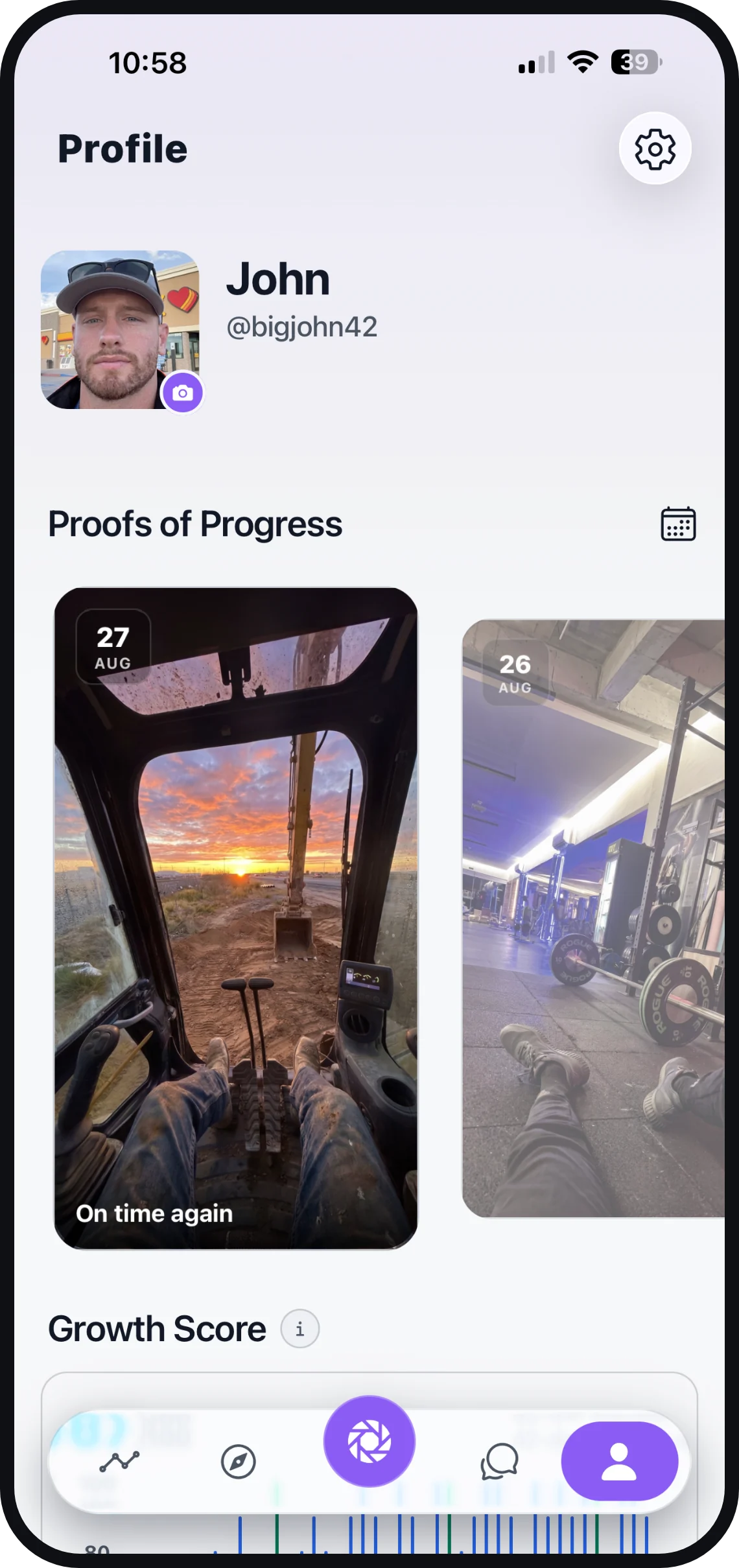
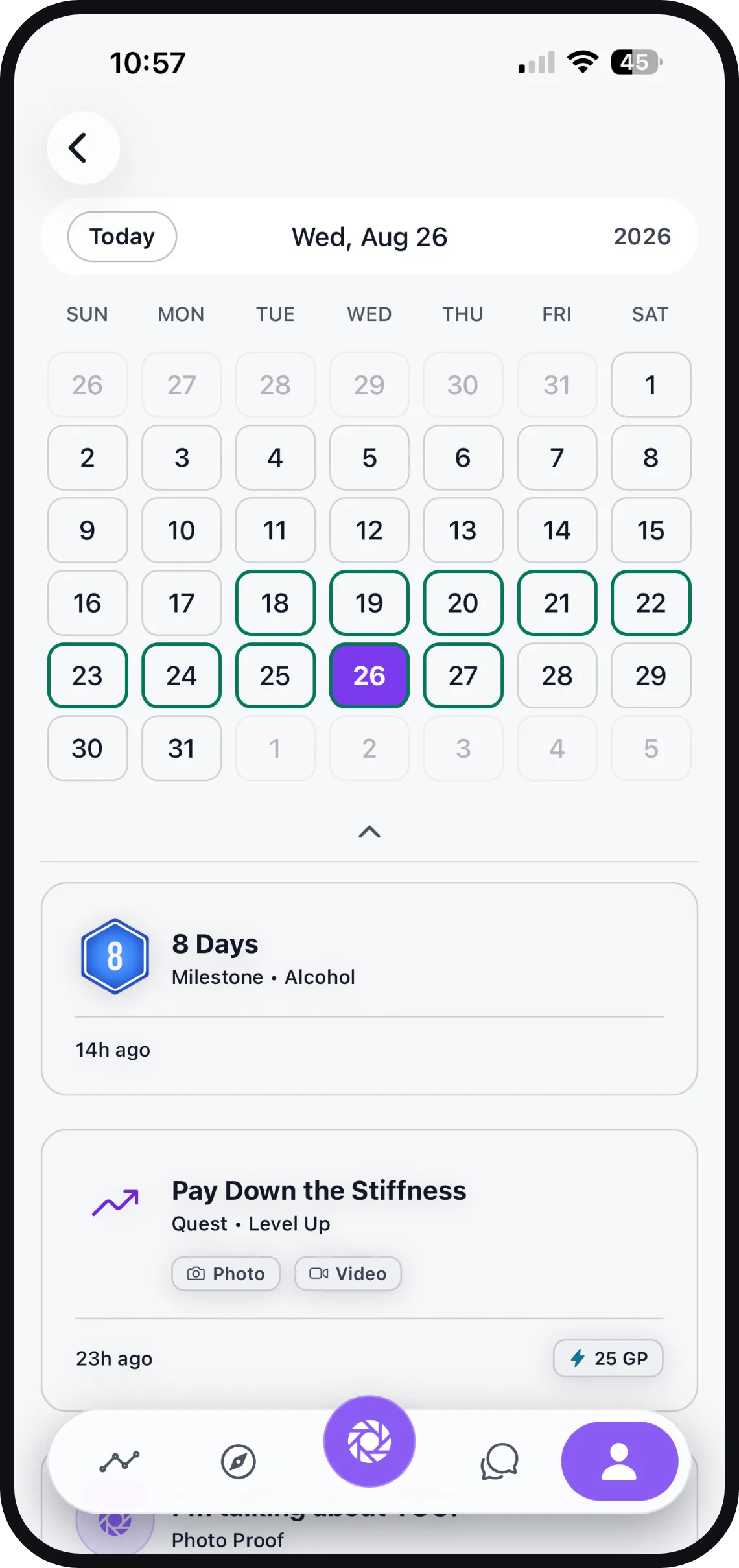
Every time you meet a trigger and stay sober, that is not a non-event. It is evidence. This is the Door 24 idea: progress is proof. When you capture a Proof after a hard moment, you are building a record of a person who handles triggers differently now. Your Growth Score tracks the trend as a 42-day rolling average, so a rough day shifts the line without erasing the pattern you are building. The app's Side Quests are designed for exactly these craving moments.
Pair this with how to get through cravings without relapsing and what to do after a relapse. A steady daily sobriety routine removes many triggers before they start.
Sources
- Melemis, S. M., "Relapse Prevention and the Five Rules of Recovery," Yale Journal of Biology and Medicine, 2015.
Frequently asked
What is the HALT method in recovery?
HALT stands for Hungry, Angry, Lonely, and Tired. It is a quick self-check: when a craving hits, run through the four states, because each one lowers your resistance. Often the real need is food, rest, or connection, not a drink.
What are the biggest triggers for relapse?
Stress and negative emotions are among the most reported triggers, along with the HALT states and environmental cues like certain people, places, or times of day. Celebration and overconfidence are triggers too, because they lower your guard.
How do I deal with triggers?
Identify your specific triggers in advance, then write a plan for each one before it arrives. Change your environment, meet the underlying need, and reach out. Spotting the early emotional signs is more effective than fighting a full-blown urge.