Getting sober
What happens to your body when you stop drinking?
When you stop drinking, your body moves through a rough first week, a rebalancing of brain chemistry over two to four weeks, and steady physical repair over the following months. Early withdrawal can start within 6 to 12 hours. Sleep and energy often improve within a week. The liver and brain keep healing for months. For heavy drinkers, the first days can be medically risky, so get guidance first.
Knowing what happens to your body when you stop drinking makes the hard early days easier to read. A rough afternoon is not a setback. It is your system recalibrating on a predictable timeline.
What happens when you stop drinking, week by week
Recovery is not a straight line, but it does follow a rough shape. This timeline is a general pattern, and your experience may differ.
| Time since last drink | What tends to happen |
|---|---|
| 6 to 48 hours | Withdrawal can begin: anxiety, shakiness, sweating, poor sleep. Highest risk window for heavy drinkers. |
| Days 3 to 7 | The worst physical symptoms usually ease. Sleep and hydration start to improve. |
| Weeks 2 to 4 | Brain chemistry rebalances. Mood swings settle. Mental clarity returns. |
| Month 1 | Better sleep, more energy, often clearer skin and some weight change. |
| Months 2 to 3 | NIAAA describes reaching a few months alcohol free as early remission, a meaningful milestone. |
Why the first weeks feel like a chemistry experiment
There is a real mechanism behind the early turbulence. Alcohol disrupts the balance between the brain's calming chemical, GABA, and its excitatory chemical, glutamate. With heavy drinking, the brain compensates by ramping up excitatory activity. When the alcohol is removed, that compensation is briefly unopposed, which produces the anxiety and restlessness of early withdrawal. According to NIAAA, this rebalancing is largely complete for most people within a few weeks. Your brain is not broken. It is resetting.
The repair keeps going. In a longitudinal MRI study led by Timothy Durazzo and colleagues, published in Addiction Biology (2015), gray matter volume increased significantly across the frontal, parietal, and occipital regions between one week and about seven months of abstinence, with 58% of the cortical recovery happening in the first month alone.
Make the invisible progress visible
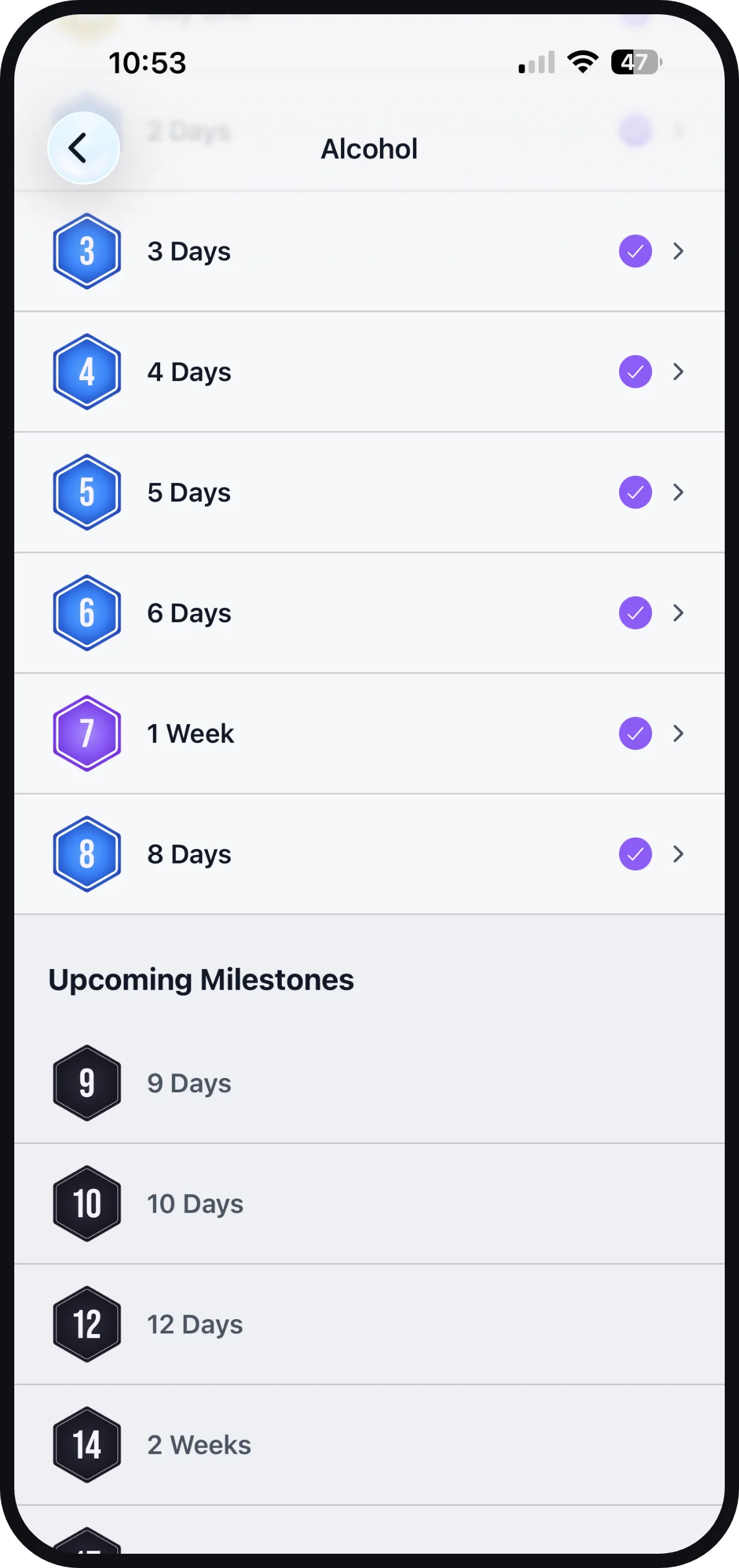
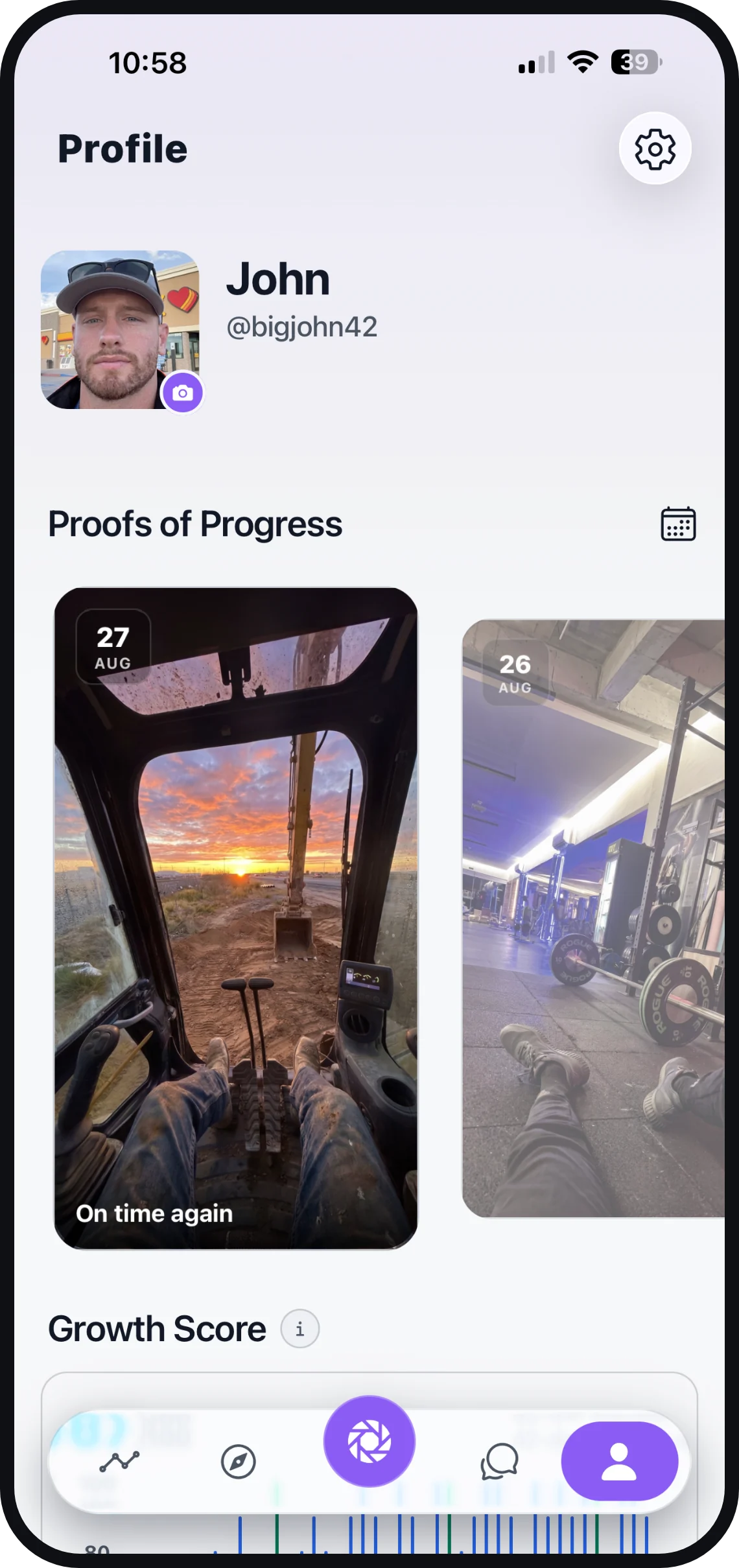
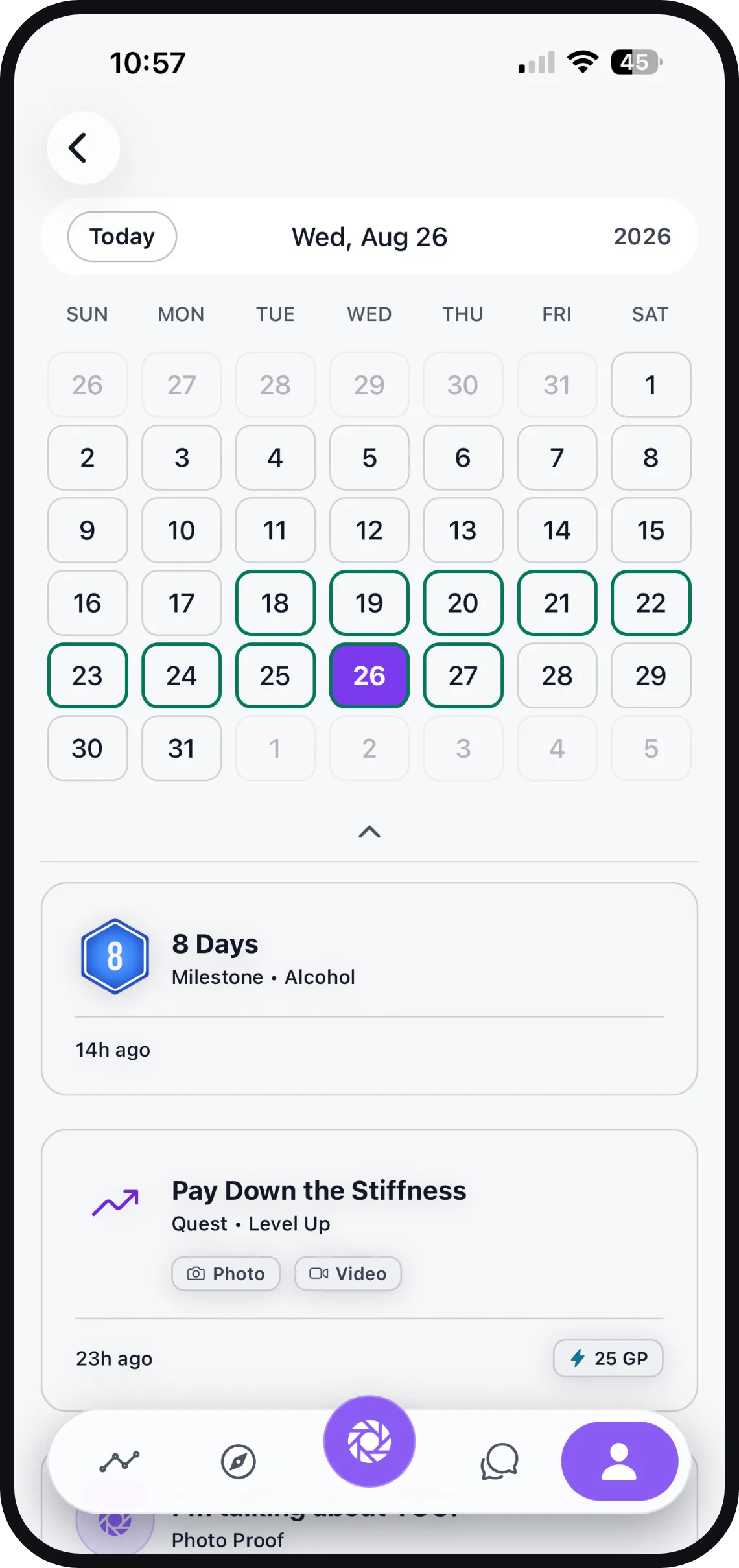
Most of this healing is happening where you cannot see it, which is exactly why early recovery feels thankless. This is the Door 24 idea: progress is proof. You capture Proofs, short photos, voice notes, or journal entries, and they land on a dated timeline. On day 20, when the mirror has not caught up with the chemistry, you can scroll back and see the trend. Your Growth Score reflects consistency as a 42-day rolling average, so one hard day bends the line without erasing the month.
Keep going with the first 30 days of sobriety and how to stop drinking on your own. To go deeper on the brain, read what happens to your brain when you get sober.
Sources
- National Institute on Alcohol Abuse and Alcoholism (NIAAA), "Alcohol Use Disorder," 2024.
- Durazzo, T. C., et al., "Non-linear regional gray matter volume recovery in abstinent alcohol-dependent individuals," Addiction Biology, 2015.
Frequently asked
How long after quitting drinking do you feel better?
Many people notice better sleep and steadier energy within the first week, though the first few days can feel worse before they feel better. Mental clarity and mood tend to improve over the first month as brain chemistry rebalances.
Does your liver heal when you stop drinking?
Often, yes. Early fatty changes in the liver can begin to reverse within weeks of stopping, and liver function commonly continues improving for up to six months, depending on your drinking history. Existing damage should be assessed by a doctor.
Is it dangerous to stop drinking suddenly?
It can be for heavy daily drinkers. Sudden withdrawal can cause shaking, sweating, confusion, or seizures within the first day or two. If that could be you, talk to a doctor before stopping, because withdrawal can be managed safely with support.