Getting sober
How do I stop drinking on my own?
Yes, you can stop drinking on your own, and most people who change their drinking do it without a formal program. The key is doing it safely and building structure. If you drink heavily every day, talk to a doctor first, because sudden withdrawal can be dangerous. From there, remove access, plan your hardest moments, get one person in your corner, and capture proof of every sober day.
Stopping drinking on your own is not about willpower alone. It is about removing friction, planning for hard moments, and making your progress visible so a bad night has something to push against.
Can you stop drinking on your own?
Yes. Alcohol use disorder is common and recovery is the norm, not the exception. An estimated 27.9 million people ages 12 and older had alcohol use disorder in the past year, according to NIAAA, yet national survey data compiled by SAMHSA show that most adults who ever had a problem with alcohol or drugs, roughly 3 in 4, consider themselves recovered or in recovery. You are attempting something millions of people have done.
Is it safe to quit drinking cold turkey?
For many people, yes. For heavy daily drinkers, not always. When someone who drinks heavily stops suddenly, the nervous system can rebound hard, and symptoms like shaking, sweating, confusion, a racing heart, or seizures can appear within the first day or two. That is a medical situation, not a test of toughness. If that describes you, talk to a doctor about a safe plan first. Recovery is not a solo endurance trial, and getting help early is a strength.
| Often safe to self-manage | Get medical guidance first |
|---|---|
| Light or moderate drinking | Heavy daily drinking |
| No past withdrawal symptoms | Past shaking, sweating, or seizures |
| No major health conditions | Existing health conditions or medications |
| Strong support around you | Drinking to avoid feeling sick |
How to stop drinking on your own, step by step
- Set a start date and a clear reason. Write down why, in your own words, and keep it visible.
- Clear the house. Remove alcohol and anything that cues it. Make the easy path the sober one.
- Plan your two hardest moments each week before they arrive, not during.
- Tell one person you trust. Accountability turns a private intention into a shared one.
- Replace the ritual. The 6pm drink was a signal to unwind. Give that moment a new job.
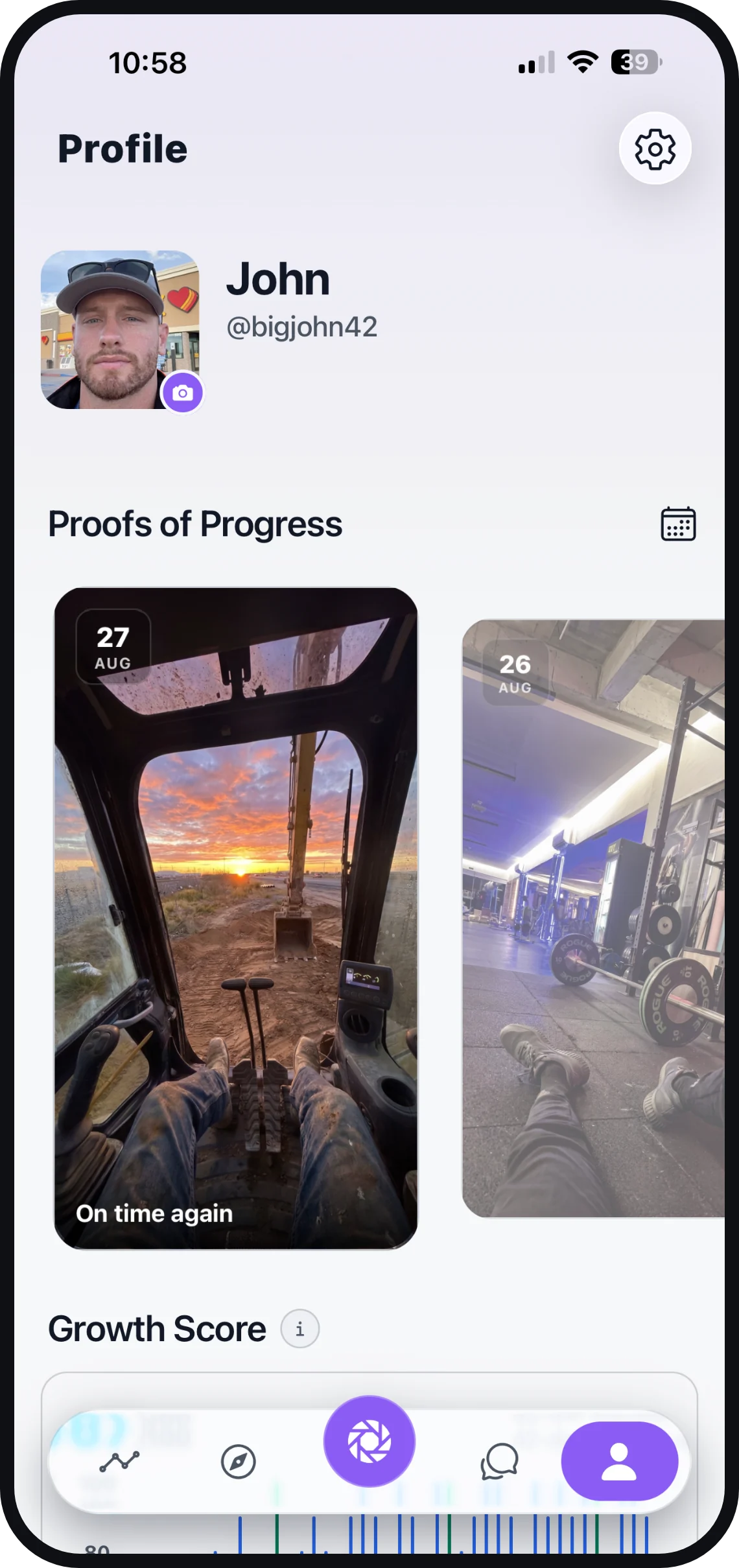
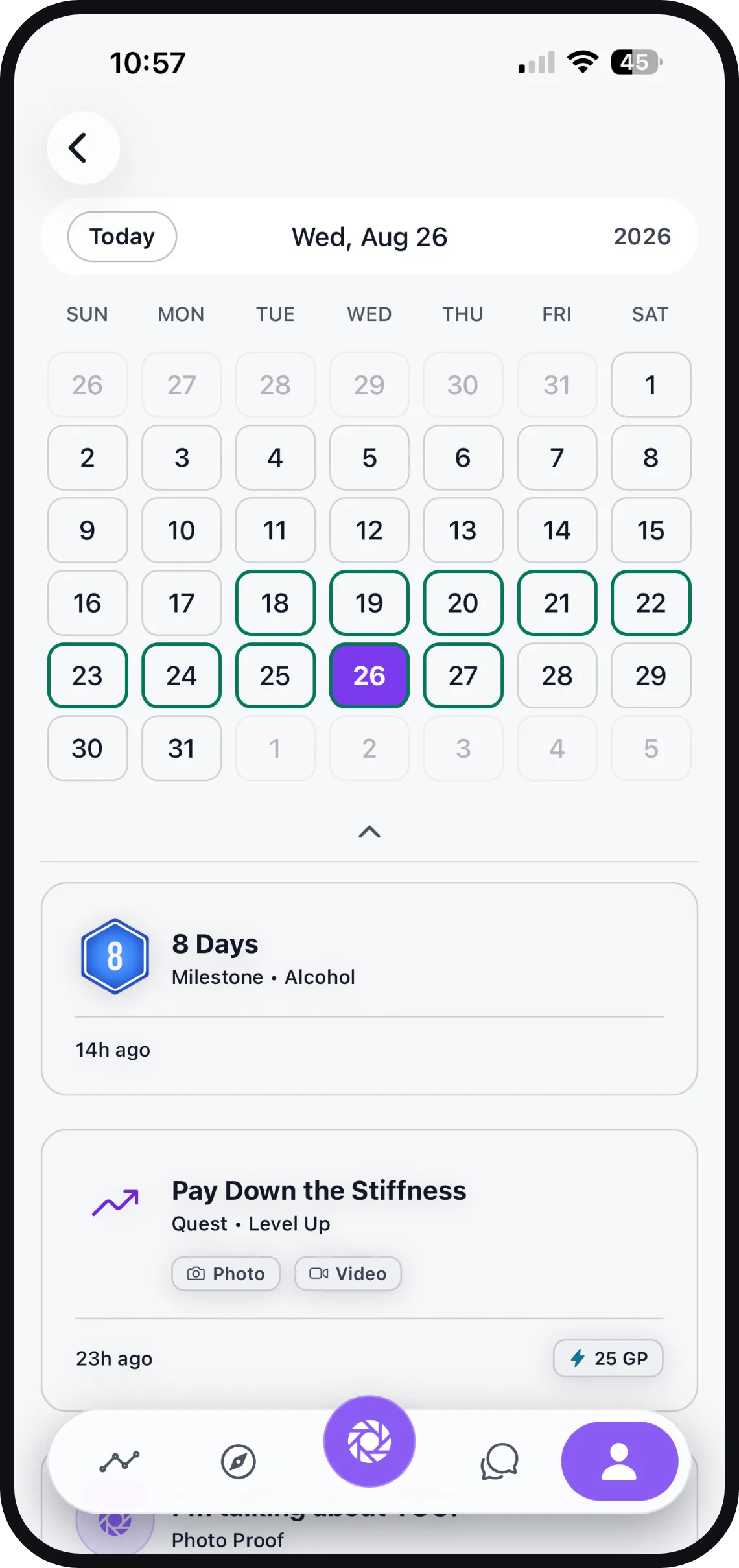
- Capture one Proof a day. A photo, a voice note, or a line of text, timestamped, so the days become evidence.
Make your progress impossible to ignore
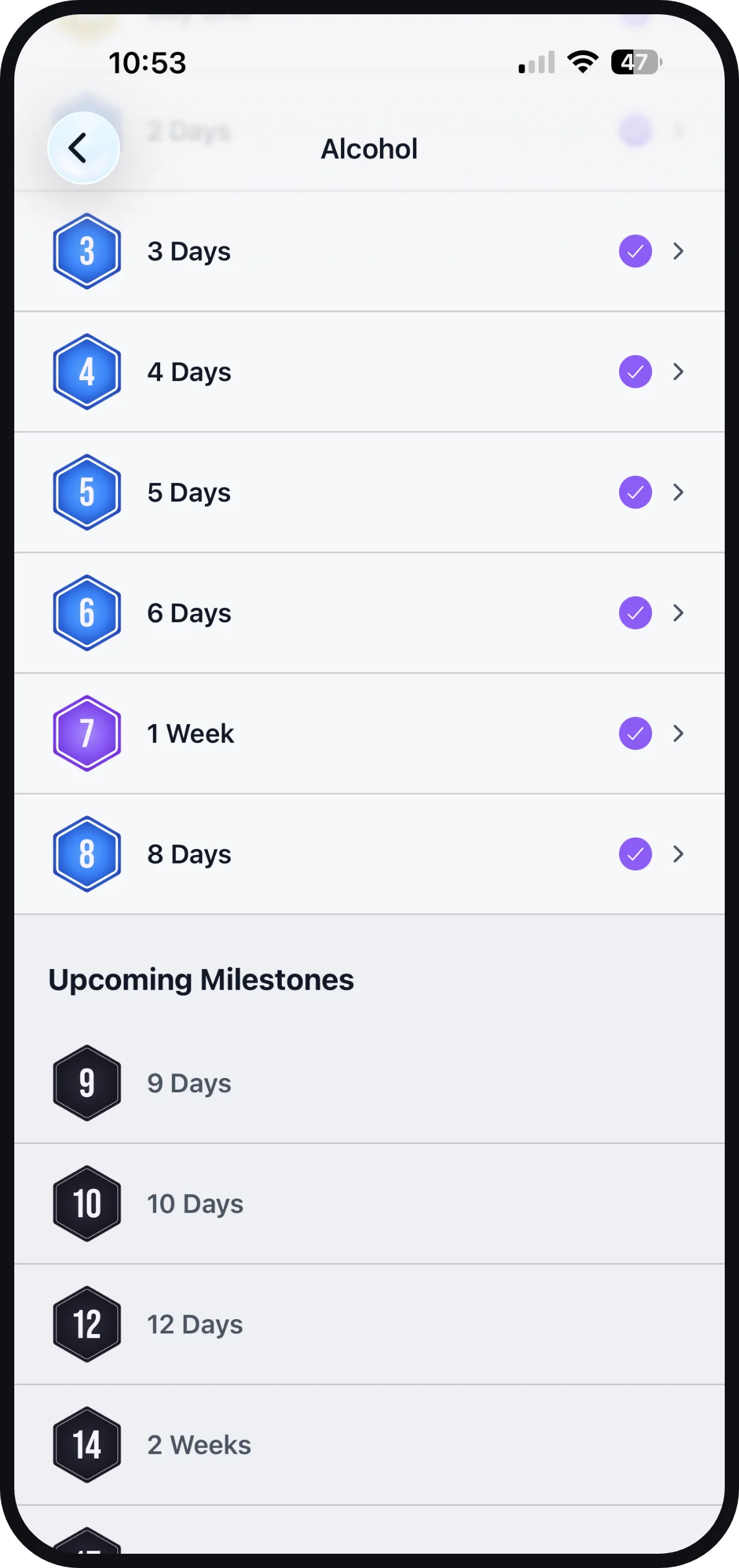
Motivation fades. Evidence does not. This is the idea behind Door 24: progress is proof. Instead of counting days on a streak that resets the moment you slip, you capture Proofs that stack on a dated timeline, and your Growth Score tracks the trend as a 42-day rolling average. On a hard night, you are not arguing with a craving using willpower alone. You are looking at three weeks of proof that the person you are becoming is real. The Freedom Ledger shows the money and time you have reclaimed, too.
If you are just starting, read what the first 30 days of sobriety are like and how to get through cravings without relapsing. To see what your body is doing, see what happens when you stop drinking. For the product side, see how Door 24 handles quitting drinking.
Sources
- National Institute on Alcohol Abuse and Alcoholism (NIAAA), "Alcohol Use Disorder," 2024.
- Substance Abuse and Mental Health Services Administration (SAMHSA), "Recovery and Support," 2024.
Frequently asked
Can I stop drinking without rehab?
Many people reduce or stop drinking without formal treatment. What matters is a real plan and support, not the setting. If you drink heavily or have withdrawal symptoms like shaking or sweating, get medical guidance first, because that can be dangerous to manage alone.
How long does it take to stop drinking?
Stopping is a decision you make once and then protect daily. The cravings that follow tend to be strongest in the first week or two and ease with time. Think in terms of getting through the next wave, then stacking sober days into evidence you can see.
What if I slip?
A slip is one data point, not a reset to zero. Look at what led up to it, plan for that trigger, and take the next sober step. Progress is measured by the trend, not by a perfect streak.