Identity & change
Why isn't abstinence enough to stay sober?
Abstinence alone is not enough to stay sober because quitting removes the substance but leaves the person unchanged. Research shows 40 to 60 percent of people relapse, often because the version of them that reached for the drink still exists. Lasting recovery adds an identity shift on top of abstinence. You become someone who no longer needs the habit, and you collect proof of it.
Getting sober starts with stopping. But stopping is where a lot of people expect the work to end, and that expectation is why so many return to the thing they quit. Abstinence removes the substance. It does not, by itself, remove the reasons the substance was there.
What does abstinence actually cover?
Abstinence covers one thing: not using. That matters, and it is the foundation of any recovery. But the National Institute on Drug Abuse (NIDA) is direct that removal alone is fragile. In its overview of treatment and recovery, NIDA notes that detoxification "alone without subsequent treatment generally leads to resumption of drug use." Clearing a substance from your body is not the same as changing the life that made room for it.
Think of abstinence as clearing the field. Necessary, but empty. What grows there next is the actual question of recovery.
Why do so many people relapse after quitting?
People relapse because the person who quit is, at first, the same person who used. NIDA reports that 40 to 60 percent of people with a substance use disorder relapse, a rate similar to chronic conditions like hypertension and asthma (JAMA, 2000). The triggers, the stress responses, the social circles, and the self-image are all still in place on day one. Abstinence pauses the behavior. It does not update the operating system underneath.
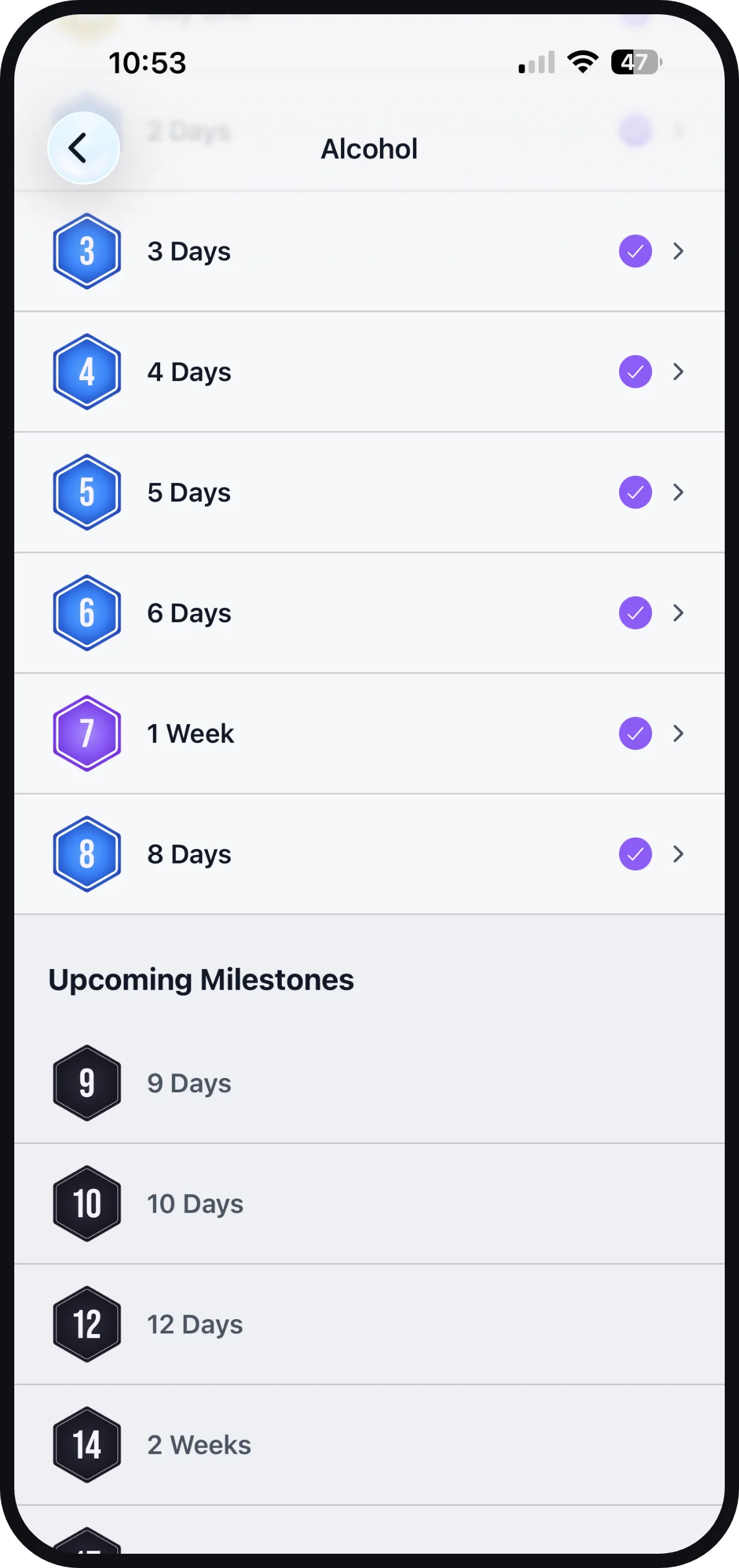
This is the trap of counting alone. A day counter measures how long you have avoided something. It says nothing about whether you have become someone who no longer wants it. That gap, between not doing and not needing, is where relapse lives.
"Stopping drug use is just one part of a long and complex recovery process." NIDA, Drugs, Brains, and Behavior: The Science of Addiction
What does "identity over abstinence" mean?
It means recovery is measured by who you are becoming, not only by what you are avoiding. This is the Door 24 thesis: abstinence is not enough. You do not just quit a habit. You become someone who no longer needs it.
Research agrees that identity is central. In the Social Identity Model of Recovery, addiction researcher David Best and colleagues describe lasting recovery as "a personal journey of socially negotiated identity transition" (Addiction Research & Theory, 2016). The old "person who drinks" identity is gradually replaced by a new one, supported by new activities and relationships. Even the official definition has widened. The NIAAA research definition of recovery (American Journal of Psychiatry, 2022) pairs remission from alcohol use disorder with cessation of heavy drinking and improved functioning and well-being, not abstinence in isolation.
Abstinence alone vs. abstinence plus identity
The difference is not subtle once you see it side by side.
| Abstinence alone | Abstinence plus identity |
|---|---|
| Measures what you avoid | Measures who you become |
| A day counter that resets to zero | A dated record of evidence that stacks |
| Relies on willpower and mood | Relies on a changed self-image and routine |
| A slip feels like starting over | A slip is one data point in a long trend |
| "I am trying not to drink" | "I am someone who does not need it" |
Both columns require you to not drink. Only the right column tends to hold, because it gives the sober days somewhere to go.
How do you build the identity that keeps you sober?
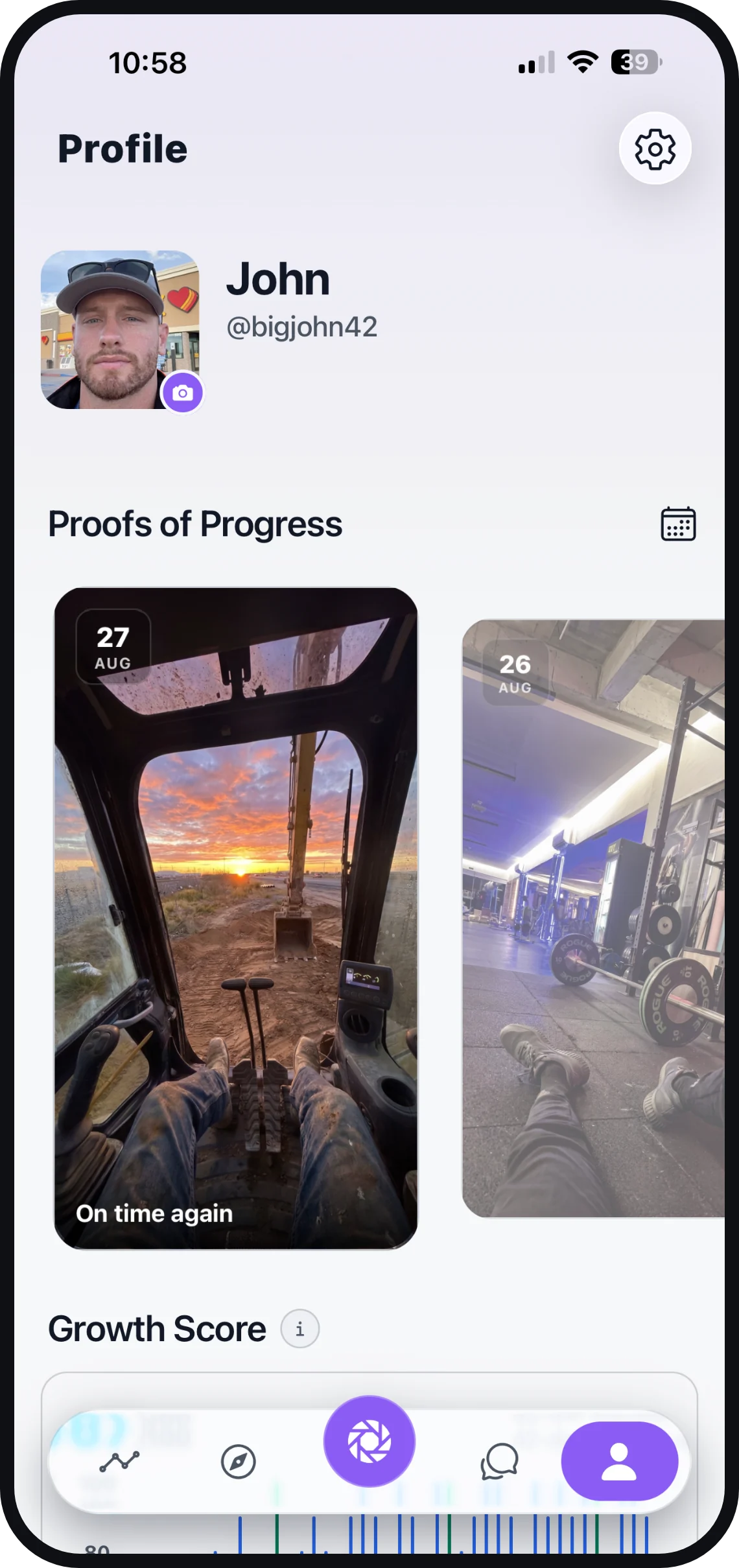
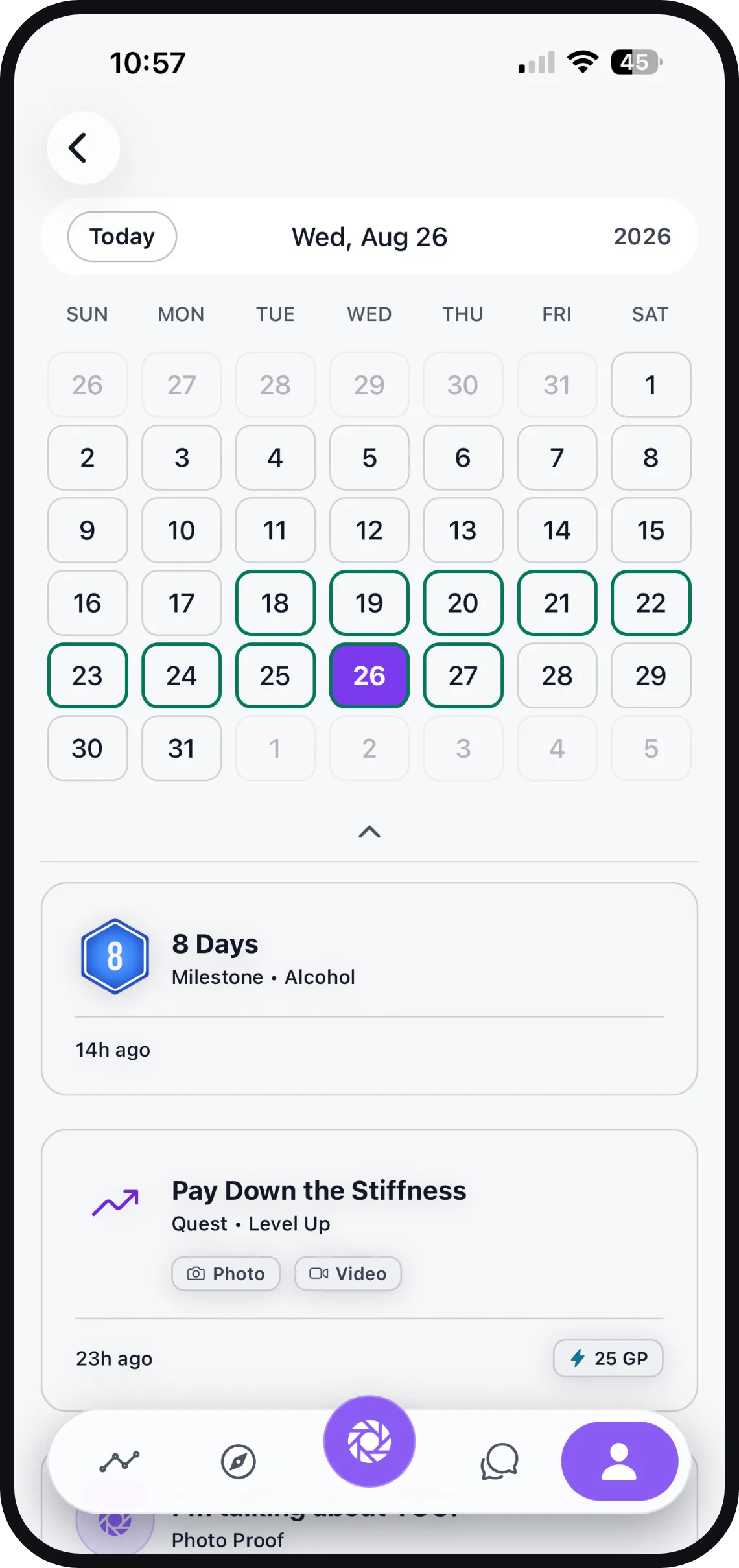
You build it the way identity is always built: through repeated evidence you can see. That is the mechanic behind Door 24. Every sober day becomes a Proof, a photo, a voice note, or a line of text, timestamped on your timeline. Instead of asking you to believe you have changed, the app helps you accumulate proof that you have.
Two design choices matter here. Your Growth Score is a 42-day rolling average, so consistency, not perfection, drives the number, and a single bad day bends the trend instead of erasing it. And your Freedom Pledge keeps your reason for change in your own words, visible on the days motivation runs thin. The goal is to make the new identity undeniable, so it stops being a wish and becomes a record.
If you are rebuilding from scratch, start with How do I rebuild my identity in recovery? and Who am I without alcohol?. If a setback has you doubting the whole thing, What should I do after a relapse? walks through the next move. When you are ready to start capturing proof, open the door.
Recovery is not a fight you win by white-knuckling one more day. It is a person you become, one piece of evidence at a time.
Sources
- National Institute on Drug Abuse (NIDA), Treatment and Recovery, Drugs, Brains, and Behavior: The Science of Addiction, 2020 (updated 2026).
- Best, D., et al., Overcoming alcohol and other drug addiction as a process of social identity transition: the social identity model of recovery (SIMOR), Addiction Research & Theory, 2016.
- Hagman, B. T., et al., Defining Recovery From Alcohol Use Disorder: Development of an NIAAA Research Definition, American Journal of Psychiatry, 2022.
Frequently asked
Is abstinence still important if identity is the real goal?
Yes. Abstinence is the foundation, not the finish line. Door 24 is abstinence-leaning. Stopping the substance is what makes room for the identity work. The point is that stopping alone rarely holds unless the person underneath also changes.
Why do people relapse even after months of not drinking?
Because time away from a substance does not automatically rewire the triggers, relationships, and self-image that drove the use. NIDA reports relapse rates of 40 to 60 percent. A slip usually signals that the recovery plan needs support, not that the person failed.
How do I actually change my identity instead of just quitting?
Identity changes through repeated, visible evidence. Pick one value, take one small action a day that matches it, and capture a Proof that you did it. Over weeks the record becomes a story of someone new, which is far more durable than willpower.
Does a slip erase my progress?
No. A slip is one data point. Door 24's Growth Score is a 42-day rolling average, so a bad day bends the trend without resetting you to zero. The proof you have already stacked does not disappear.