In the news
Alcohol use disorder dropped again in 2025, SAMHSA finds
Alcohol use disorder in the United States fell to 25.7 million people, or 8.9 percent of everyone aged 12 or older, in 2025. SAMHSA released the figures on July 27, 2026. That is roughly 4 million fewer people than in 2021. In the same survey, 22.3 million adults said they consider themselves to be in recovery. The national trend is moving. Your own trend is a separate question.
The federal government just published its annual read on how much America is drinking, and the direction is down. Fewer people meet the criteria for alcohol use disorder than four years ago. Fewer teenagers drink at all. If you are sober or trying to get there, the numbers are worth knowing. They are also worth putting in their place.
What did SAMHSA's 2025 survey find about alcohol use disorder?
Alcohol use disorder declined across every age group measured. The Substance Abuse and Mental Health Services Administration released the 2025 National Survey on Drug Use and Health on July 27, 2026, drawing on self-reported answers from more than 60,000 people. In 2025, 44.6 million people aged 12 or older, or 15.3 percent, had a substance use disorder in the past year. Of those, 25.7 million had an alcohol use disorder, 26.0 million had a drug use disorder, and 7.1 million had both.
The five-year comparison is the part worth sitting with.
| Measure, ages 12 or older | 2021 | 2025 |
|---|---|---|
| Past-year alcohol use disorder | 10.6% (29.7 million) | 8.9% (25.7 million) |
| Past-year substance use disorder | 16.7% (46.8 million) | 15.3% (44.6 million) |
| Past-month alcohol use | 47.4% (132.5 million) | 44.4% (129.1 million) |
| Past-month binge drinking | 21.7% (60.6 million) | 19.5% (56.8 million) |
| Past-month heavy drinking | 5.7% (16.1 million) | 5.0% (14.5 million) |
Source: 2025 NSDUH Annual National Report, SAMHSA, July 2026.
In plain terms, SAMHSA reported that the drop in alcohol use disorder "reflects an estimated 4 million fewer people with alcohol use disorder in 2025 compared to 2021."
How many Americans say they are in recovery?
22.3 million adults. In 2025, 30.6 million adults aged 18 or older, or 11.6 percent, said they ever had a problem with their use of drugs or alcohol. Among those adults, 73.0 percent, or 22.3 million people, considered themselves to be in recovery or to have recovered. That 73 percent is the share of people who reported a past problem, not a share of the whole country, and it is worth stating carefully because the number gets misquoted.
Notice how the survey asks the question. It does not ask how many days you have. It does not ask whether you have been perfect. It asks whether you consider yourself to be in recovery. That is a question about identity, and 22.3 million people answered yes.
Are young people drinking less?
Yes, and this is the clearest trend in the release. Past-month alcohol use among adolescents aged 12 to 17 fell from 7.2 percent in 2021 to 5.9 percent, or about 1.5 million people, in 2025. Among young adults aged 18 to 25, past-month drinking fell from 50.9 percent to 46.2 percent, and past-month binge drinking fell from 30.0 percent to 26.7 percent.
SAMHSA Principal Deputy Assistant Secretary Christopher D. Carroll said in the release: "Building on encouraging trends first reported in the 2024 NSDUH, in 2025, adolescents aged 12 to 17 and young adults aged 18 to 25 continued to show downward or stable trends in most behavioral health indicators over the past five years."
If you have felt like the culture around drinking is shifting under your feet, the data agrees with you. That shift is part of why sober curious stopped being a fringe phrase.
If the numbers are falling, why does quitting still feel this hard?
Because a national average has never once made a Tuesday night easier. The same survey found that among the 44.6 million people with a past-year substance use disorder, 86.4 percent, or 38.5 million people, received neither substance use treatment nor other services for it. Only 2.6 percent of people with a past-year alcohol use disorder received medication for it, roughly 1.1 million people. Among everyone classified as needing substance use treatment, about 1 in 6, or 16.0 percent, got any.
Add the National Institute on Drug Abuse estimate that 40 to 60 percent of people relapse at some point, a rate comparable to other chronic conditions, and the picture sharpens. The trend line is improving. The individual work is exactly as hard as it was.
What do these numbers mean for your own recovery?
They mean the country's trend is not your trend, and only one of those is yours to change. This is where Door 24 differs from a day counter. Abstinence is not enough. You do not just quit a habit. You become someone who no longer needs it, and the only way to know that is happening is to have evidence.
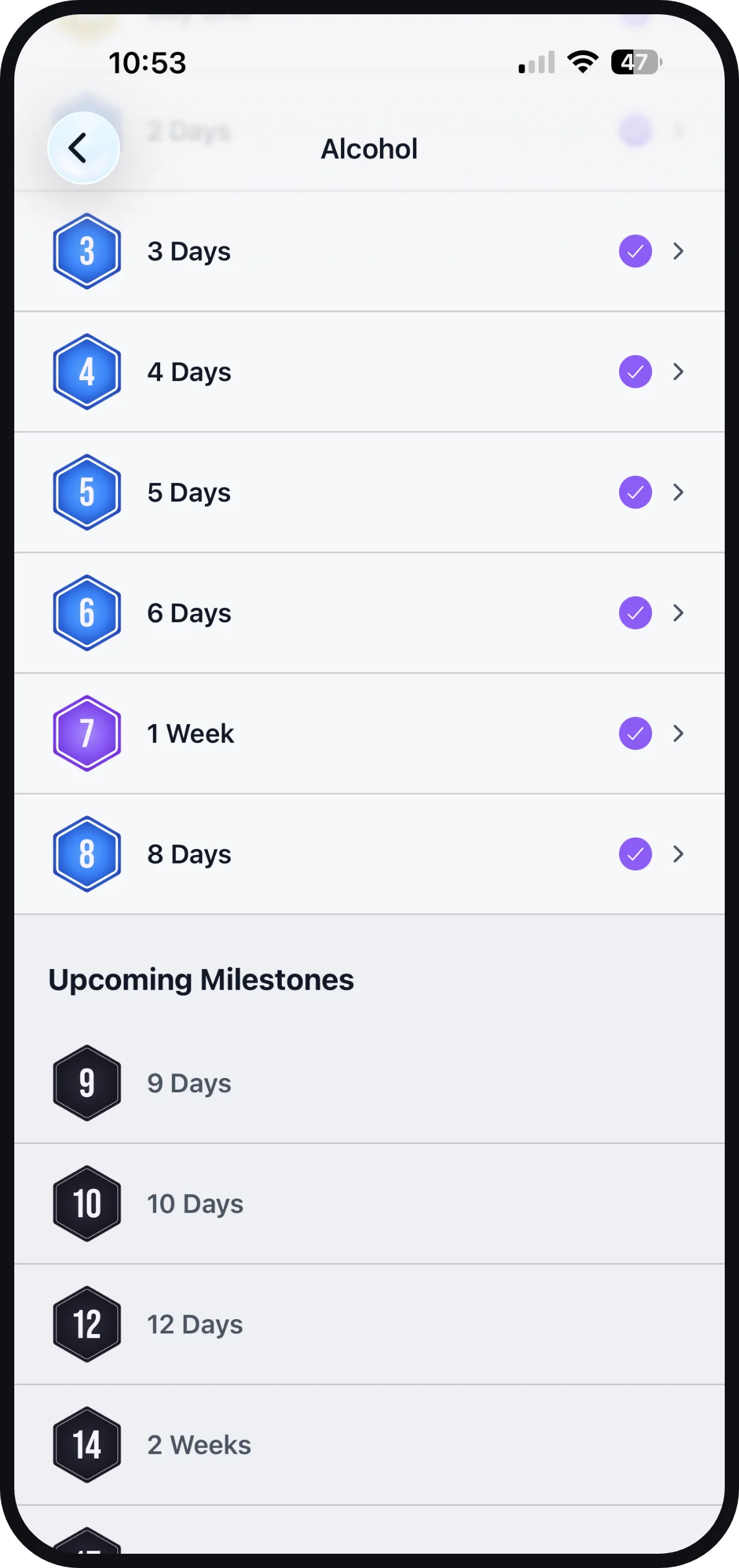
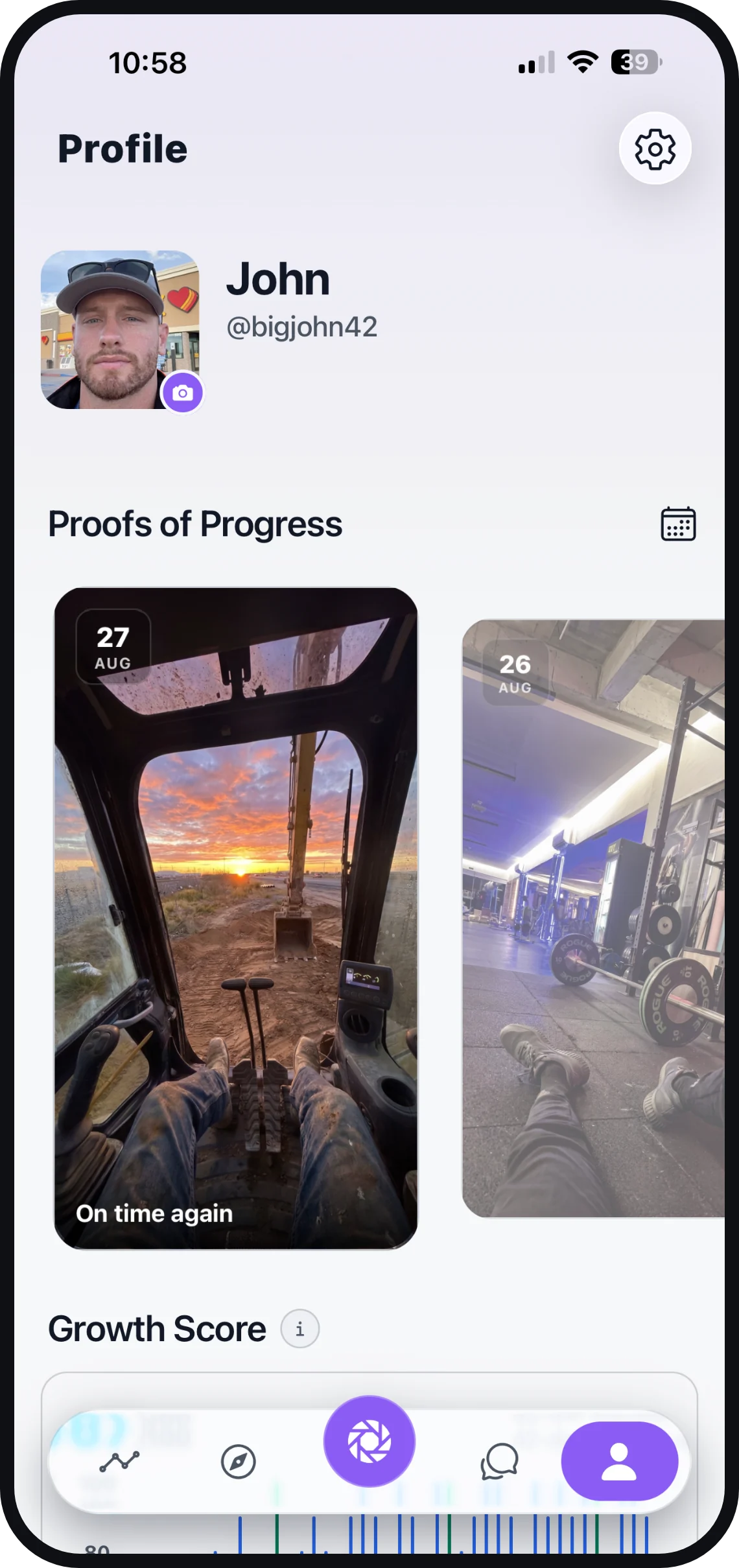
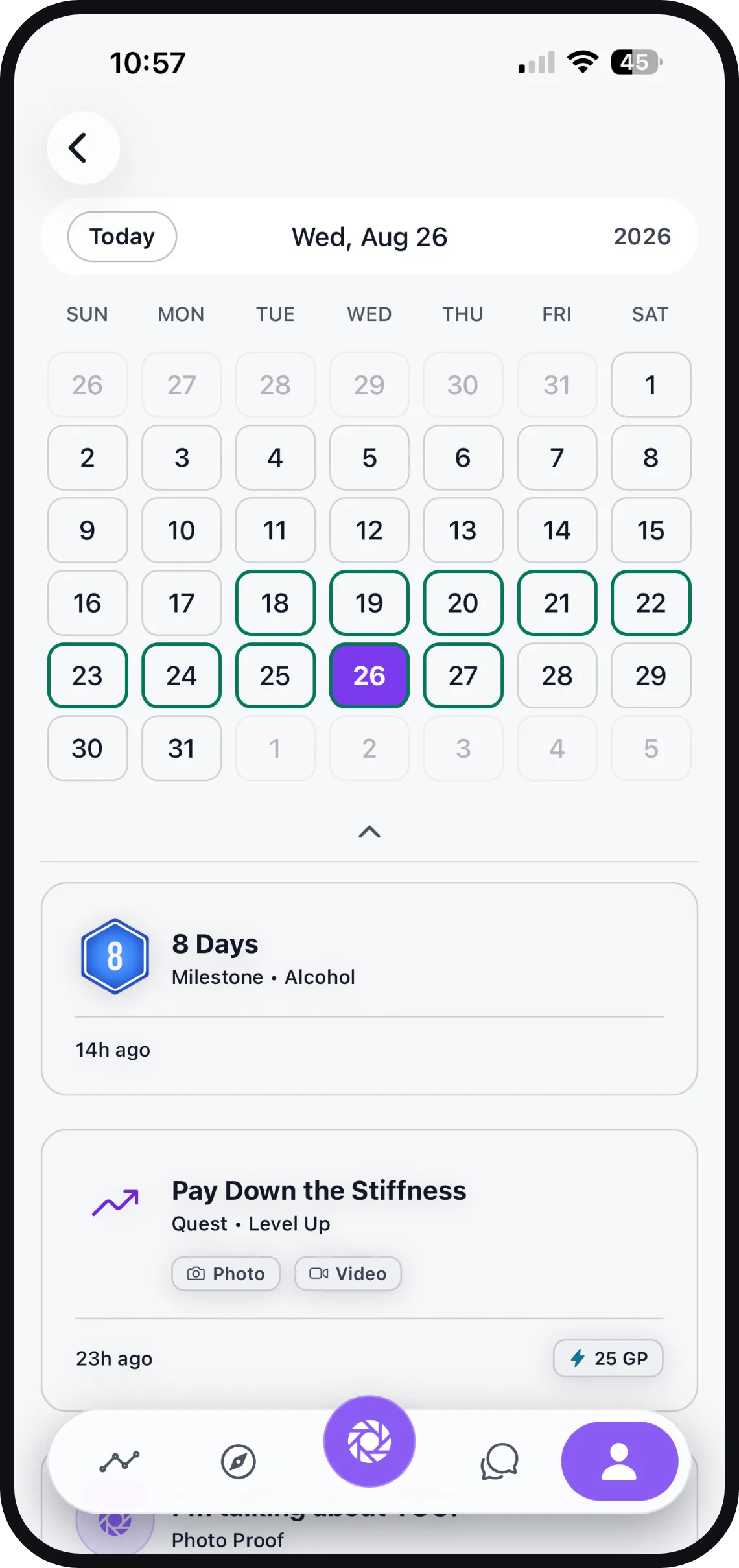
That is what a Proof is. Every sober day becomes something you capture, a photo, a voice note, a video, or a journal entry, dated and stacked on your own timeline. Your Growth Score is a 42-day rolling average, which means it follows the trend rather than snapping to zero after one bad night. Your Freedom Ledger holds the money and time you have reclaimed. The Freedom Pledge holds the reason, in your own words.
SAMHSA counted 22.3 million people who consider themselves in recovery. Consider is doing a lot of work in that sentence. It is a claim you make about yourself. Proof is what turns the claim into a record you can scroll back through, which matters most on the days you do not believe yourself. If you want to understand why the counting model fails people, start with why abstinence alone is not enough, and if you want the biology of why willpower keeps losing, read why it is so hard to quit drinking.
How much weight should these numbers carry?
Read them as a direction, not a verdict. Four caveats matter. First, NSDUH is a self-report survey, so it measures what people say about themselves, not clinical diagnoses. Second, SAMHSA compares 2025 only back to 2021, because a change in how the survey is collected makes 2020 and earlier years non-comparable. Third, SAMHSA re-weighted its 2021 estimates to make the five-year comparison valid, so figures may differ from previously published versions. Fourth, a decline in a population statistic tells you nothing about whether any particular person is doing better this month.
The honest read: fewer Americans meet the criteria for alcohol use disorder than in 2021, most of them still get no treatment, and 22.3 million people describe themselves as being in recovery right now. You are not statistically unusual for wanting out. You are also not going to get out on the strength of a national average. Start your own record.
Sources
- SAMHSA, 2025 National Survey on Drug Use and Health Annual National Report, HHS Publication No. PEP26-07-010, NSDUH Series H-61, July 2026.
- SAMHSA, SAMHSA Releases Annual National Survey on Drug Use and Health, press announcement, July 27, 2026.
- SAMHSA, Release of the 2025 National Survey on Drug Use and Health, July 27, 2026.
- SAMHSA, 2025 NSDUH National Releases.
- National Institute on Drug Abuse, Treatment and Recovery.
Frequently asked
How many people have alcohol use disorder in 2025?
SAMHSA's 2025 National Survey on Drug Use and Health, released July 27, 2026, estimated that 25.7 million people aged 12 or older had a past-year alcohol use disorder, which is 8.9 percent of that population. That is down from 10.6 percent, or 29.7 million people, in 2021.
How many Americans are in recovery from drugs or alcohol?
In 2025, 30.6 million adults aged 18 or older said they ever had a problem with their drug or alcohol use. Among that group, 73.0 percent, or 22.3 million people, considered themselves to be in recovery or to have recovered. The 73 percent figure applies to people who reported a past problem, not to the whole adult population.
Are young people drinking less?
Yes, according to the 2025 survey. Past-month alcohol use among adolescents aged 12 to 17 fell from 7.2 percent in 2021 to 5.9 percent in 2025. Among young adults aged 18 to 25 it fell from 50.9 percent to 46.2 percent over the same period.
If alcohol use disorder is falling, why is quitting still so hard?
Because a national average says nothing about one person's week. The same survey found that 86.4 percent of people with a past-year substance use disorder received neither treatment nor other services for it, and only 2.6 percent of people with alcohol use disorder received medication for it. A falling statistic is not a lighter load.
How reliable is the NSDUH data?
It is the federal government's primary national survey on substance use, based on self-reported answers from more than 60,000 people. It is a self-report survey, not a clinical assessment, and SAMHSA compares 2025 only back to 2021 because a change in how the survey is collected makes earlier years non-comparable.