Cravings & setbacks
How do I stay sober through the holidays?
Staying sober through the holidays comes down to planning, not willpower. Decide before each event what you will drink, how you will answer the offer, and when you will leave. The season is louder, boozier, and more emotional than the rest of the year, so you protect your sobriety by removing decisions in the moment. Prepared, you can walk into any room and stay yourself.
How do I stay sober through the holidays?
To stay sober through the holidays, make your decisions before you arrive, not in the moment. Pick your drink, rehearse how you will decline alcohol, arrive with your own transportation, and set a time you will leave. The holidays raise the stakes because alcohol is everywhere and emotions run high, so the goal is to remove in-the-moment choices while your guard is down. You are not relying on willpower. You are relying on a plan you made when you were clear-headed.
That is the whole strategy in one line: decide early, so the party never gets a vote.
Why are the holidays so hard to stay sober?
The holidays are hard because alcohol becomes the default and stress climbs at the same time. From roughly late November through New Year's, drinking is built into almost every gathering, and the pressure to "just have one" is constant. The National Institute on Alcohol Abuse and Alcoholism (NIAAA) puts it plainly in its holiday guidance: during this season some people drink beyond their limits and face consequences that range from fights to falls to traffic crashes, according to its Truth About Holiday Spirits fact sheet.
The risk is not just social, it is physical. According to the National Highway Traffic Safety Administration, 1,038 people died in drunk driving crashes in December 2023, and from 2019 to 2023 NHTSA recorded more than 4,931 December deaths in drunk driving crashes. That is why its Drive Sober or Get Pulled Over enforcement runs December 12 through January 1 every year.
You are not weak for finding this stretch difficult. Alcohol use disorder affects 27.9 million people ages 12 and older in the past year, about 9.7 percent of that group, per NIAAA's most recent survey data. A hard season is a common experience, and it is one you can plan around.
What is a plan for every kind of holiday event?
The best plan matches the risk of the specific event. A quiet dinner with close friends needs less armor than an open-bar office party where you know no one well. Decide your move for each situation before you go.
| Situation | The risk | Your move |
|---|---|---|
| Open-bar work party | Free alcohol, thin social ties, long night | Drive yourself, set a hard exit time, hold a club soda all night |
| Family dinner | Old roles, old tension, "just one won't hurt" | Decide your line in advance, sit near an ally, plan a reason to step outside |
| New Year's Eve | Peak drinking, midnight toast, staying late | Bring your own non-alcoholic bottle, leave before the pressure peaks |
| Solo night at home | Loneliness, boredom, no accountability | Fill the evening on purpose: a Daily Quest, a call, a walk, lights and a plan |
| Traveling to see people | Out of routine, no easy exit, houseguest pressure | Book your own room or ride, keep your morning routine, protect your sleep |
Two rules cover almost everything. First, never arrive without a way to leave that does not depend on anyone else. Second, keep a drink in your hand at all times so the offer is already answered.
What do I say when someone offers me a drink?
Keep your answer short, warm, and final. You do not owe anyone the story of your recovery, and long explanations invite debate. Pick one line and use it on repeat: "I'm good, thanks," "Not tonight," or "I'm the sober driver." Most people move on immediately, because they are far more focused on their own night than yours.
If you want a shield that ends the conversation before it starts, hold a full non-alcoholic drink. A glass that is already full quietly closes the offer. For the relatives or coworkers who push, decide in advance that you will change the subject once, then physically move: refill your water, find the host, step outside.
How Door 24 helps you protect the season
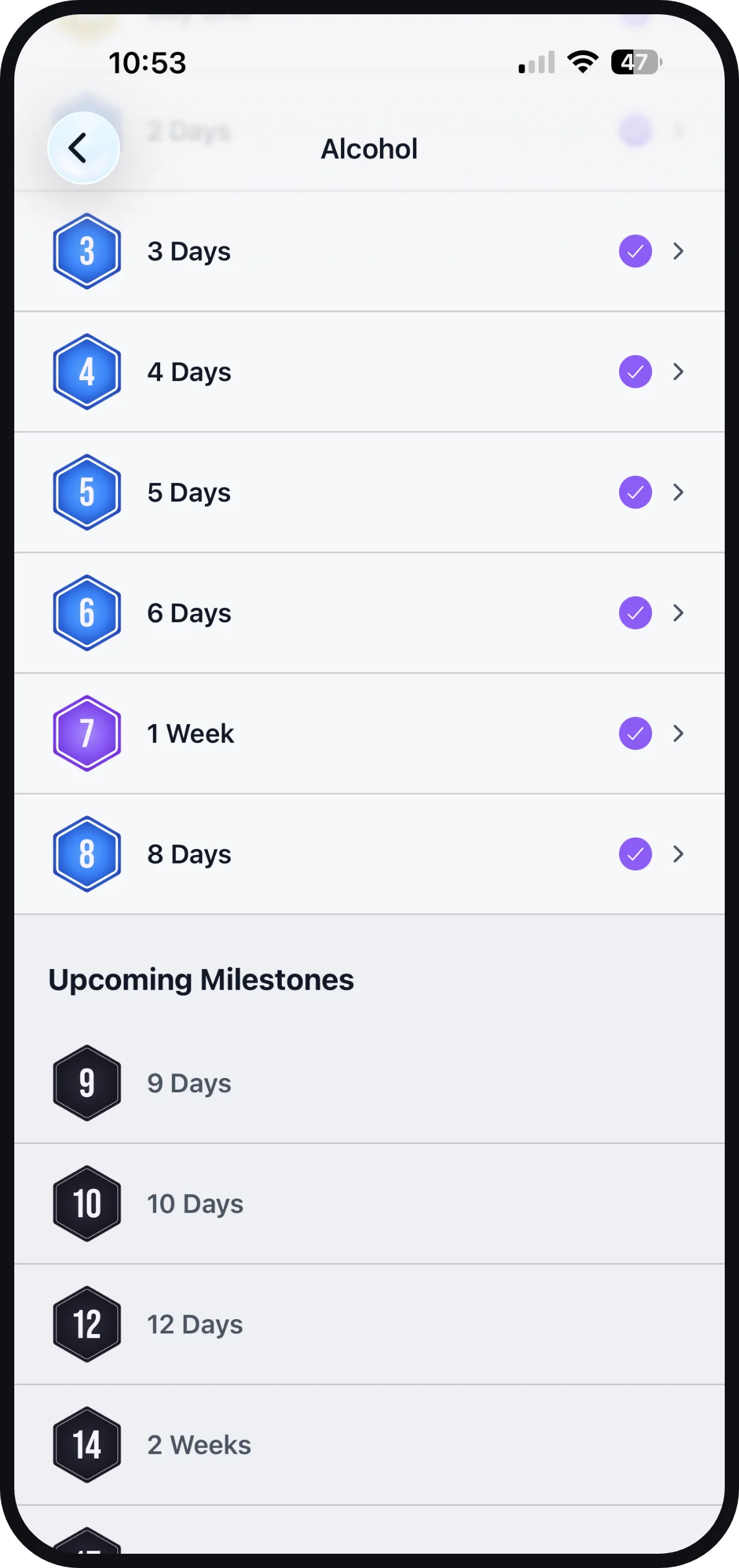
Most apps count what you avoided, so a hard holiday feels like a threat to a fragile number. Door 24 does the opposite. It documents who you are becoming, and that is exactly the thing the season cannot take from you.
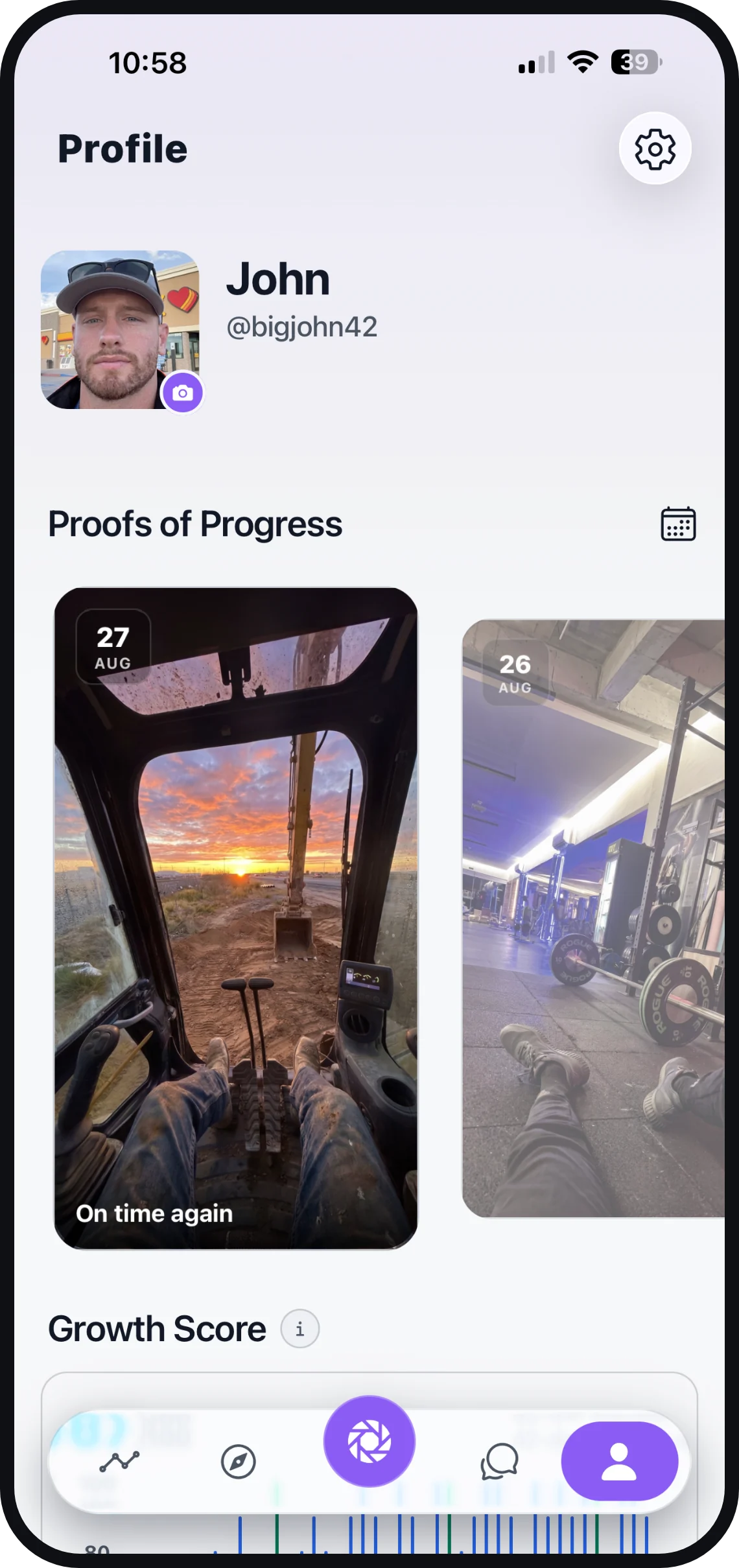
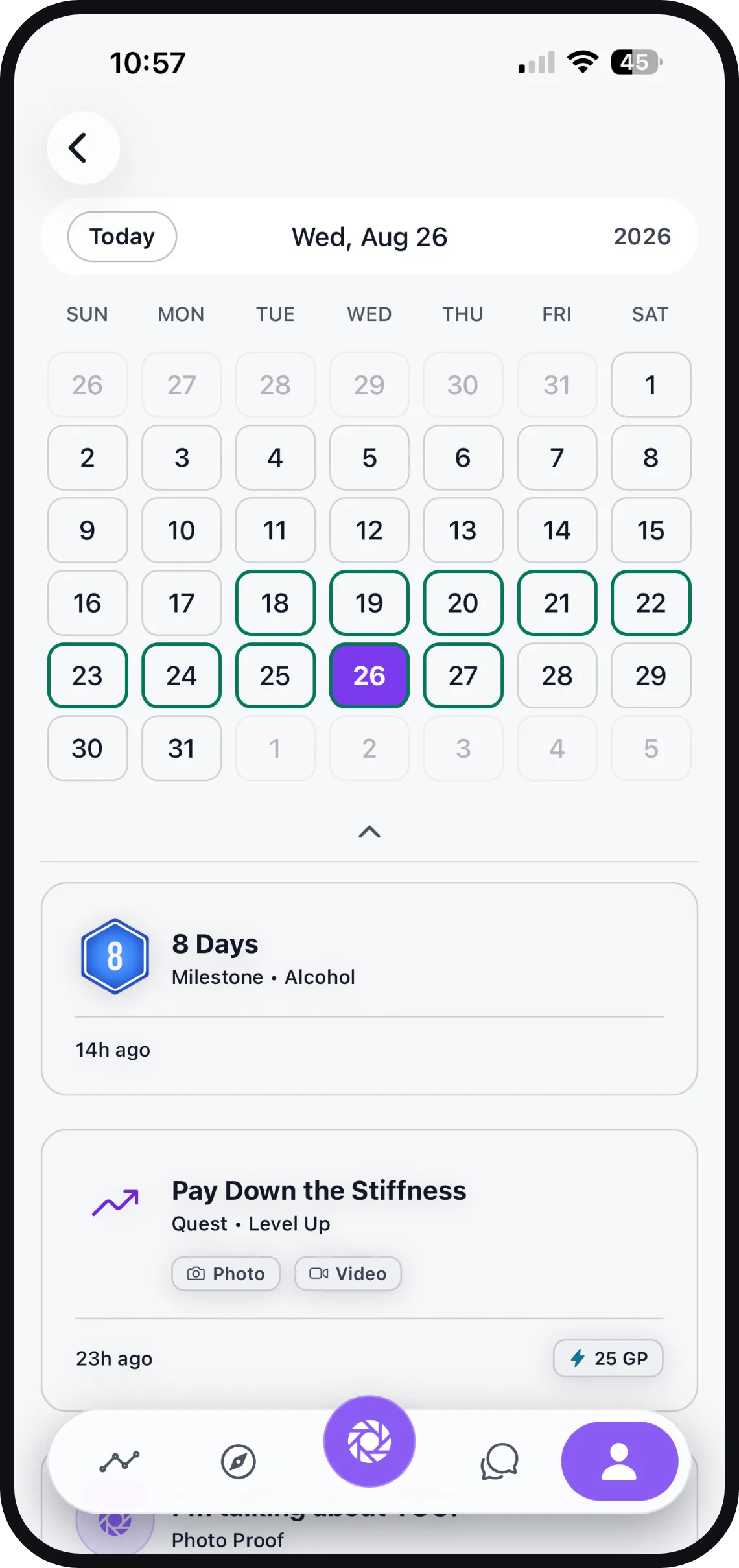
Every sober day you get through becomes a Proof: a photo, a voice note, or a journal entry that lands on a dated timeline. Walk into a dreaded dinner, hold your line, come home, and capture it. Now the night is not just survived, it is evidence. Your Growth Score is a 42-day rolling average, so it moves with the trend instead of resetting the moment one day goes sideways. Counters reset. People don't. And the Freedom Ledger shows you the money and time you reclaimed by not drinking through a month that usually drains both.
The wedge is simple. Abstinence is not enough. You do not just white-knuckle the holidays, you become someone who no longer needs the drink to get through them. By January, the timeline is not a wish. It is a stack of proof you built one hard night at a time.
If you want the deeper version of this, read how to get through cravings without relapsing, how to stay sober around people who are drinking, and the most common relapse triggers. When you are ready to start stacking proof, get Door 24.
Sources
- National Institute on Alcohol Abuse and Alcoholism (NIAAA), The Truth About Holiday Spirits, 2024. https://www.niaaa.nih.gov/publications/brochures-and-fact-sheets/truth-about-holiday-spirits
- National Highway Traffic Safety Administration (NHTSA), Drive Sober This December and Every Month, 2024. https://www.nhtsa.gov/drive-sober-december-and-every-month
- National Institute on Alcohol Abuse and Alcoholism (NIAAA), Alcohol Treatment in the United States (2024 NSDUH data), 2025. https://www.niaaa.nih.gov/alcohols-effects-health/alcohol-topics-z/alcohol-facts-and-statistics/alcohol-treatment-united-states
Frequently asked
Is it okay to skip holiday events to stay sober?
Yes. Protecting your sobriety is a reason, not an excuse. You do not owe anyone an explanation for leaving early or declining an invite. A short 'I can't make it this year, but let's grab coffee soon' is a complete sentence. Early recovery is not the season to prove you can white-knuckle a five-hour open bar.
What do I drink at a party if I am not drinking alcohol?
Keep a non-alcoholic drink in your hand the entire time: sparkling water with lime, a soda, coffee, or a non-alcoholic beer if that feels safe for you. A full glass ends most offers before they start, and it gives your hands something to do. Ask the host or bartender to build you the same drink twice.
How do I handle family who pressure me to drink?
Decide your line before you walk in and keep it short. 'I'm good, thanks' repeated calmly beats any debate. You do not have to disclose your recovery to people who have not earned it. If a specific relative is a known trigger, plan your exit and a person you can text on the way out.
What if I slip during the holidays?
One day does not erase months of work. A slip is information about what the plan missed, not proof that you failed. Note what led to it, adjust the plan, and capture your next sober day. In Door 24, a bad day shifts the trend, it does not reset you to zero.