Cravings & setbacks
How do I stay sober around people who are drinking?
You stay sober around people who are drinking by deciding your response before you walk in, not while someone is holding a glass out to you. Research on relapse found that social pressure contributed to more than 20 percent of relapse episodes. It also found something more useful: exposure to a risky room did not predict relapse. How people coped in that room did.
You stay sober around people who are drinking by deciding your response before you walk in, not while someone is holding a glass out to you. Research on relapse found that social pressure contributed to more than 20 percent of relapse episodes. It also found something more useful: exposure to a risky room did not predict relapse. How people coped in that room did.
How do I stay sober around people who are drinking?
You stay sober around people who are drinking by treating the event as a situation you prepare for rather than one you survive on willpower. The National Institute on Alcohol Abuse and Alcoholism teaches a recognize, avoid, cope approach drawn from cognitive-behavioral therapy: recognize the kind of pressure you are facing, avoid what you can reasonably avoid, and have a specific response ready for what you cannot. That is three decisions made in advance, in a calm moment, instead of one decision made under pressure with a drink already in front of you.
The order matters. Most people try to do all of it in the room, in real time, while making conversation. That is the hardest possible place to think clearly. Everything below happens before you arrive.
What kind of pressure am I actually facing?
There are two kinds, and they need different plans. The NIAAA separates direct social pressure, where someone offers you a drink or an opportunity to drink, from indirect social pressure, where you feel tempted just by being around others who are drinking, even if nobody offers you anything.
Direct pressure is loud and obvious. You see it coming and you can script for it. Indirect pressure is the one that catches people, because there is no moment to say no to. Nothing happens. You are just standing there, and the room is doing something to you quietly. If you only prepare a refusal line, you have prepared for half of what is actually going to happen.
In the relapse research from psychologist Alan Marlatt's taxonomy, social pressure counts both forms together. Summarizing that work in Alcohol Research & Health, Mary Larimer, Rebekka Palmer, and Marlatt report that social pressure, "including both direct verbal or nonverbal persuasion and indirect pressure," contributed to more than 20 percent of relapse episodes in Marlatt's 1996 study. It is not the largest category. Negative emotional states and interpersonal conflict together accounted for more than half. But it is the category with the clearest fix, because unlike a hard feeling, a room has a door.
What do I say when someone offers me a drink?
Say something short, friendly, and immediate. The NIAAA's guidance is to be clear and firm, yet friendly and respectful, and to avoid long explanations and vague excuses, which "tend to prolong the discussion and provide more of an opportunity to give in." Do not hesitate, because hesitation gives you time to talk yourself into it. Make eye contact. Keep it simple.
Plan a sequence, not a single line, because some people persist. The NIAAA suggests escalating from "No, thank you" to "No, thanks, I don't want to" to a more direct reply that asks for help. There is also the broken record strategy: acknowledge what the person said, then repeat your same short answer. "I hear you, but no thanks." Again. And again. Most people run out of pressure before you run out of repetitions. If words fail, the NIAAA's advice is plain: you can walk away.
Practice it out loud. This sounds unnecessary until the first time you try to say it and hear how strange your own voice is. The NIAAA recommends scripting your lines, rehearsing them aloud, and even role-playing with someone who will apply realistic pressure. The guidance is adapted from the Combined Behavioral Intervention Manual, a clinical research guide used in NIAAA-funded treatment research.
What is the plan for each kind of situation?
| Situation | What it looks like | Decide before you go |
|---|---|---|
| Direct offer | Someone hands you a drink or asks what you want | Your short no, plus two escalations if they push |
| Indirect pull | Nobody offers, but everyone is drinking and you feel it | A non-alcoholic drink in your hand from minute one |
| The persistent friend | They keep asking, joking, or negotiating | Broken record. Same answer, no new material |
| It is going badly | You are rehearsing reasons, not conversation | Your exit line and your ride, decided before you arrived |
| The room is not worth it | Old crowd, old bar, old script | Skip it for now, and suggest something else instead |
The NIAAA also lists practical moves that do not require a speech: keep an alcohol-free drink in hand the whole time, ask someone for support ahead of time, and plan an escape if the temptation gets too great. A ride home you already arranged is a better plan than a decision you make at 11 p.m.
Can I just avoid these situations instead?
Yes, and that is a strategy, not a surrender. The NIAAA is direct about this: for some situations, your best strategy may be avoiding them altogether. If you feel guilty about turning down an invitation, the NIAAA's own framing is worth borrowing: you are not necessarily talking about forever. When your confidence in your resistance skills grows, you can ease back into situations you skip today. In the meantime, you stay connected by suggesting things to do that do not involve drinking.
It also helps to know the room is smaller than it looks. Gallup's Consumption Habits survey, published on August 13, 2025, found that 54 percent of U.S. adults said they drink alcohol, the lowest figure in Gallup's nearly 90-year trend, with adults aged 18 to 34 at 50 percent. A majority, 53 percent, now say that even moderate drinking is bad for your health. You are not the strange one at the party. You are just early.
Why does the room matter less than your response?
Because the room is not what predicts the outcome. This is the finding worth carrying with you: in the NIAAA-funded Relapse Replication and Extension Project, William Miller and colleagues found that, as Larimer, Palmer, and Marlatt summarize it, "although mere exposure to specific high-risk situations did not predict relapse, the manner in which people coped with those situations strongly predicted subsequent relapse or continued abstinence." Being in the room is not the risk. Being in the room with nothing prepared is.
That reframe is worth sitting with, because it moves the whole question. The goal is not to become someone who never enters a bar. It is to become someone for whom a bar is not a crisis. Those are different people, and only one of them is free. Marlatt's model calls the thing you are building self-efficacy, the earned confidence that you can handle a specific situation, and it grows from actually handling it, not from avoiding it forever.
Worth noting honestly: the same research group found the relapse taxonomy's predictive validity to be modest, and its reliability strongest at the general category level rather than the fine-grained one. This is a useful map, not a law of physics.
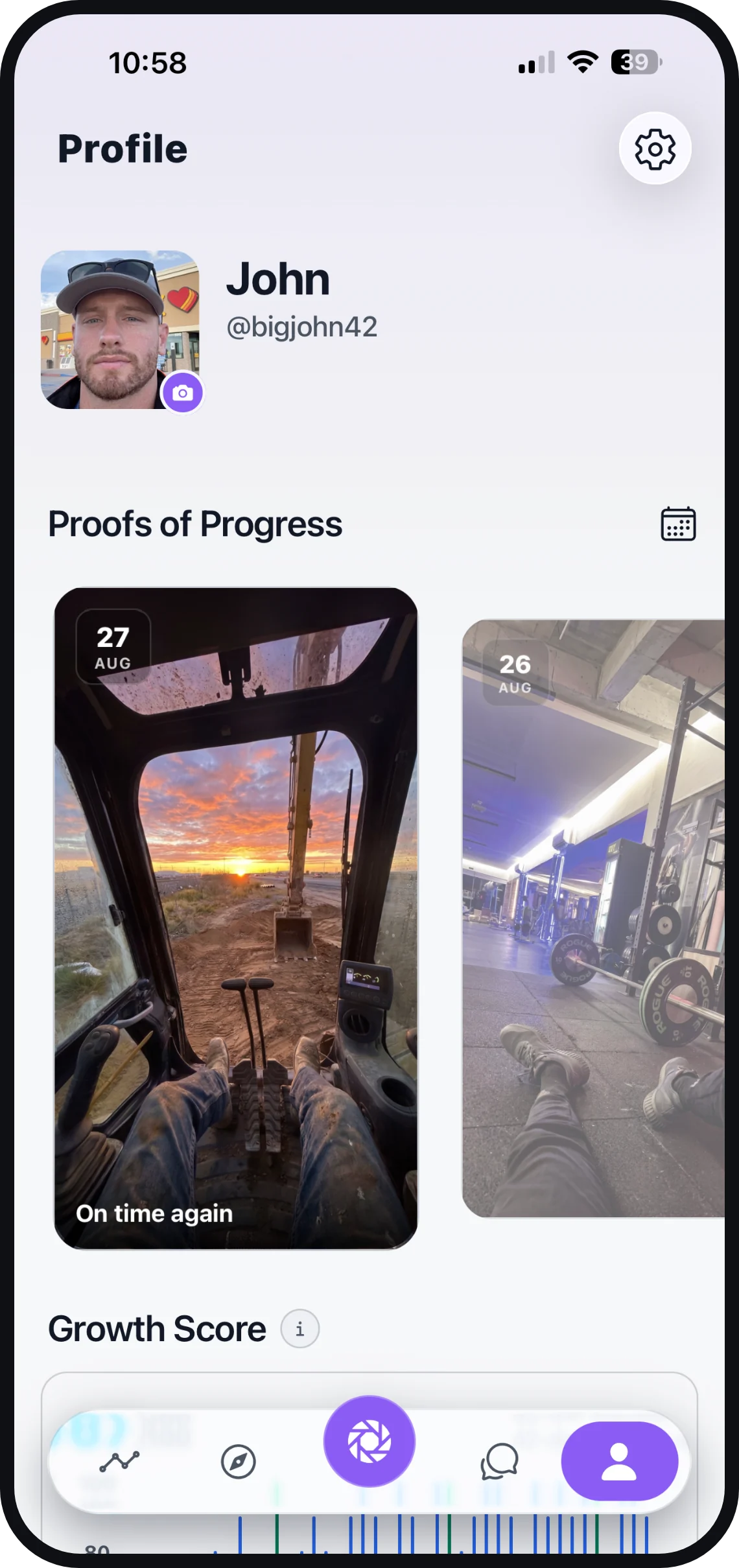
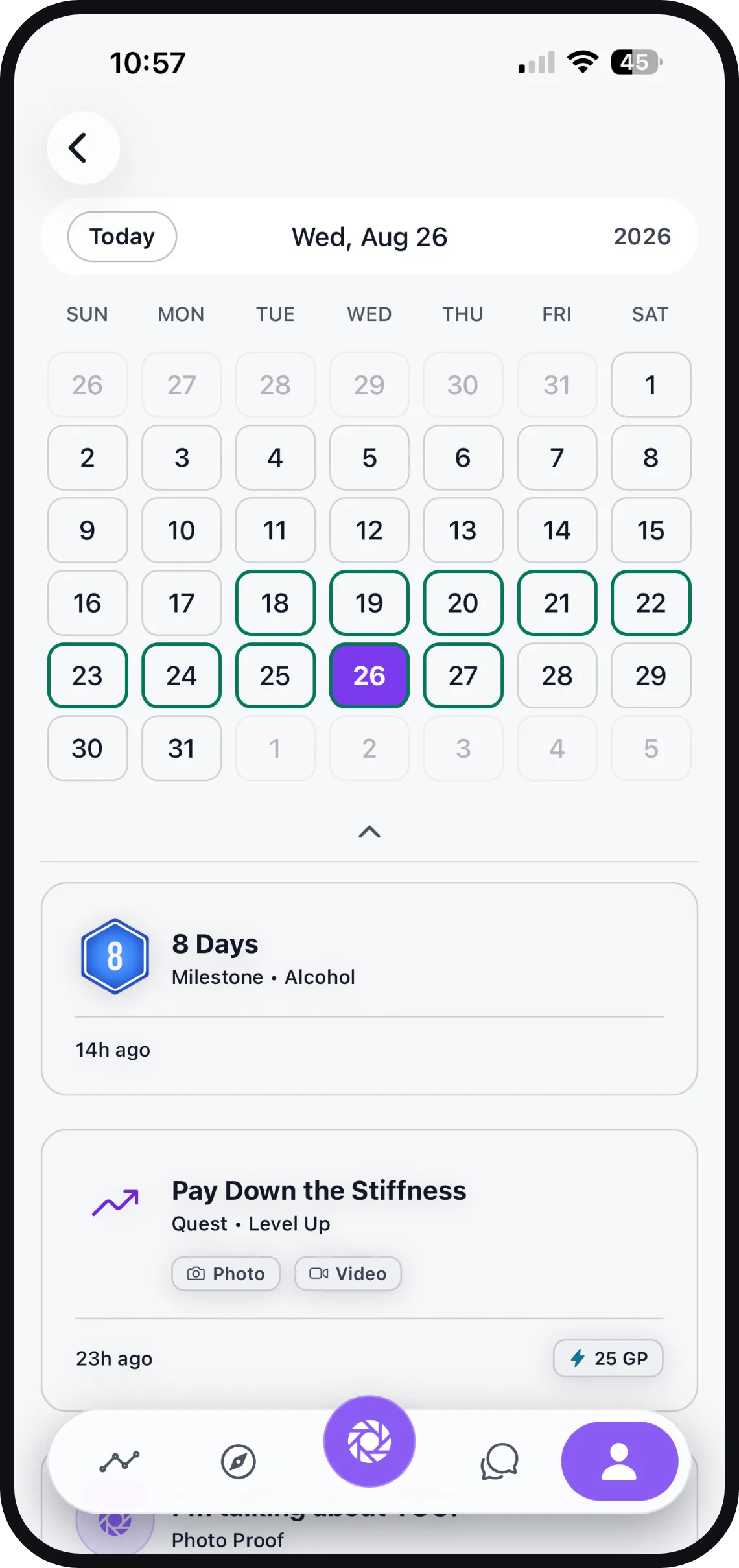
This is also where the Door 24 wedge lands. Abstinence is not enough, and "I didn't drink at the party" is a fact about one night. The identity is what you are actually after, and identity is built from evidence. Every night you walk into a room and walk out of it as yourself becomes a Proof: a photo, a voice note, or a few lines, timestamped on your timeline. Six months in, you are not hoping you can handle it. You can scroll back and see the nights you did. The Freedom Pledge is where the plan lives, in your own words. Your Growth Score, a 42-day rolling average rather than a fragile streak, means a bad night shifts the trend without erasing the work behind it.
If you want to learn your own specific high-risk situations first, start with the most common relapse triggers. For the full planning framework this piece sits inside, read how to stop a relapse before it happens. And for the moment a craving actually arrives, here is how to get through it.
You will not avoid every room where people are drinking, and the goal was never to try. The goal is to walk in having already decided. Know your no. Hold something. Have an exit. Then let the night become one more piece of evidence. When you are ready to start stacking that proof, open the door.
Sources
- National Institute on Alcohol Abuse and Alcoholism, Building Your Drink Refusal Skills, Rethinking Drinking (direct vs. indirect pressure; recognize-avoid-cope; refusal sequence).
- Larimer, M. E., Palmer, R. S., and Marlatt, G. A., Relapse Prevention: An Overview of Marlatt's Cognitive-Behavioral Model, Alcohol Research & Health, Vol. 23, No. 2, 1999 (social pressure >20% of relapse episodes; Miller et al. 1996 coping finding; RREP reliability).
- Gallup, U.S. Drinking Rate at New Low as Alcohol Concerns Surge, August 13, 2025 (54% drink; 18-34 at 50%; 53% say moderate drinking is unhealthy).
- National Institute on Drug Abuse, Treatment and Recovery (relapse 40 to 60 percent).
Frequently asked
How do I say no to a drink without explaining myself?
Keep it short, friendly, and immediate. The NIAAA recommends a clear no with no long explanation or vague excuse, because both prolong the conversation and give you room to give in. Plan a short sequence in case the person persists, from a simple no thank you to a more direct reply, and repeat it rather than arguing.
Should I avoid parties and bars in early sobriety?
Sometimes, and that is a legitimate strategy, not a failure. The NIAAA notes that for some situations the best plan is avoiding them, and that avoidance is not necessarily forever. As your confidence in your resistance skills grows, you can ease back into situations you choose to skip now.
What is indirect social pressure?
It is the pull you feel just from being around people who are drinking, even when nobody offers you anything. The NIAAA distinguishes it from direct pressure, where someone actually offers you a drink. Indirect pressure is easier to miss because there is no moment to say no to, which is why it needs a plan of its own.
What do I do if I drink at an event after being sober?
Treat it as information, not a verdict. NIDA reports that 40 to 60 percent of people in recovery return to use at least once. Look at what the situation actually asked of you and what you had prepared, then adjust the plan. In Door 24, your Growth Score is a 42-day rolling average, so one hard night moves the trend without erasing the Proof behind it.
Do I have to tell people I am sober?
No. You decide what to share and with whom. The NIAAA frames the change as your choice rather than a rule imposed on you, and notes that thinking of it as an external rule can breed resentment and make it easier to give in. A short answer with no backstory is a complete answer.