Cravings & setbacks
Is one drink a relapse, or just a slip?
One drink is a lapse, not a failure. Researchers separate a lapse, the first drink after a quit attempt, from a relapse, a return to your old drinking level. Between 40 and 80 percent of people treated for alcohol use disorder have at least one drink in the first year, but only about 20 percent go back to where they started. What you do next decides which one this becomes.
You had one drink. Now you are doing the math on whether the last 60 days count for anything. Here is the honest answer, and it is better than the one shame is giving you.
Is one drink a relapse?
No. One drink is a lapse. Addiction researchers draw a hard line between the two. As Jayakrishnan Menon and Arun Kandasamy explain in their review of relapse prevention in the Indian Journal of Psychiatry (2018), "the initial transgression of problem behaviour after a quit attempt is defined as a lapse," which only becomes a relapse if it continues "to a level that is similar to before quitting."
The numbers back up the distinction. That same review reports that 40 to 80 percent of people receiving treatment for alcohol use disorder have at least one drink within the first year, while around 20 percent return to their pre-treatment level of drinking. Most lapses do not become relapses. The gap between those two numbers is where your next hour lives.
There is a third outcome most people have never heard of, and it is the one you want. A prolapse is when you lapse, cope with it, and keep moving forward anyway.
| Term | What it means | What it looks like |
|---|---|---|
| Lapse | The first drink after a quit attempt | One drink at a wedding, then you stop |
| Relapse | A return to your pre-quit drinking level | The one drink becomes the old pattern again |
| Prolapse | Coping with the lapse and continuing forward | You name it, learn from it, and keep going |
What is the abstinence violation effect?
The abstinence violation effect is the reason one drink so often becomes ten. Named by psychologist G. Alan Marlatt in 1985 and detailed by Larimer, Palmer and Marlatt in Alcohol Research & Health (1999), it describes what happens when you blame the slip on yourself and lose your sense of control. Menon and Kandasamy put the mechanism plainly: it happens when a person "perceives no intermediary step between a lapse and relapse," so, having already broken the rule, "they may get most out of the lapse."
Read that again. The drink is not what ends your sobriety. The verdict you pass on yourself is. People who treat a lapse as personal failure feel guilt and shame, and that guilt drives more drinking as a way to escape the feeling. It is a closed loop, and it runs on self-punishment.
The clinical fix is not more willpower. It is a different story. In relapse prevention, the review notes, clients are taught to reframe their perception of lapses, "to view them not as failures but as key learning opportunities resulting from an interaction between various relapse determinants, both of which can be modified in the future."
Translation: a slip is data. It tells you which situation your plan did not cover yet.
Does one drink undo your recovery?
It does not. Recovery is a process, not a perfect record, and the people who study it for a living say so. When NIAAA scientists Brett Hagman, Dan Falk, Raye Litten and George Koob published the agency's research definition of recovery in the American Journal of Psychiatry (April 2022), they wrote that "recovery is a process through which an individual pursues both remission from AUD and cessation from heavy drinking." Pursues. Not achieves flawlessly on the first attempt.
Slips are also common enough that no serious body treats them as disqualifying. NIDA puts relapse rates for substance use disorders at 40 to 60 percent, comparable to type 1 diabetes, hypertension and asthma, and states directly that relapse does not mean treatment failed. It means the approach needs to be resumed or adjusted.
To be clear about where Door 24 stands: the goal here is not fewer drinks. It is becoming someone who does not need one. Abstinence is not enough on its own, but it is the floor, not the ceiling.
What should you do in the first hour after one drink?
Move fast and stay kind. Speed matters more than self-criticism.
- Stop and change your setting. Leave the room, the bar, the house. Physical distance breaks the momentum.
- Tell one person today. Secrecy is what lets a lapse grow in the dark.
- Get honest, not harsh. Write down what the 24 hours before the drink actually looked like. Stress, conflict and social pressure are the usual suspects.
- Name the gap. Which specific situation did your plan not cover? Fix that one thing.
- Take one sober action now. Any action. You are restarting the trend, not the clock.
Why your progress should not reset to zero
This is exactly where the counter model fails people. A day counter answers "is one drink a relapse" with a brutal, inaccurate yes. It flips to zero and tells you the 60 days never happened. That is not a neutral design choice. It is the abstinence violation effect, built into an interface.
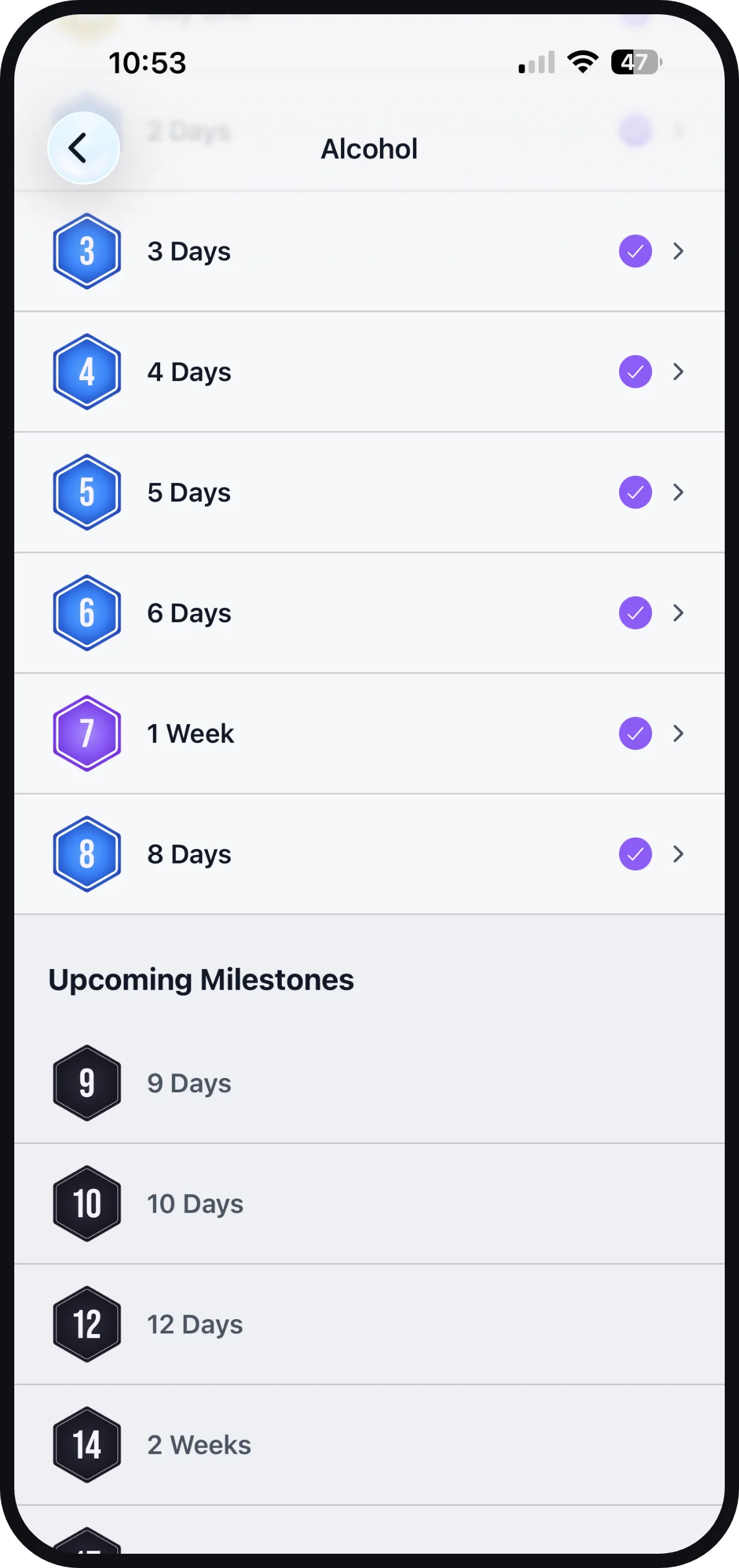
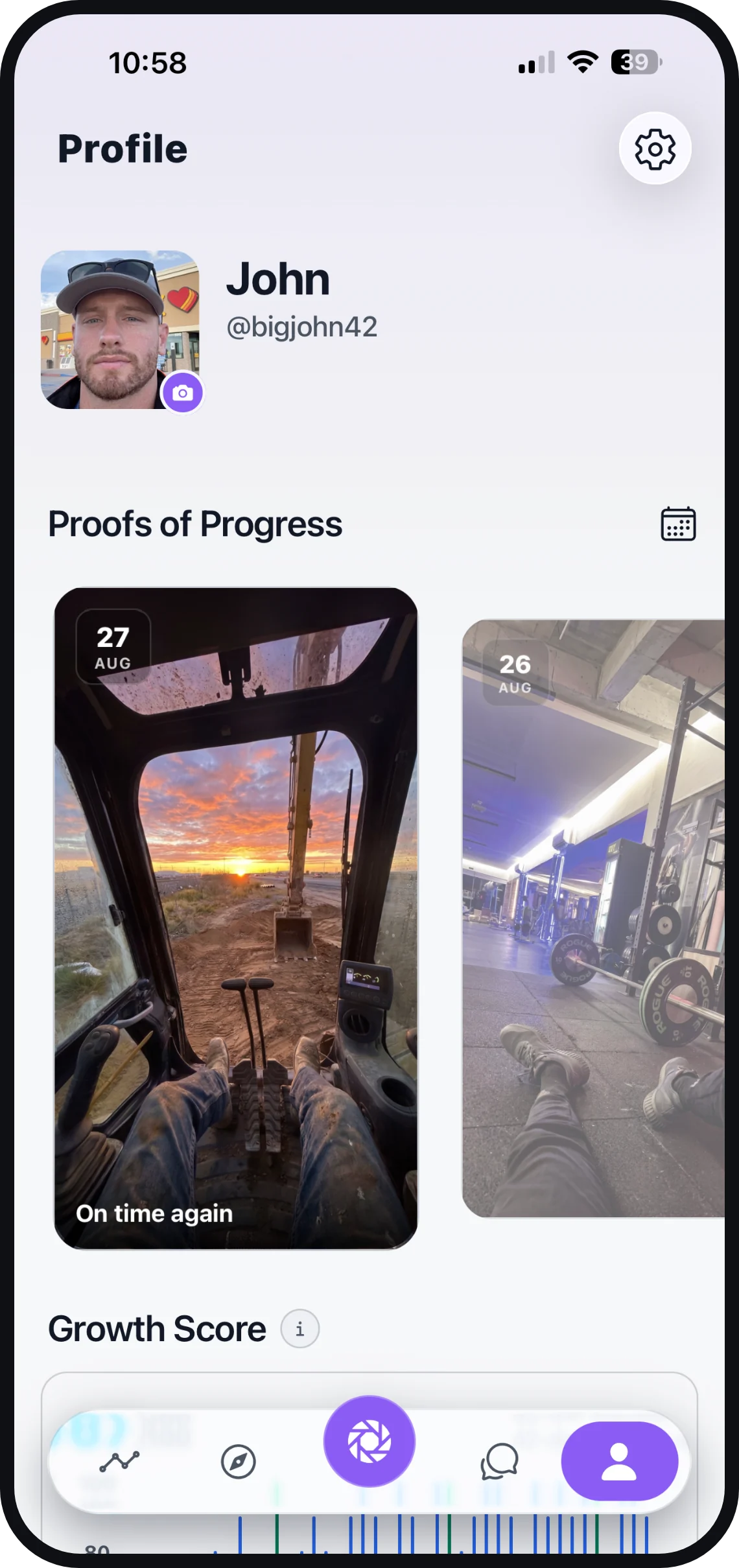
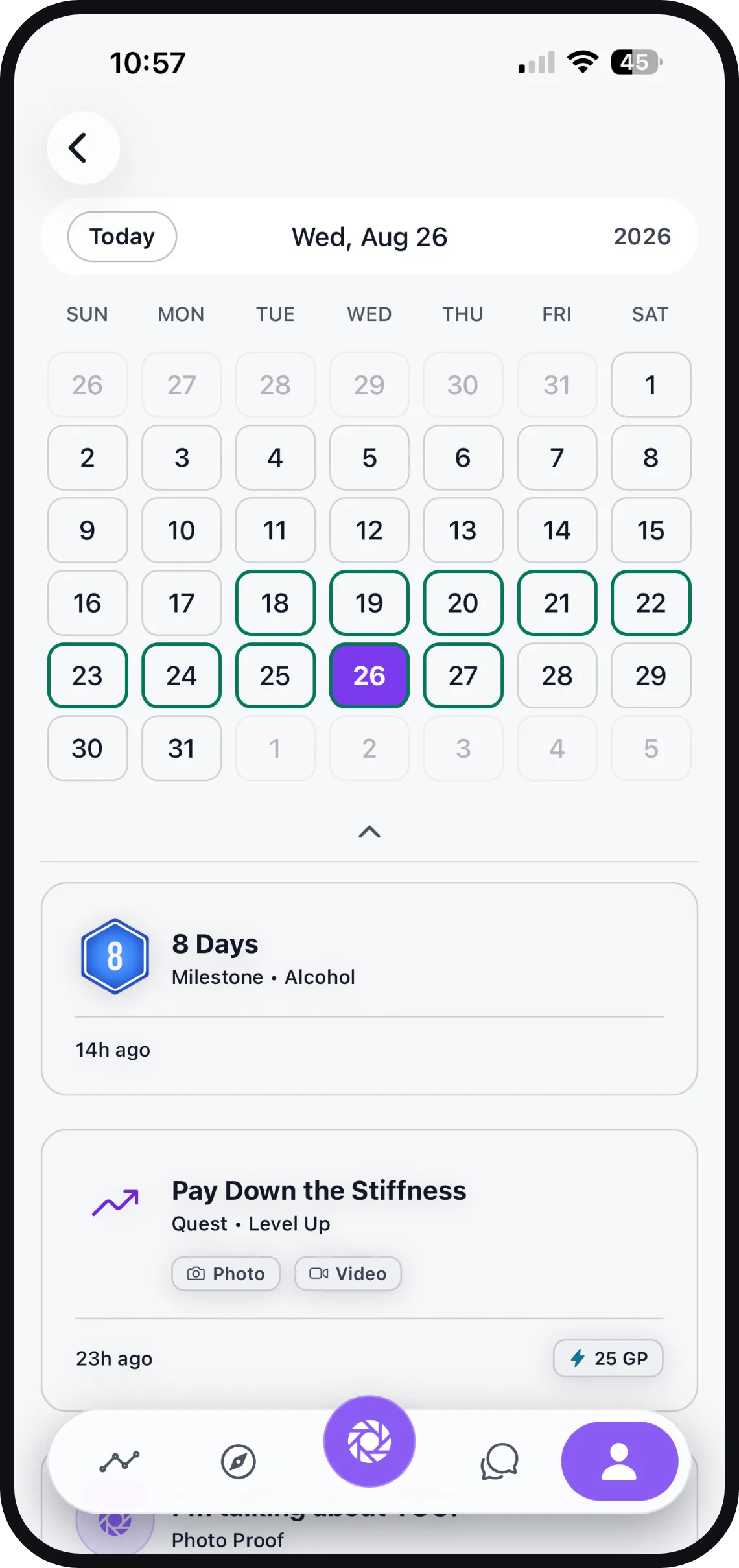
Door 24 is built the other way, because progress is proof. Every sober day you captured is a Proof: a photo, a voice note or a journal entry, timestamped on a dated timeline. One drink cannot delete Day 12 or Day 44. They are still there, and you can still scroll back and look at them. Your Growth Score is a 42-day rolling average, so a bad day bends the trend without erasing the work. Your Freedom Ledger still holds the time and money you reclaimed.
Counters reset. People do not. The point is not to count the days. It is to make them count, and to hold the evidence when a single drink tries to tell you none of it was real.
For what comes next, read what to do after a relapse and how to stop a relapse before it happens. For the design argument in full, see streaks vs. rolling averages. You can start stacking your own Proofs on the Freedom Ledger or get the app.
Sources
- Menon, J., and Kandasamy, A., "Relapse Prevention," Indian Journal of Psychiatry, 2018, 60(Suppl 4): S473-S478.
- Larimer, M. E., Palmer, R. S., and Marlatt, G. A., "Relapse Prevention: An Overview of Marlatt's Cognitive-Behavioral Model," Alcohol Research & Health, 1999.
- Hagman, B. T., Falk, D., Litten, R., and Koob, G. F., "Defining Recovery From Alcohol Use Disorder: Development of an NIAAA Research Definition," American Journal of Psychiatry, April 2022.
- National Institute on Drug Abuse (NIDA), "Treatment and Recovery," Drugs, Brains, and Behavior: The Science of Addiction.
Frequently asked
Is one drink a relapse?
Not by itself. Researchers call the first drink after a quit attempt a lapse. It becomes a relapse only if you return to your old drinking level. Roughly 40 to 80 percent of people treated for alcohol use disorder have at least one drink within the first year, while about 20 percent return to pre-treatment drinking.
Do I have to reset my sobriety date after one drink?
That is your call, and it is worth thinking about before you do it. The sober days you already lived still happened. Resetting a counter to zero can trigger the abstinence violation effect, where a single slip feels like total failure and makes further drinking more likely.
Why did one drink turn into a whole night?
Often because of the abstinence violation effect, described by Marlatt in 1985. When you see no step between one drink and total failure, the logic becomes get the most out of it. The drink did not cause the night. The story you told yourself about the drink did.
What should I do right after one drink?
Stop and change your setting. Tell one person the same day. Write down what the hours before the drink were actually like. Then take one sober action now. Returning quickly is what separates a lapse from a relapse.
Does one drink mean I failed at recovery?
No. The NIAAA research definition of recovery, published in 2022, treats recovery as an ongoing process rather than a perfect record. A slip is information about a gap in your plan, not a verdict on who you are.