Tools & tracking
Why do sobriety streaks backfire?
Sobriety streaks backfire because they are all-or-nothing. One slip resets the counter to zero, which triggers shame, and shame is what turns a single drink into a full relapse. A rolling average measures the trend of your behavior instead, so a bad day bends the line without erasing your progress. For a process as non-linear as recovery, the trend is the more honest and more motivating measure.
The most popular way to measure sobriety, the day counter, has a hidden flaw that can push people out of recovery at the exact moment they need to stay. Here is the problem, and a better model.
Why do sobriety streaks backfire?
Because a streak is all-or-nothing, and recovery is not. Relapse is common, roughly 40 to 60 percent of people treated for substance use disorders relapse at some point, per NIDA, a rate similar to other chronic conditions. So a streak is almost designed to break. When it does, the reset to zero frames the slip as total failure. Addiction physician Steven Melemis, in the Yale Journal of Biology and Medicine (2015), describes how this kind of all-or-nothing thinking feeds the shame that drives a lapse into a full relapse. The measurement itself becomes a trigger.
Why a rolling average is a better measure
A rolling average tracks the trend of your behavior over a window of time rather than an unbroken chain. One slip nudges the line down. It does not delete the months underneath it. That better matches how change actually works, and it keeps you looking at the direction you are heading instead of a single fragile number.
| Day-counter streak | Rolling average of consistency |
|---|---|
| One slip resets to zero | One slip bends the trend |
| All-or-nothing, shame on failure | Directional, resilient to a bad day |
| Rewards a perfect chain | Rewards showing up over time |
| Fragile at the worst moment | Steady when you need it most |
How Door 24 measures it
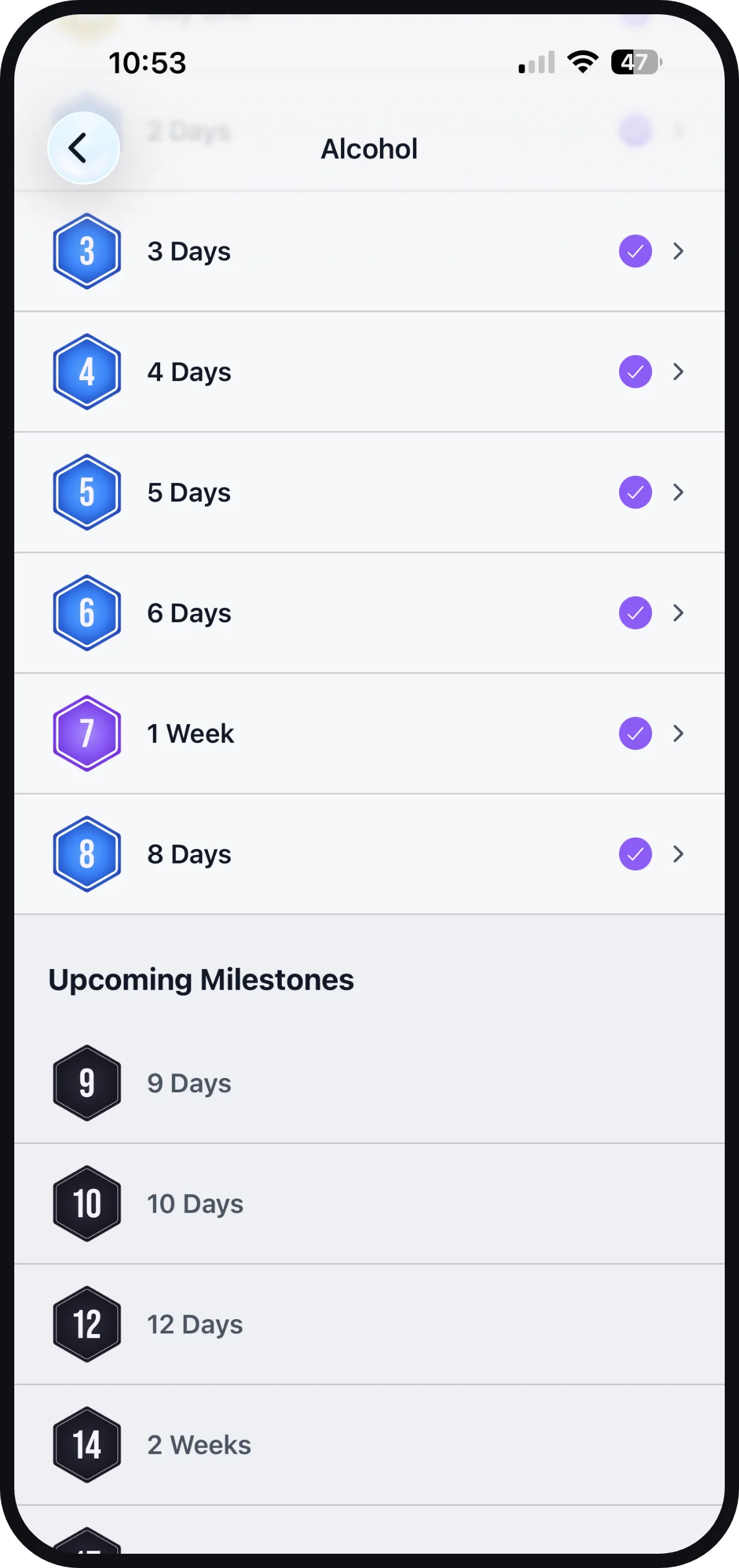
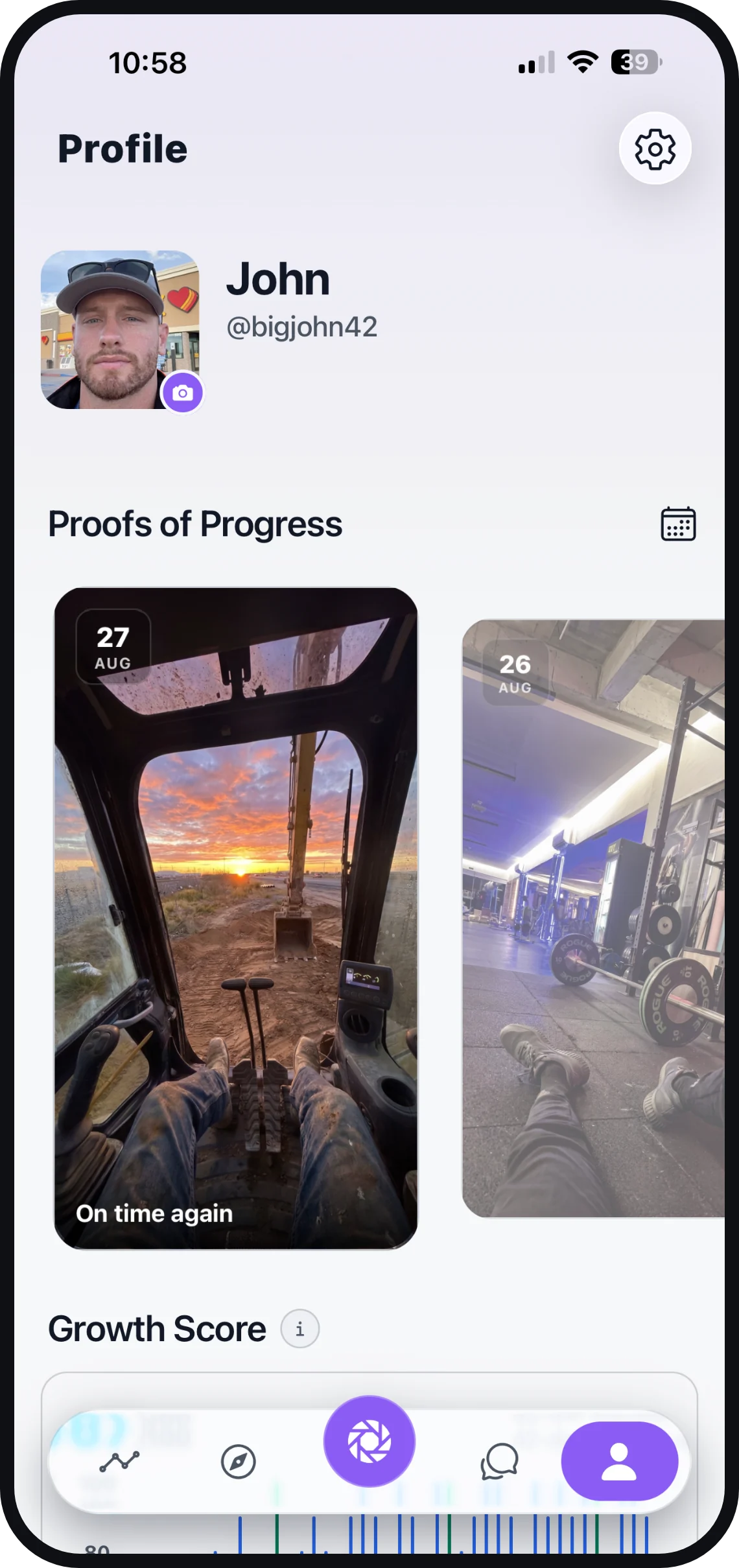
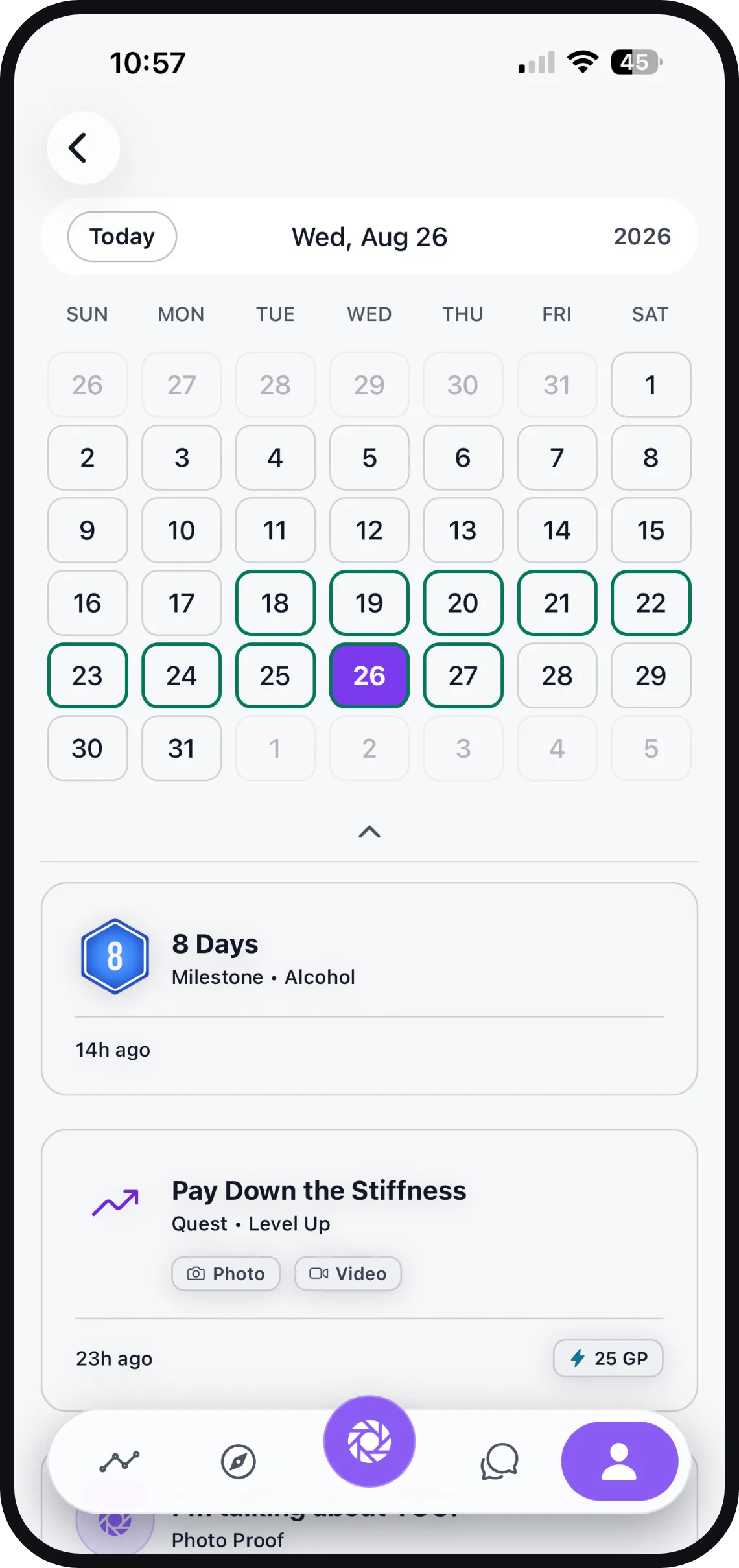
This is the whole reason Door 24 exists: progress is proof, and the point is not to count the days, it is to make them count. Every sober day becomes a Proof on a dated timeline, and your Growth Score is a 42-day rolling average of consistency, not a streak. A hard day shifts the trend, it does not send you back to zero. Counters reset. People do not. The Freedom Ledger adds the money and time you have reclaimed, another number that only grows.
If a slip already happened, read what to do after a relapse. For the moments that threaten the trend, see how to get through cravings without relapsing and the most common relapse triggers. Ready to start? Get Door 24.
Sources
- National Institute on Drug Abuse (NIDA), "Treatment and Recovery," Drugs, Brains, and Behavior: The Science of Addiction, 2020.
- Melemis, S. M., "Relapse Prevention and the Five Rules of Recovery," Yale Journal of Biology and Medicine, 2015.
Frequently asked
Why do day counters make relapse worse?
Because resetting to zero frames a single slip as total failure. That all-or-nothing framing fuels shame and the sense that the work is gone, which makes it easier to keep drinking rather than return to recovery the same day.
What is a better way to measure sobriety than a streak?
A rolling average of consistency. Instead of a fragile all-or-nothing count, it tracks the trend of your behavior over a window of time, so progress is visible even when recovery is messy, and one hard day does not erase months of effort.
Is it bad to count sober days?
Counting days can be motivating, but making the count the whole point creates a brittle streak that shame can shatter. The healthier frame is to make the days count by capturing what they build, then watch the trend rather than a single fragile number.