The science of recovery
Why do people relapse? The science of relapse explained
People relapse because relapse is a process, not a single moment. Researchers describe three stages: emotional relapse, where self-care slips and stress builds; mental relapse, where craving and bargaining begin; and physical relapse, the first drink or use. The brain changes of addiction raise the odds, but the earliest stage is behavioral, quiet, and catchable weeks before anything gets poured.
Most people picture relapse as a single bad night. A party, a bad hour, a moment of weakness. The research says something different and far more useful. By the time the drink is in your hand, the process has usually been running for weeks.
Why do people relapse?
People relapse because relapse is a gradual process with distinct stages, not one impulsive decision. Steven M. Melemis, writing in the Yale Journal of Biology and Medicine in 2015, put it plainly: "Relapse is a gradual process that begins weeks and sometimes months before an individual picks up a drink or drug." He describes three stages, emotional, mental, and physical, and notes that the goal of treatment is to help people recognize the early stages, when the chances of success are greatest. That reframe matters for the roughly 27.9 million Americans ages 12 and older, or 9.7 percent, who had alcohol use disorder in 2024, according to NIAAA.
| Stage | What is happening | What it looks like |
|---|---|---|
| Emotional relapse | Not thinking about using, but self-care is eroding | Bottling up emotions, isolating, poor sleep and eating, focusing on other people's problems |
| Mental relapse | An internal argument between using and not using | Craving, glamorizing past use, bargaining, thinking about people and places tied to use, looking for opportunities |
| Physical relapse | The drink or the use itself | Often a relapse of opportunity, a window where it feels like no one will know |
The common denominator of the first stage is poor self-care. Melemis notes that when people live in emotional relapse long enough, they start to feel restless, irritable, and discontent, and the thought of using arrives as an escape from that tension rather than as a craving out of nowhere.
What happens in the brain before a relapse?
The brain has already been remodeled by the substance, and that remodeling loads the dice. In their 2016 review in the New England Journal of Medicine, Nora Volkow, George Koob, and A. Thomas McLellan describe addiction as a three-stage cycle: binge and intoxication, withdrawal and negative affect, and preoccupation and anticipation. That third stage is the one that drives relapse. Prefrontal circuits that support self-control are weakened at the same time that stress and cue circuits are amplified, so a familiar bar, a song, or a rough week can pull harder than the intention to stay sober.
Craving also does not reliably fade on a neat schedule. In a 2001 Nature study, Grimm, Hope, Wise, and Shaham found that cue-triggered drug seeking in rats increased progressively across two months of withdrawal rather than decaying, a finding now known as the incubation of craving. Worth being precise here: that work is preclinical animal research, not a human trial. It does not predict your month three. But it does undercut the common assumption that time alone makes cues harmless.
What situations trigger relapse most often?
Ordinary human ones. In their overview of Marlatt's cognitive-behavioral model in Alcohol Research and Health, Larimer, Palmer, and Marlatt report that a small set of high-risk situations accounts for roughly three quarters of relapse episodes: negative emotional states, interpersonal conflict, and social pressure. Not exotic circumstances. A fight, a bad day, a wedding.
The same model describes the abstinence violation effect, which is the second half of the problem. When someone who has committed to abstinence has one drink, the reaction to it can matter more than the drink. If the slip gets read as proof of total failure, the all-or-nothing thinking that follows often turns a lapse into a full return to use. The evidence, in other words, does not just say slips happen. It says shame is what escalates them.
Does a relapse mean treatment failed?
No. The National Institute on Drug Abuse reports relapse rates of 40 to 60 percent for substance use disorders, comparable to the 50 to 70 percent seen in chronic medical conditions like hypertension and asthma. NIDA is direct about what that means: stopping substance use is one part of a long and complex recovery process, and a return to use signals that treatment needs to be resumed or adjusted, not that recovery is impossible.
What does the science say actually prevents relapse?
Early detection plus coping skills, not last-second willpower. Melemis makes the point that when people misunderstand relapse prevention, they think it means saying no in the final moment, which is the hardest possible place to intervene. Witkiewitz and Marlatt, writing in American Psychologist in 2004, went further and proposed a dynamic model in which relapse emerges from shifting interactions among many risk factors over time, rather than from one trigger. Both point the same direction: watch the trend, not the moment.
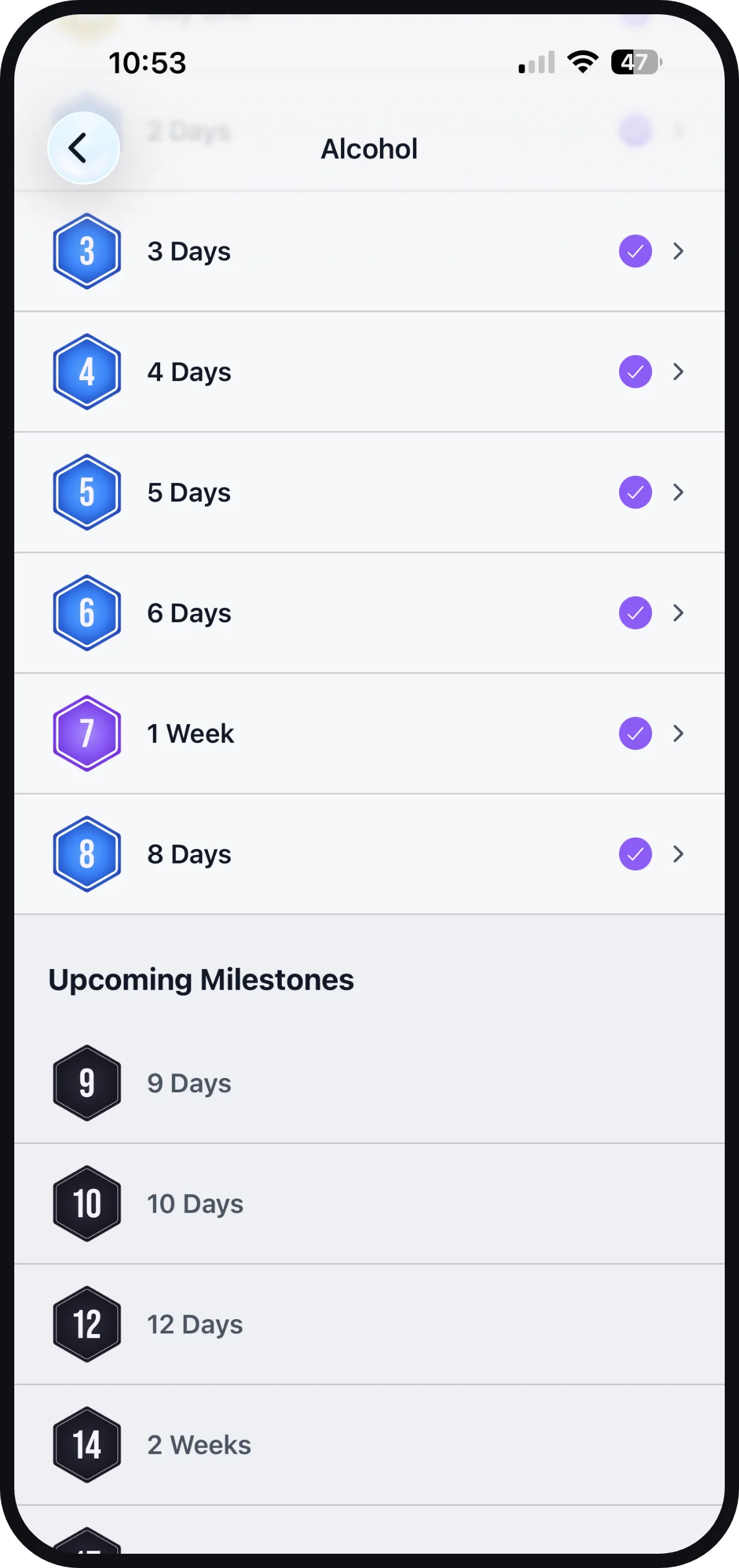
That is the practical problem with a day counter. It can only tell you about physical relapse, the last stage. It stays green through every day of emotional relapse, then drops you to zero on the one day it finally notices. It is blind exactly when you need sight, and punishing exactly when you need traction.
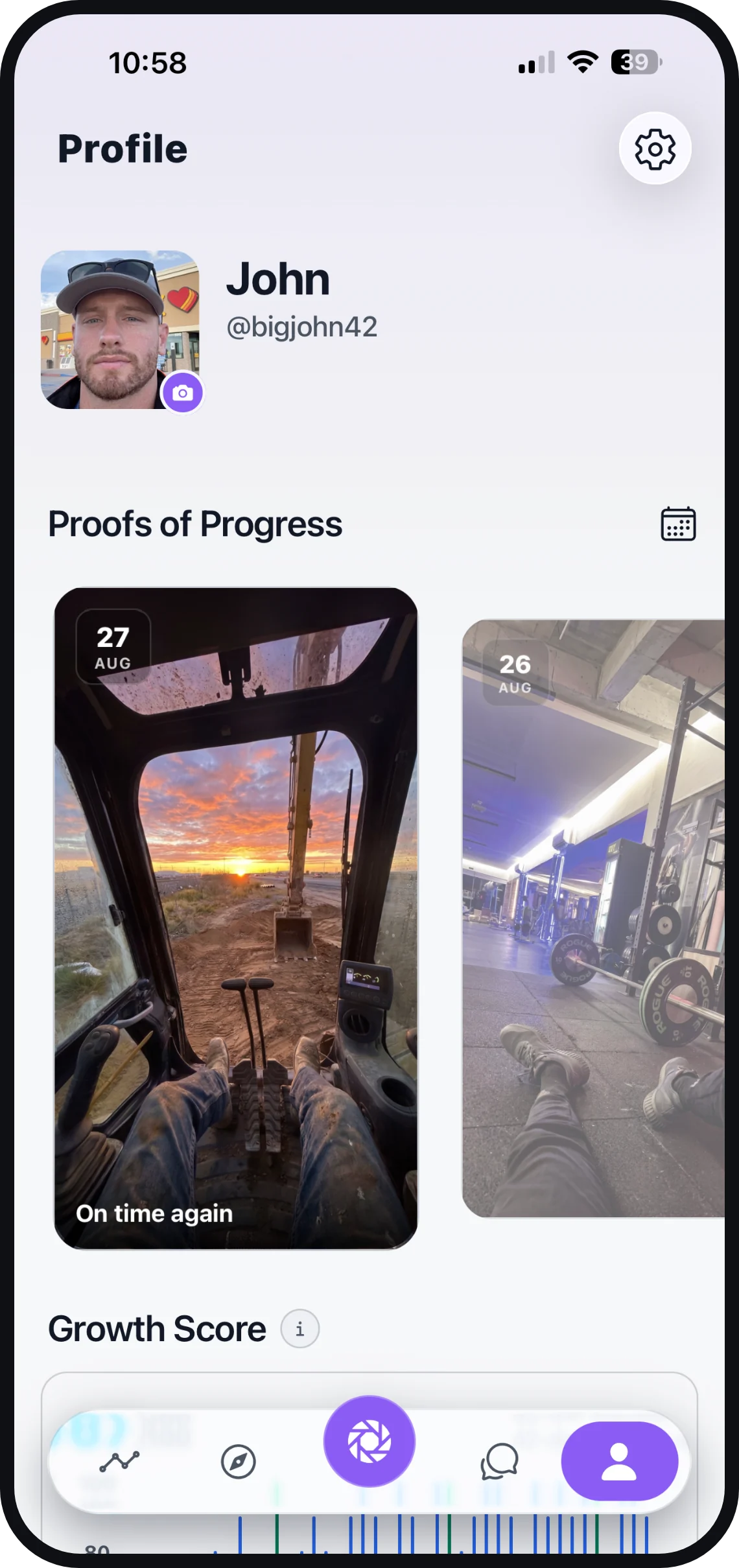
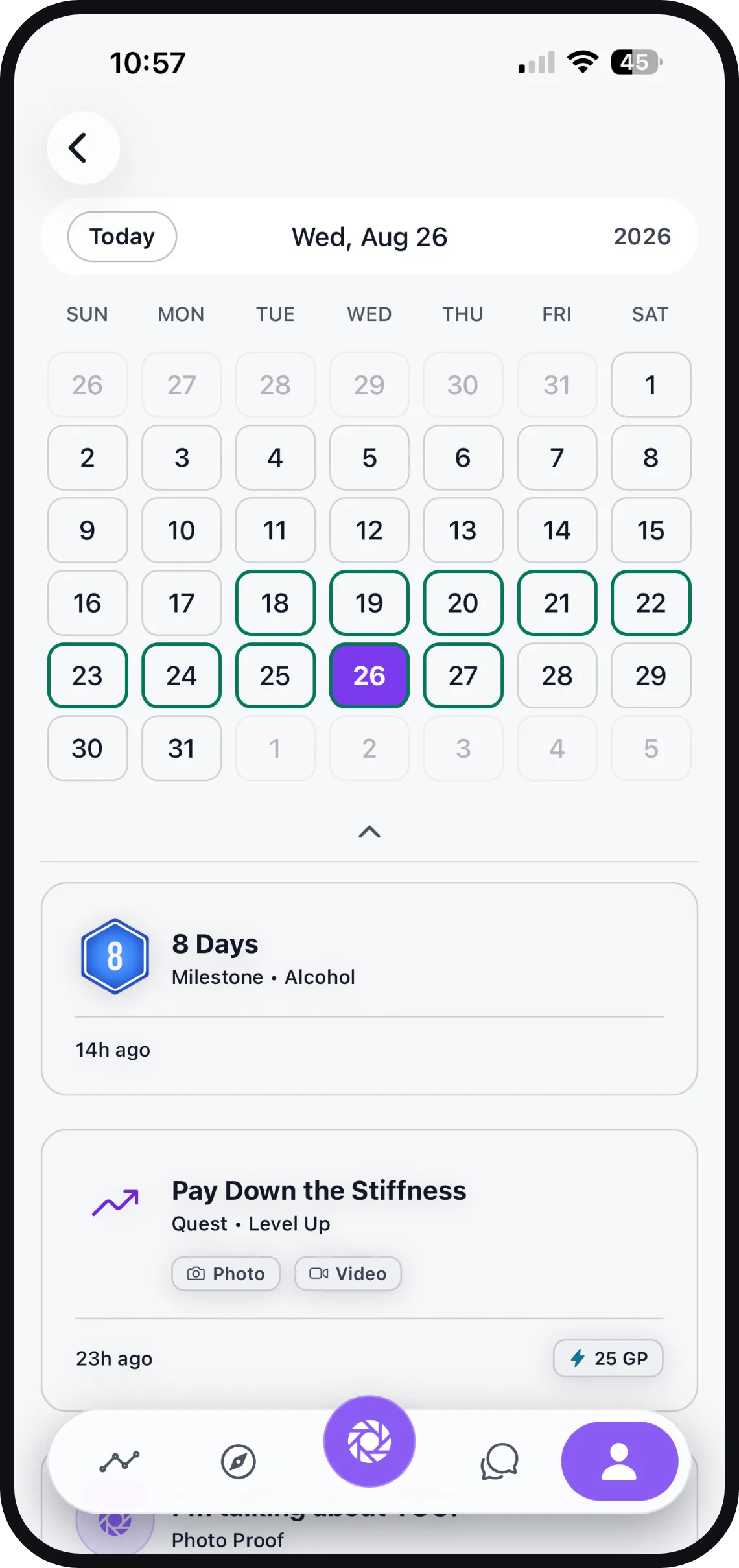
Door 24 was built on the other side of that. Abstinence is not enough. You do not just quit a habit, you become someone who no longer needs it, and becoming leaves evidence. Every sober day becomes a Proof you capture, a photo, a voice note, or a journal entry, dated on a timeline you can scroll back through. Your Growth Score reads consistency as a 42-day rolling average, so it moves with the trend instead of resetting, and a hard day shifts the line without erasing your work. The Freedom Ledger keeps the time and money in view. When you can see two weeks of thinner entries before the craving arrives, the early stage stops being invisible. That is the whole point. Counters reset. People don't.
Keep going with how to stop a relapse before it happens, what to do after a relapse, and why it is so hard to quit drinking. If you want the early stage to be something you can actually see, start with Door 24.
Sources
- Melemis SM, "Relapse Prevention and the Five Rules of Recovery," Yale Journal of Biology and Medicine, 2015;88(3):325-332. https://pubmed.ncbi.nlm.nih.gov/26339217/
- Volkow ND, Koob GF, McLellan AT, "Neurobiologic Advances from the Brain Disease Model of Addiction," New England Journal of Medicine, 2016;374:363-371. https://www.nejm.org/doi/full/10.1056/NEJMra1511480
- Grimm JW, Hope BT, Wise RA, Shaham Y, "Incubation of cocaine craving after withdrawal," Nature, 2001;412:141-142. https://www.nature.com/articles/35084134
- Larimer ME, Palmer RS, Marlatt GA, "Relapse Prevention: An Overview of Marlatt's Cognitive-Behavioral Model," Alcohol Research and Health, 1999;23(2):151-160. https://www.ncbi.nlm.nih.gov/pmc/articles/PMC6760427/
- Witkiewitz K, Marlatt GA, "Relapse Prevention for Alcohol and Drug Problems: That Was Zen, This Is Tao," American Psychologist, 2004;59(4):224-235. https://pubmed.ncbi.nlm.nih.gov/15149263/
- National Institute on Drug Abuse (NIDA), "Treatment and Recovery," Drugs, Brains, and Behavior: The Science of Addiction. https://nida.nih.gov/publications/drugs-brains-behavior-science-addiction/treatment-recovery
- National Institute on Alcohol Abuse and Alcoholism (NIAAA), "Alcohol Use Disorder (AUD) in the United States," 2024 NSDUH data. https://www.niaaa.nih.gov/alcohols-effects-health/alcohol-topics/alcohol-facts-and-statistics/alcohol-use-disorder-aud-united-states-age-groups-and-demographic-characteristics
Frequently asked
Why do people relapse after being sober for a long time?
Because the risk shifts rather than disappears. Cue sensitivity does not simply fade with time, and later relapses often follow a drop in self-care, a return to old routines, or the belief that use can now be controlled. Research on the abstinence violation effect also shows that how a person interprets a slip predicts what happens next more than the slip itself does.
Is relapse a sign of failure?
No. The National Institute on Drug Abuse reports relapse rates of 40 to 60 percent for substance use disorders, similar to the 50 to 70 percent seen in chronic conditions like hypertension and asthma. A return to use signals that the plan or the support needs adjusting, not that the person is beyond help.
What are the warning signs of relapse?
The earliest signs are emotional, not cravings: bottling up feelings, isolating, poor sleep and eating, and focusing on everyone else's problems. Mental warning signs come next, including craving, glamorizing past use, bargaining, and looking for opportunities. Physical relapse is the last stage, not the first.
Can relapse be prevented?
Risk can be reduced meaningfully. The evidence points to catching the early stages, building coping skills for high-risk situations, and protecting self-care rather than relying on willpower in the final moment.