The science of recovery
Does the brain heal after addiction?
Yes. The brain has real capacity to heal after addiction. Because the brain is adaptable, or plastic, many alcohol- and drug-induced changes can improve and even partly reverse with sustained abstinence. Some gray matter recovers within the first weeks. Reward-system markers can regenerate over months. The healing is real, but it is uneven, and it is not the same as instant or complete.
You quit weeks ago and you still feel foggy, flat, or wired. It is easy to read that as proof nothing is changing. It is usually the opposite. The repair is already underway. You just cannot feel it yet, because the brain heals quietly, from the inside, long before the mirror or the mood catches up.
Does the brain heal after addiction?
Yes, the brain heals after addiction, though the healing is partial, uneven, and gradual. The reason is neuroplasticity: the brain's ability to reorganize and adapt. The National Institute on Alcohol Abuse and Alcoholism (NIAAA) makes the point directly in its Core Resource on the neuroscience of addiction and recovery: "Just as brain plasticity contributes to the development of AUD, it can be harnessed to help the brain heal." A growing number of studies indicate that at least some substance-induced brain changes, and the shifts in thinking and feeling that come with them, can improve and possibly reverse with months of abstinence. This matters to a lot of people. In 2024, an estimated 27.9 million Americans ages 12 and older (9.7 percent) had alcohol use disorder, according to NIAAA.
What parts of the brain recover first?
Brain volume tends to rebound early. Chronic heavy drinking can shrink both gray and white matter, but that loss is not always permanent. A 2015 longitudinal MRI study in Drug and Alcohol Dependence tracked alcohol-dependent adults through abstinence and found significant volume increases across frontal, parietal, and occipital regions, the thalamus, and the cerebellum over roughly seven months. The key detail is the shape of the curve: the gains were significantly larger from one week to one month than from one month to seven and a half months. Recovery is real, but it is non-linear. The steepest climb comes early, then it settles into a slower grade.
| Brain system | What recovery can look like | Rough timing (varies by person) |
|---|---|---|
| Gray matter volume | Frontal, parietal, and other regions regain volume | Begins within the first 2 weeks, fastest in the first month |
| White matter | Structural integrity improves with sustained abstinence | Gradual, over months |
| Reward system (dopamine) | Dopamine-terminal markers rise back toward normal | Studied across ~14 months of abstinence |
| Executive function | Impulse control and decision-making improve | Months to years; some deficits can linger |
Can the brain's reward system bounce back?
Yes, at least in part. Addiction blunts the brain's dopamine reward system, which is part of why early sobriety can feel joyless. But that machinery can regenerate. In a classic Journal of Neuroscience study (2001), NIDA researchers led by Nora Volkow scanned methamphetamine users during early abstinence and again after protracted abstinence, an average of about 14 months. Dopamine transporter levels, which had dropped sharply, rose again over that longer stretch. As Volkow described it, "The increase in dopamine transporter levels with prolonged abstinence indicates that the terminals of dopamine-secreting cells, which are thought to be damaged by methamphetamine abuse, are able to regenerate." One honest caveat: the participants' performance on memory and motor tests did not improve to the same degree, which tells us that structural repair and full functional recovery are not the same thing, and that time matters.
Does the brain fully return to normal?
Not always, and honesty is the responsible answer here. NIAAA states plainly that the extent of the brain's capacity to return to "normal" following long-term sobriety is not fully understood. Some alcohol-related deficits, particularly in the prefrontal executive-function circuits that govern impulse control and decision-making, can persist for months to years. The encouraging part is that even when some circuitry stays altered, there is evidence that other brain circuits can compensate to help restore compromised function. Recovery is also not a straight line in behavior. NIDA reports that relapse rates for substance use disorders run 40 to 60 percent, on par with chronic conditions like hypertension and asthma. A return to use is a signal to adjust support, not proof the brain has stopped healing.
Why doesn't recovery feel like healing?
Because the repair is invisible from the inside. Your dopamine system does not send you a receipt when a transporter regenerates. Gray matter does not announce itself. So the brain can be weeks into real recovery while the day still feels heavy, and that gap is exactly where a lot of people quit. Invisible progress is the easiest kind to abandon on a hard night.
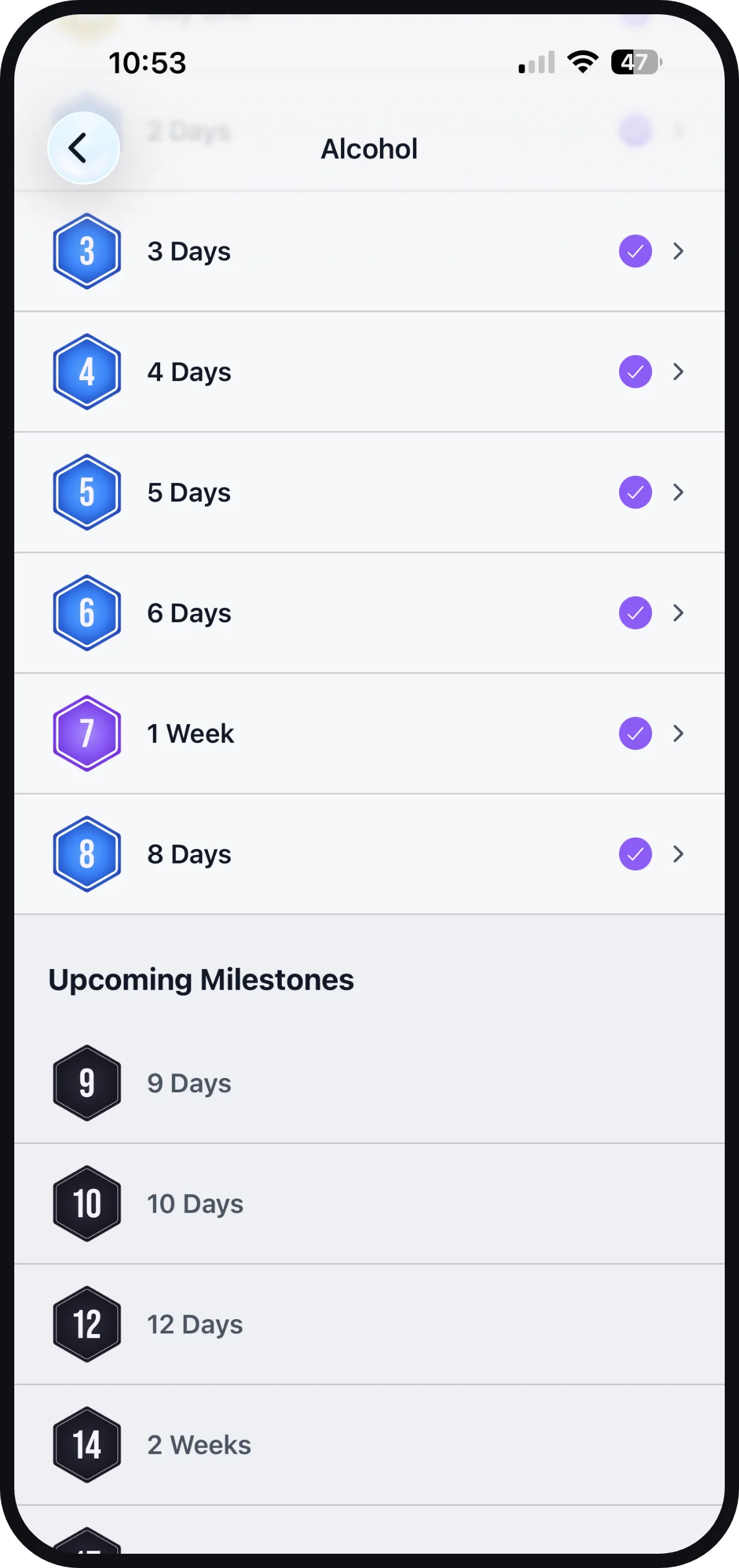
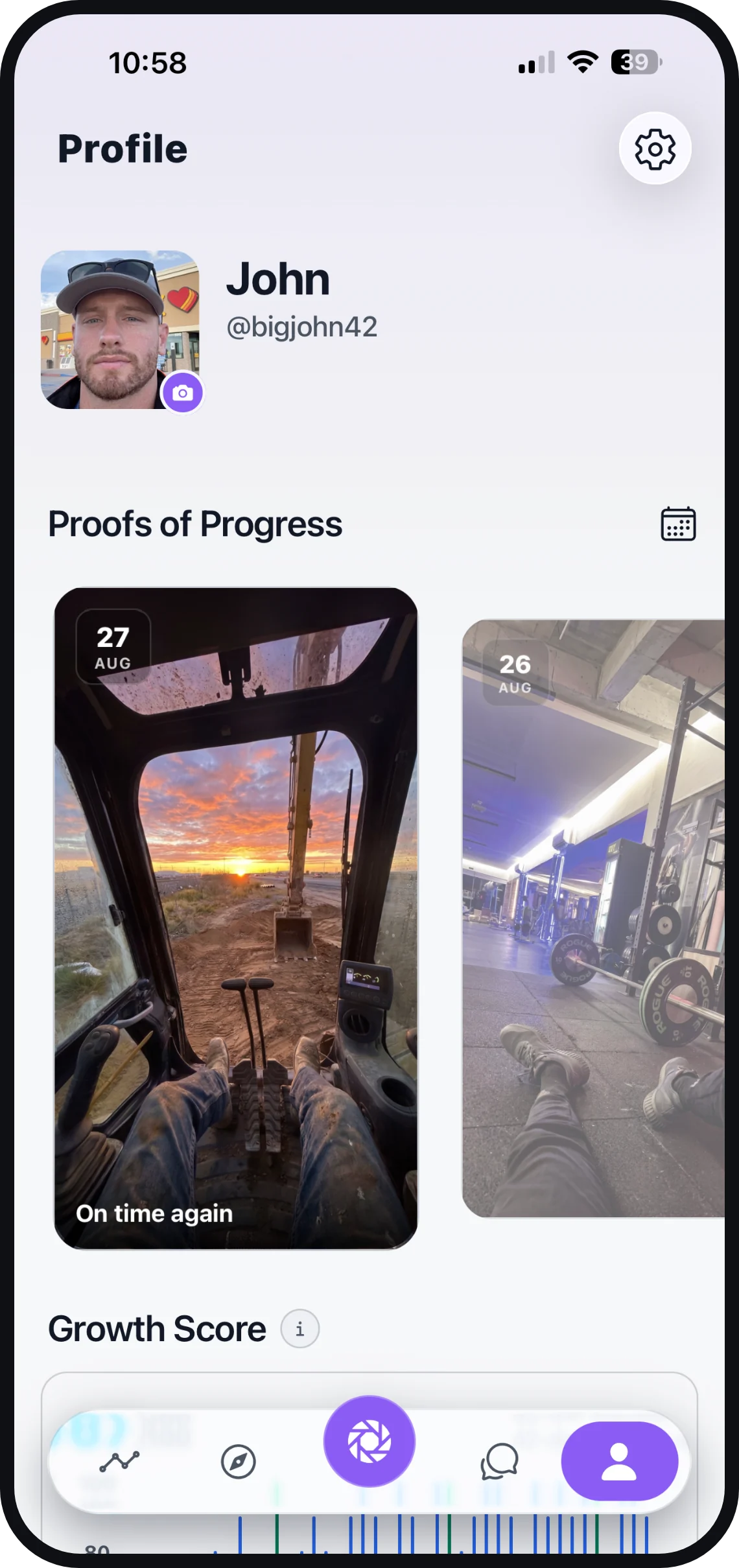
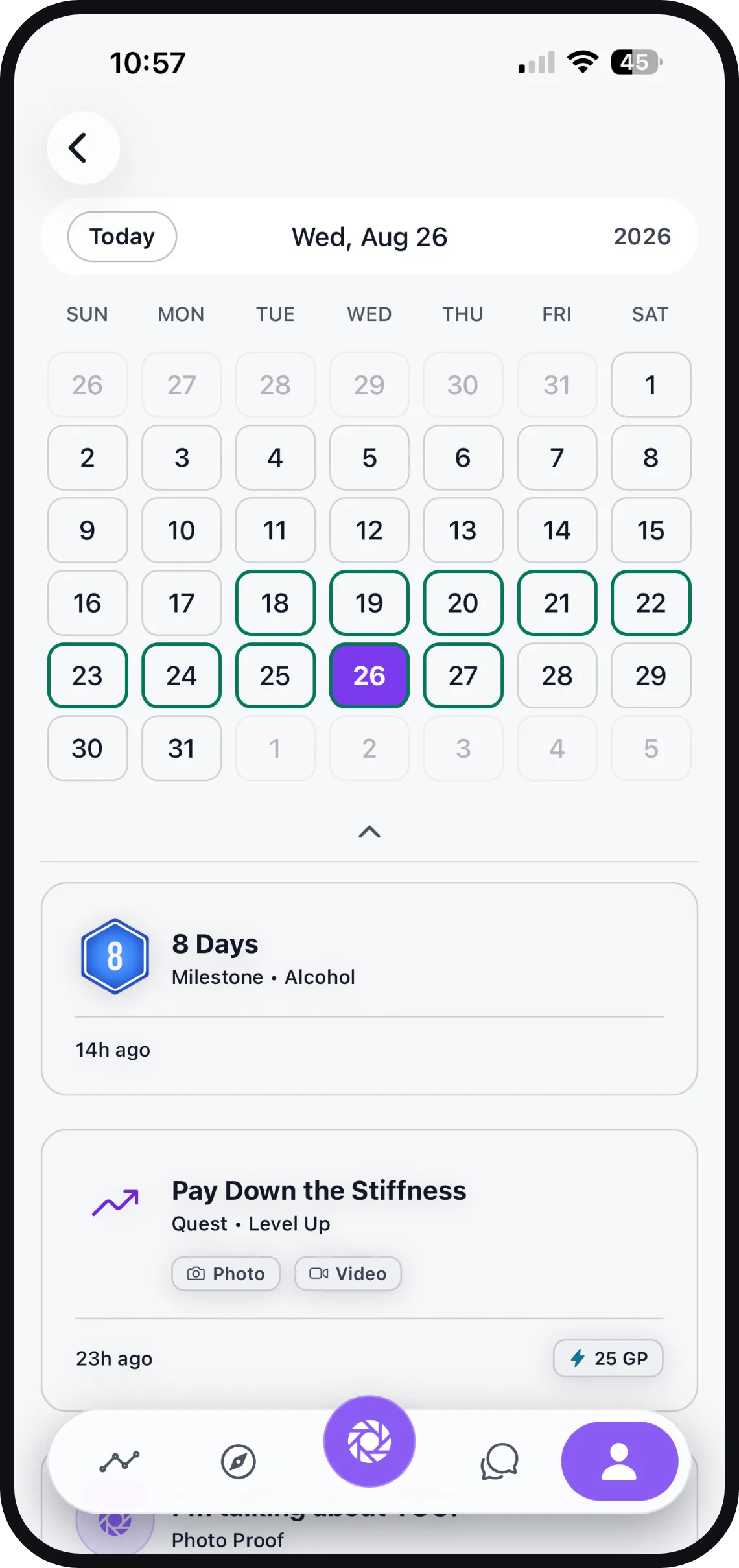
This is the Door 24 idea. Abstinence is not enough. You do not just quit a habit, you become someone who no longer needs it, and the biology of that becoming is happening whether or not you can feel it. So Door 24 makes it visible. You capture Proofs, dated photos, voice notes, or journal entries, that stack on a timeline you can scroll back through. Your Growth Score reads consistency as a 42-day rolling average, not a fragile streak, so one hard day moves the trend without erasing your work. When your brain is healing faster than your mood, the evidence can show you what your feelings cannot yet confirm.
Keep going with what happens to your brain when you get sober, how long it takes the brain to recover from alcohol, and why it is so hard to quit drinking. When you are ready to make the invisible repair visible, start with Door 24.
Sources
- National Institute on Alcohol Abuse and Alcoholism (NIAAA), "Neuroscience: The Brain in Addiction and Recovery," Core Resource on Alcohol (Koob GF, White AM). https://www.niaaa.nih.gov/health-professionals-communities/core-resource-on-alcohol/neuroscience-brain-addiction-and-recovery
- Mon A, et al., "Serial longitudinal MRI data indicates non-linear regional gray matter volume recovery in abstinent alcohol-dependent individuals," Drug and Alcohol Dependence, 2015. https://pmc.ncbi.nlm.nih.gov/articles/PMC4345147/
- Volkow ND, et al., "Loss of Dopamine Transporters in Methamphetamine Abusers Recovers with Protracted Abstinence," Journal of Neuroscience, 2001;21(23):9414. https://www.jneurosci.org/content/21/23/9414
- National Institute on Drug Abuse (NIDA), "Treatment and Recovery," Drugs, Brains, and Behavior: The Science of Addiction. https://nida.nih.gov/publications/drugs-brains-behavior-science-addiction/treatment-recovery
- National Institute on Alcohol Abuse and Alcoholism (NIAAA), "Alcohol Use Disorder (AUD) in the United States," 2024 NSDUH data. https://www.niaaa.nih.gov/alcohols-effects-health/alcohol-topics/alcohol-facts-and-statistics/alcohol-use-disorder-aud-united-states-age-groups-and-demographic-characteristics
Frequently asked
Does the brain fully heal after addiction?
Not always, and not always completely. NIAAA states the brain's full capacity to return to normal after long-term sobriety is not yet fully understood. A growing body of research shows many changes improve and can partly reverse with months of abstinence, while some deficits in areas like executive function can linger. Even then, other brain circuits can often compensate to help restore function.
How long does it take the brain to heal after addiction?
It depends on the region and the person. Some gray matter volume can begin recovering within the first two weeks of abstinence, with the fastest gains in the first month. Reward-system markers studied in stimulant users kept increasing across roughly 14 months. Healing is a long, non-linear process, not a single finish line.
Can the brain's reward system recover after addiction?
Yes, at least in part. In a Journal of Neuroscience study, dopamine transporter levels that were reduced in methamphetamine users rose again after protracted abstinence, which researchers interpreted as damaged dopamine terminals regenerating. Cognitive performance did not fully recover in step, so structural repair and full functional recovery are not the same thing.
Is it ever too late for the brain to heal?
It is rarely as simple as too late. Neuroplasticity, the brain's ability to change, works in both directions your whole life. Gray matter volume begins recovering within the first two weeks of abstinence, and dopamine systems keep repairing over months.