Tools & tracking
How much money do you save when you quit drinking?
The average US household spent $643 on alcohol in 2024, according to the Bureau of Labor Statistics. That is the floor, not your number. It is averaged across every household, including the ones that never drink at all. Multiply your real drinks per week by what you actually pay, and the arithmetic puts most regular drinkers somewhere between $3,000 and $13,000 a year.
Alcohol is one of the few expenses people never total up. The receipts are small, they are spread across bars, stores, and delivery apps, and nobody wants to see the annual figure. So here it is, calculated honestly, with the sources.
How much money do you save quitting drinking in a year?
Start with the national benchmark. The Bureau of Labor Statistics reported that average annual household spending on alcohol was $643 in 2024, up from $637 in 2023 and $583 in 2022. That is 0.8 percent of the $78,535 the average consumer unit spent on everything that year.
That $643 is a weak number for one reason: it is an average across all 135.8 million US consumer units, and a large share of them buy no alcohol at all. The households that do drink absorb the entire national total, so their individual spending runs well above the headline figure. Heavy drinking concentrates the spend further still. Per the 2024 National Survey on Drug Use and Health, summarized by NIAAA, 57.0 million adults reported binge drinking in the past month and 14.4 million adults reported heavy alcohol use, defined as binge drinking on five or more days in a month.
If you were in that group, the national average is not your number. Yours is a multiple of it.
How do you calculate your own number?
Count your drinks in an ordinary week, not a good one. Multiply by what you actually pay per drink. Then multiply by 52.
The table below runs that arithmetic at two price points: $8 per drink, roughly a blend of store and bar prices, and $12 per drink, closer to what a night out costs in most cities. These are estimates, not survey data. Substitute your own price.
| Drinks per week | Per week at $8 | Per year at $8 | Per week at $12 | Per year at $12 |
|---|---|---|---|---|
| 7 (one a day) | $56 | $2,912 | $84 | $4,368 |
| 14 (two a day) | $112 | $5,824 | $168 | $8,736 |
| 21 (three a day) | $168 | $8,736 | $252 | $13,104 |
| 28 (four a day) | $224 | $11,648 | $336 | $17,472 |
Then add what rides along with the drinking. Rideshares home. The delivery order at 11 p.m. Cover charges. The Sunday you spent horizontal instead of doing the thing you were paid to do. Those costs are the easiest ones to forget and the easiest ones to recover, because unlike cash at the bar they leave a clean trail on your card statement.
What does alcohol cost beyond the bar tab?
The bill does not stop at your wallet. CDC researchers estimated that excessive drinking cost the United States $249 billion in 2010, which works out to $2.05 per drink, up from $1.90 per drink in 2006, and that two of every five dollars of that cost were paid by governments. NIAAA still cites that estimate, and notes that three quarters of the total cost of alcohol misuse was related to binge drinking. Most of the cost was lost workplace productivity, not medical bills.
"The increase in the costs of excessive drinking from 2006 to 2010 is concerning, particularly given the severe economic recession that occurred during these years," said Robert Brewer, M.D., M.S.P.H., head of CDC's Alcohol Program and one of the study's authors, in the CDC release announcing the findings. The researchers noted their figure is probably an undercount, because alcohol use is routinely underreported and the study excluded pain and suffering entirely.
The productivity share is the part worth sitting with. It is not an abstraction. It is your mornings.
Why does saving money alone not keep you sober?
Because a number in a bank app is not an identity.
Money saved is real, and it is motivating for about three weeks. Then it becomes background. The savings arrive invisibly, in the form of things that did not happen, and the human brain is bad at feeling grateful for absences. This is the same reason a day counter stops working around day 40. Counting what you avoided gives you nothing to look at.
That is the difference between a tally and evidence. A tally says you did not spend $168 this week. Evidence says here is the person who did not spend it, and here is what he did instead. One is a subtraction. The other is a life taking shape.
Abstinence is not enough. You do not quit a habit. You become someone who no longer needs it. The money is a byproduct of that change, not the engine of it.
How does the Freedom Ledger turn savings into Proof?
Door 24 runs the money and the identity on the same rails.
The Freedom Ledger is the money and time you have reclaimed, calculated from what you actually used to spend rather than a national average. It answers the finance question directly and keeps answering it as the total grows.
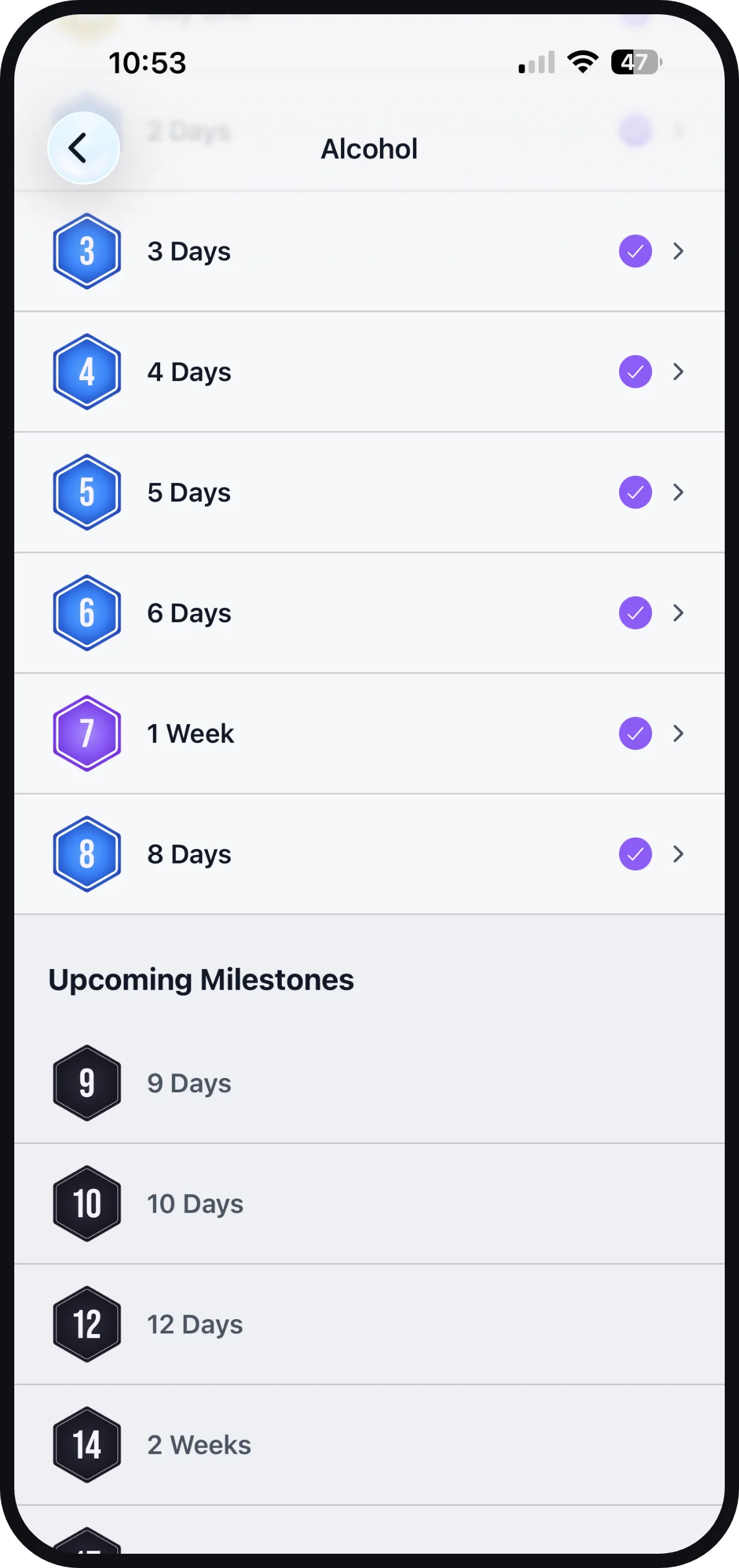
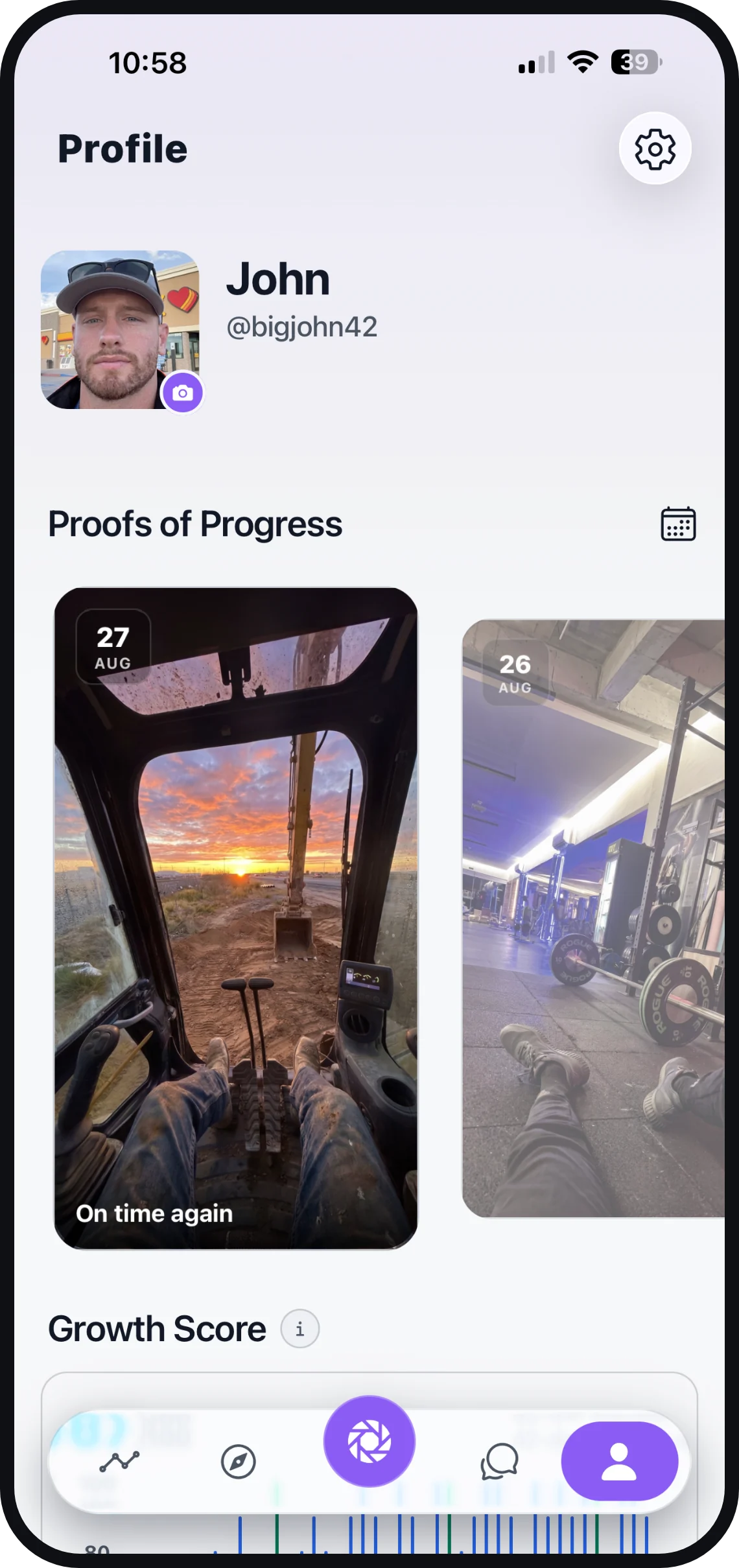
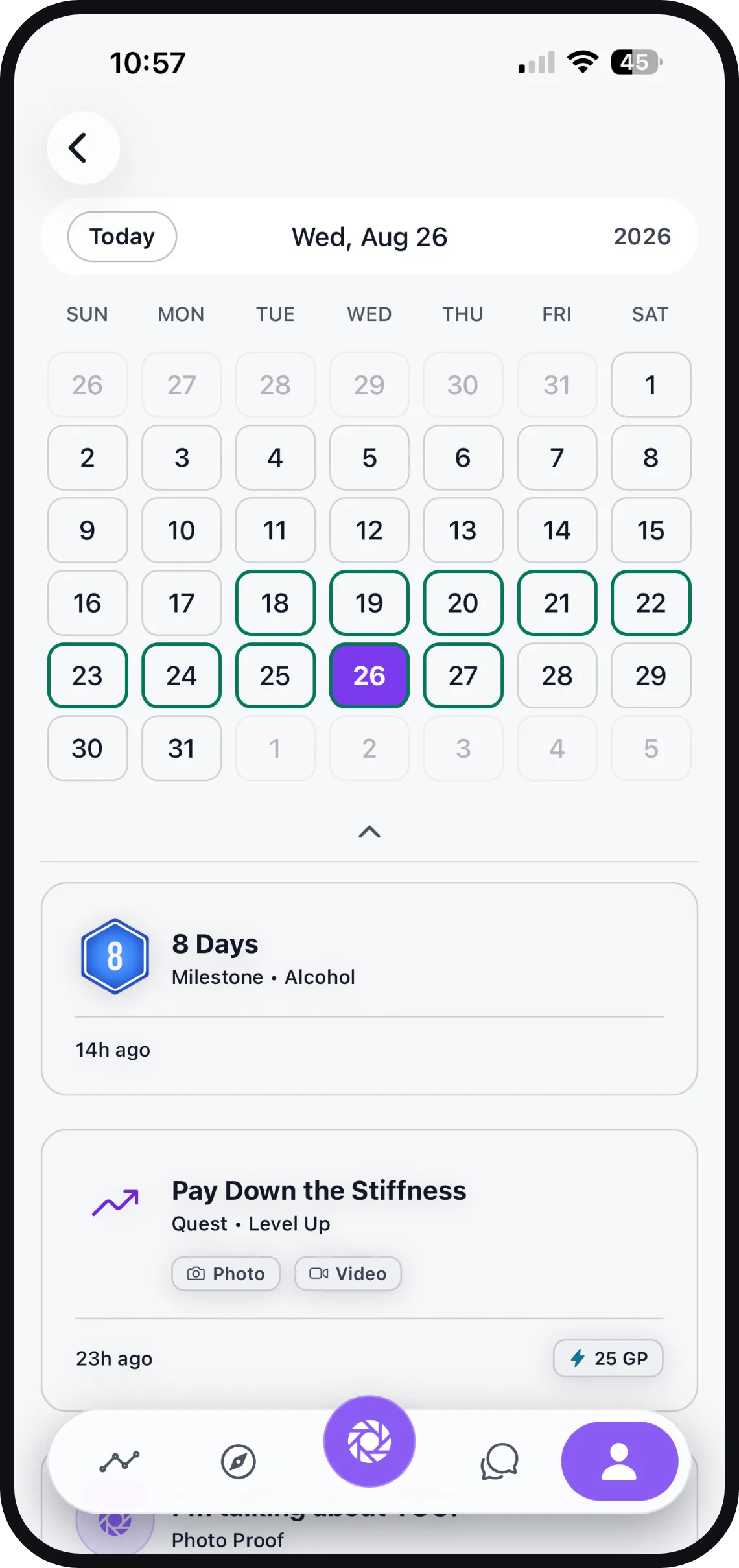
But the Ledger sits next to your Proofs. Every sober day becomes a Proof you capture: a photo, a video, a voice note, or a journal entry, timestamped onto a dated timeline. Scroll back to Day 12 and you can see the version of you that was barely holding on. Look at Day 90 and something about the eyes has changed. The dollars tell you what you kept. The Proofs tell you who kept it.
Your Growth Score is a 42-day rolling average of consistency, not a streak. A hard day moves the trend. It does not erase your work and it does not zero out your Ledger. That matters here, because the fastest way to abandon a savings goal is to break it once and decide the whole thing is ruined.
Money is the easiest thing to measure and the least interesting thing you get back.
What should you do with the money?
Move it before it dissolves.
Unassigned savings get absorbed into ordinary spending within a month or two, and then the win vanishes. Give it a destination on day one:
- Automate the transfer. Set a weekly move equal to your old weekly drinking spend. Same day, same amount, no decision required.
- Name one thing. Not "savings." A specific object, trip, debt, or class. Vague goals lose to specific cravings.
- Buy back time, not just stuff. The mornings you get back are the larger asset. Spend some of the money protecting them.
- Capture it. Photograph the balance, the paid-off statement, the thing you bought. That is a Proof, and it belongs on the timeline next to the rest.
Ninety days in, the savings are real enough to see. The person who saved them is the part worth documenting.
Related reading
- Do sobriety apps actually work?
- How do I measure sobriety progress beyond day counts?
- Why do sobriety streaks backfire?
- See how the Freedom Ledger works
- Get Door 24
Sources
- U.S. Bureau of Labor Statistics, Consumer Expenditures 2024, released December 19, 2025.
- NIAAA, Economic Burden of Alcohol Misuse in the United States, updated March 2026.
- NIAAA, Alcohol Use in the United States: Age Groups and Demographic Characteristics, 2024 NSDUH data.
- CDC, Excessive alcohol use continues to be drain on American economy, October 15, 2015.
- Sacks JJ, Gonzales KR, Bouchery EE, Tomedi LE, Brewer RD. 2010 National and State Costs of Excessive Alcohol Consumption. Am J Prev Med. 2015;49(5):e73-e79.
Frequently asked
How much money does the average person save by quitting drinking?
The Bureau of Labor Statistics put average household spending on alcohol at $643 in 2024. That figure is averaged across all 135.8 million US consumer units, including the millions that buy no alcohol at all, so a regular drinker's real spend is usually several times higher. Running your own drinks per week against your own per-drink price is the only number that means anything.
How do I calculate how much I spend on alcohol?
Count your drinks in a normal week, not a good week. Multiply by what you actually pay per drink, blending bar prices and store prices. Multiply that weekly figure by 52. Then add the costs that ride along with drinking: rideshares, late-night food, cover charges, and the deliveries you do not remember placing.
Does saving money help you stay sober?
Money is useful evidence, not a strategy on its own. Savings show up slowly and quietly, which is why a dollar counter alone rarely holds anyone through a hard week. It works best paired with something you can see and feel, like a dated Proof of the day you got through, so the financial change and the personal change land together.
How long does it take to notice the money?
Most people notice it in the first full billing cycle, roughly 30 days in. Weekend spending is usually where it shows first, because that is where the largest per-drink prices live. By 90 days the pattern is clear enough to redirect on purpose instead of by accident.
What should I do with the money I save from not drinking?
Move it somewhere visible before it disappears into normal spending. A separate account, an automatic weekly transfer, or one specific goal you name out loud. Money that stays in your checking account gets absorbed. Money you assign to something becomes proof that your life is changing shape.