Getting sober
What is a sobriety date and why does it matter?
Your sobriety date is the first full day you stopped drinking or using. It is the anchor point everything else is measured from. It matters because it turns a vague intention into a fixed, dated fact you can build on. What it is not is a scoreboard. The date gives your recovery a starting line. What you do after it is the actual work.
Almost everyone in recovery has a date. Fewer people can say what it is actually for.
What is a sobriety date and why does it matter?
A sobriety date is the first full day you stopped drinking or using. It matters because it converts a private intention into a fixed, dated fact. Before the date, quitting is something you are thinking about. After it, there is a line in your calendar and a before and an after. That line is useful. It gives every day that follows a place to sit.
The date also matters because it is the unit researchers and clinicians use. Time in recovery is not treated as a vague feeling. It is measured. The National Institute on Alcohol Abuse and Alcoholism categorizes remission from alcohol use disorder by duration: initial, early, sustained, and stable. You cannot locate yourself on that arc without a starting point.
This is not a small population. An estimated 28.9 million Americans aged 12 and older had alcohol use disorder in 2023, about 10.2 percent, according to SAMHSA's National Survey on Drug Use and Health. Millions of those people are choosing a date this year.
How do researchers measure time in recovery?
By duration, in named bands. NIAAA's research definition, published in the American Journal of Psychiatry on April 12, 2022 by Brett Hagman, Dan Falk, Raye Litten, and George Koob, is explicit about what recovery is and how it is timed.
"Recovery is a process through which an individual pursues both remission from AUD and cessation from heavy drinking."
That is the NIAAA definition, verbatim. Note the word "process." Not an event, not a number. The duration bands below give that process a shape.
| Stage | Time since your sobriety date | What it means |
|---|---|---|
| Initial remission | Up to 3 months | The earliest, most volatile stretch |
| Early remission | 3 months to 1 year | Habits start to hold |
| Sustained remission | 1 to 5 years | The new normal takes over |
| Stable remission | More than 5 years | Identity, not effort |
Source: NIAAA Recovery Research Definitions. These bands describe remission from alcohol use disorder in research terms. They are not a diagnosis and not a promise about your path.
Two things are worth reading in that table. First, the early stretch is short and the later stretches are long, which tells you the shape of the work changes as time passes. Second, nothing in the bands describes who you are. They describe elapsed time. That gap is exactly where most people get stuck.
How do you choose your sobriety date?
Pick the first full day you made it through without drinking or using, and write it down today. Some people use the date of their last drink instead. Both are common and neither is wrong. What matters is that you choose one, record it, and stop arguing with it.
A few practical notes:
- Do not wait for a clean, symbolic date. January 1 and Monday morning are not more powerful than a random Wednesday.
- Write it somewhere permanent. A Freedom Pledge in your own words, dated, is harder to talk yourself out of than a mental note.
- If you drink heavily every day, talk to a doctor before you stop suddenly. Alcohol withdrawal can be medically serious, and NIAAA notes that abstinence is the safest course but should be approached with care for people managing certain health conditions.
- Tell one person. A date you have said out loud is a different kind of date.
What happens to your sobriety date if you slip?
Nothing has to. This is where the standard model and the Door 24 model part ways. In many settings, a slip resets the count to zero, and that reset is one of the most reliable reasons people quit their recovery tool and disappear. The number was the only thing holding the weight, so when the number broke, everything did.
Sobriety is messy. A bad day shifts the trend. It does not erase the work or the evidence you have already stacked. If a slip has already happened, the useful next move is not shame, it is a plan. Read what to do after a relapse.
Is counting days from your sobriety date enough?
No. A day count measures absence. It records what you did not do. It says nothing about the person you were on Day 12 or the person looking back at you on Day 200, and it is precisely that difference that keeps people sober long term.
This is the Door 24 wedge. Abstinence is not enough. You do not quit a habit, you become someone who no longer needs it. So your date is the beginning of a record, not the beginning of a score.
| A day counter | A dated record of Proof |
|---|---|
| Counts what you avoided | Documents who you are becoming |
| Resets to zero on a hard day | Absorbs a hard day into the trend |
| One fragile number | A timeline you can scroll |
| Motivation depends on the streak | Evidence stands on its own |
How do you make the days after your date count?
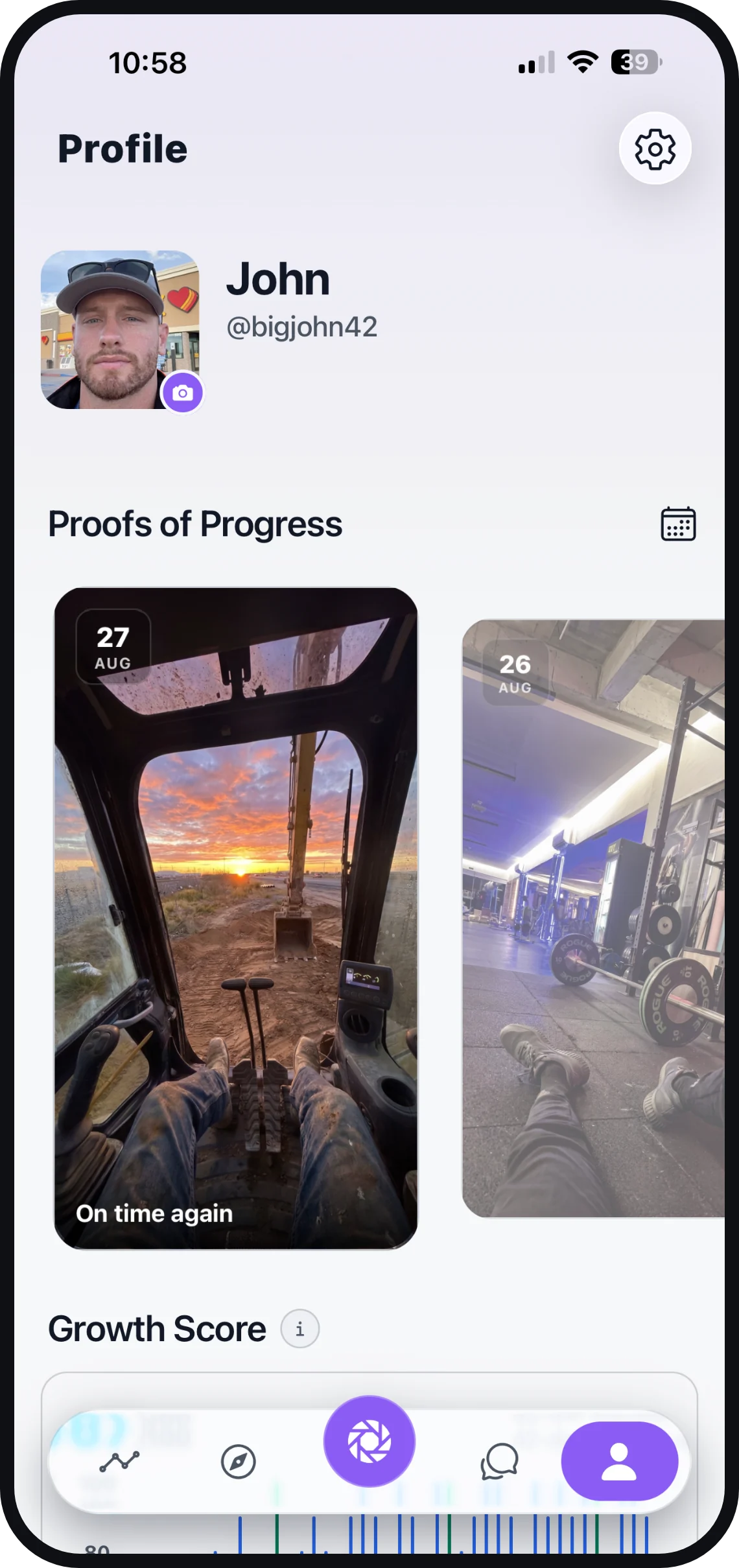
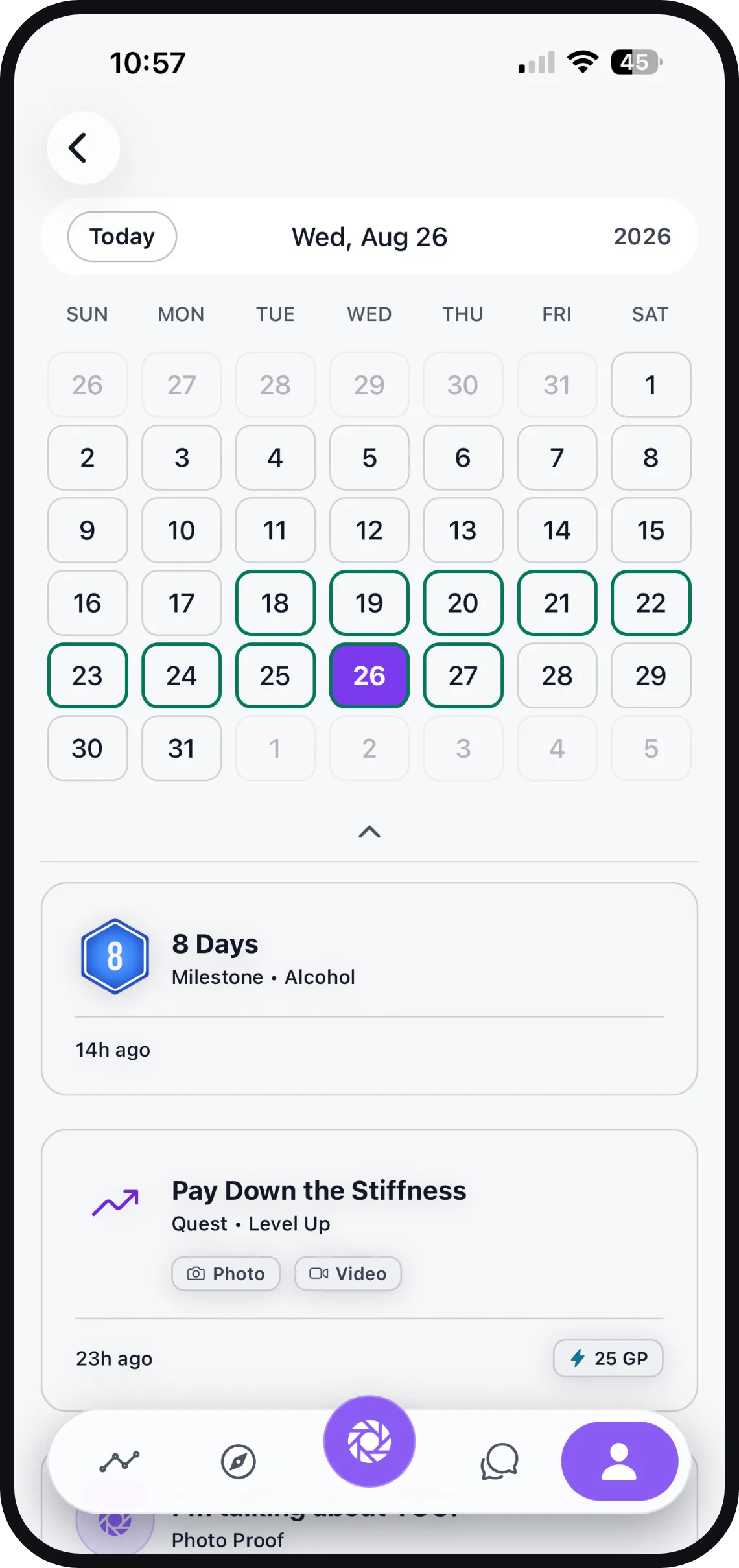
Capture one Proof a day. A photo, a video, a voice note, or a line of text, timestamped and landing on a dated timeline that starts at your sobriety date. Over weeks that timeline stops being a log and starts being evidence. You can scroll back to the face you had in week one and compare it to the one in month three.
Your Growth Score is a 42-day rolling average of consistency, so it moves with the trend rather than snapping back to zero. Alongside it, the Freedom Ledger counts the money and time you have reclaimed since the date. That is the point of the date: not the number of days, but the evidence stacked on top of them. Stop counting the days. Make the days count.
If your date is recent, read what the first 30 days of sobriety are like. If you want the reasoning behind rolling averages, see streaks versus rolling averages.
Your date is the door. Walking through it is the part only you can do. Ready to open it? Start here.
Sources
- National Institute on Alcohol Abuse and Alcoholism (NIAAA), "NIAAA Recovery Research Definitions." https://www.niaaa.nih.gov/research/niaaa-recovery-from-alcohol-use-disorder/definitions
- Hagman, B.; Falk, D.; Litten, R.; and Koob, G. "Defining Recovery From Alcohol Use Disorder: Development of an NIAAA Research Definition." American Journal of Psychiatry, published online April 12, 2022. PMID: 35410494. https://www.niaaa.nih.gov/news-events/research-update/niaaa-scientists-unveil-new-definition-recovery-aud
- Substance Abuse and Mental Health Services Administration (SAMHSA), "Key Substance Use and Mental Health Indicators in the United States: Results from the 2023 National Survey on Drug Use and Health." https://www.samhsa.gov/data/report/2023-nsduh-annual-national-report
Frequently asked
What day counts as your sobriety date?
Most people use the first full day with no alcohol or no use, meaning the first calendar day you woke up and got through without drinking or using. Others use the date of their last drink. Either is defensible. Pick one, write it down, and stop relitigating it. The date is a reference point, not a verdict on you.
Does your sobriety date reset if you slip?
That is your call, and it depends on what the date is for. Some programs require a reset. Door 24 does not build around that logic. A slip is data, not deletion. Your Growth Score is a 42-day rolling average, so a hard day shifts the trend without erasing the weeks of Proof you already captured.
Why do people celebrate sobriety anniversaries?
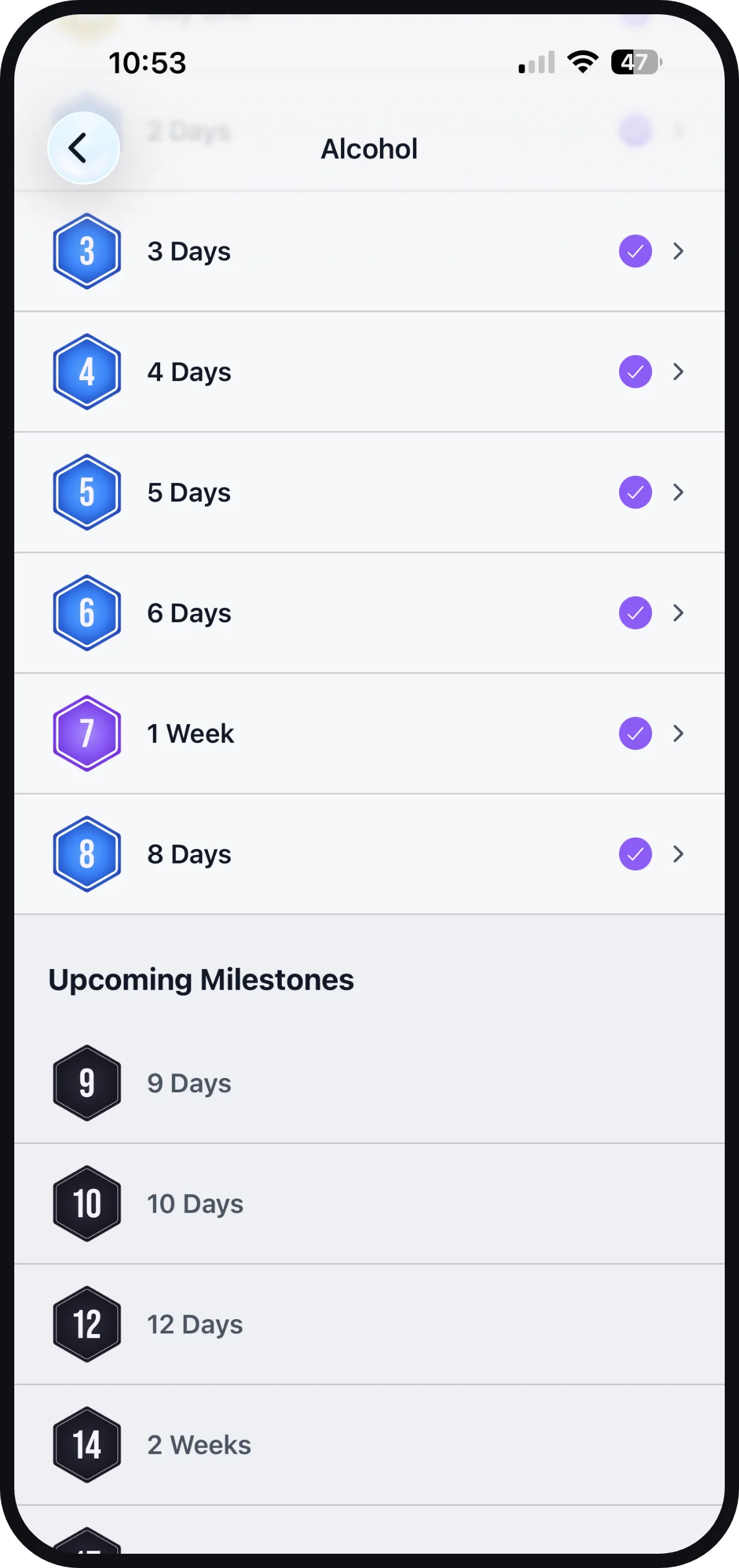
An anniversary marks accumulated evidence, not luck. Research groups time in recovery by duration for a reason. NIAAA categorizes remission from alcohol use disorder as initial, early, sustained, and stable, with stable meaning more than five years. Milestones give that arc a shape you can see and feel.
Is counting days from your sobriety date enough to stay sober?
No. A number tells you how long you have gone. It tells you nothing about who you are becoming. Counting alone is fragile because the count is the only thing at stake. Capturing Proof of each day gives you something a reset cannot take back.