Getting sober
How do I quit weed?
To quit weed, set a stop date, clear your space of cannabis and its cues, and prepare for a short withdrawal that usually peaks within a week. Most people quit without formal treatment. What predicts success is not willpower but structure: a plan for cravings, one person who knows, and proof you can see that you are becoming someone who no longer needs it.
Quitting weed is not just about putting it down. It is about becoming someone who no longer reaches for it. That shift is what makes the change last.
How do I quit weed?
To quit weed, set a stop date, remove cannabis and its triggers from your space, and prepare for a short withdrawal period. Most people who quit do so without formal treatment, because cannabis withdrawal is uncomfortable but not medically dangerous. The steps that actually predict success are practical: a written reason, a plan for your hardest moments, one person who knows, and a way to see your own progress. You are not just dropping a habit. You are proving, day by day, that you do not need it.
The mistake most people make is treating quitting as a test of willpower. Willpower fades by evening. Structure does not. Build the plan first, then lean on it.
Is weed addictive, and is quitting actually hard?
Yes, cannabis can be addictive, and quitting can be harder than people expect. According to the CDC, approximately 3 in 10 people who use cannabis have cannabis use disorder, which means they keep using even when it causes problems at home, work, or in relationships. The risk is not evenly spread. The National Institute on Drug Abuse notes that people who begin using in their teens are 4 to 7 times more likely to develop a cannabis use disorder than those who start as adults.
Two things make quitting harder than it looks. First, cannabis potency has climbed. CDC data show average THC concentration in studied samples nearly doubled, from about 9 percent in 2008 to 17 percent in 2017, and dispensary products often run higher. Second, weed is woven into daily routines: sleep, stress, boredom, and reward. When you remove it, those moments do not disappear. They need something to fill them.
What happens to your body when you stop?
When you quit weed, you may experience cannabis withdrawal, and it is more common than many people realize. A systematic review and meta-analysis in JAMA Network Open by Anees Bahji and colleagues, pooling data from 23,518 participants, found that cannabis withdrawal syndrome affects roughly 47 percent of people with regular or dependent use. As the authors concluded, cannabis withdrawal is a common experience among frequent users and is worth planning for, not ignoring.
The timeline is predictable and, for most people, short. Symptoms tend to begin within the first few days, peak in the first week, and settle within two weeks. The most common symptoms are trouble sleeping, irritability, anxiety, restlessness, and reduced appetite.
| Cannabis withdrawal | What to expect |
|---|---|
| Onset | Symptoms usually begin 1 to 3 days after your last use |
| Peak | Most intense around days 2 to 6 |
| Duration | Most symptoms ease within 1 to 2 weeks |
| Common signs | Poor sleep, irritability, anxiety, restlessness, low appetite |
| Lingering | Sleep changes and mood can take a few weeks to fully settle |
Knowing this matters. The peak of withdrawal is exactly when people talk themselves back into using, because they read the discomfort as failure. It is not failure. It is your brain recalibrating. If you plan for a hard first week, you take away withdrawal's main power, which is surprise.
What actually helps you quit and stay quit?
The habits that keep people off weed are simple, concrete, and built before the craving hits. Motivation is unreliable, so you replace it with a system.
- Write down your reason. A Freedom Pledge in your own words is harder to argue with at 9pm than a vague intention.
- Set a stop date and clear your space. Remove the weed, the paraphernalia, and the visual cues that trigger use.
- Plan your two hardest moments each week before they arrive. If you used to smoke after work or to fall asleep, decide now what replaces it.
- Tell one person you trust. A private choice becomes a shared commitment, and shared commitments hold.
- Protect your sleep. Since insomnia is the most common withdrawal symptom, a steady wind-down routine and daytime movement help more than anything.
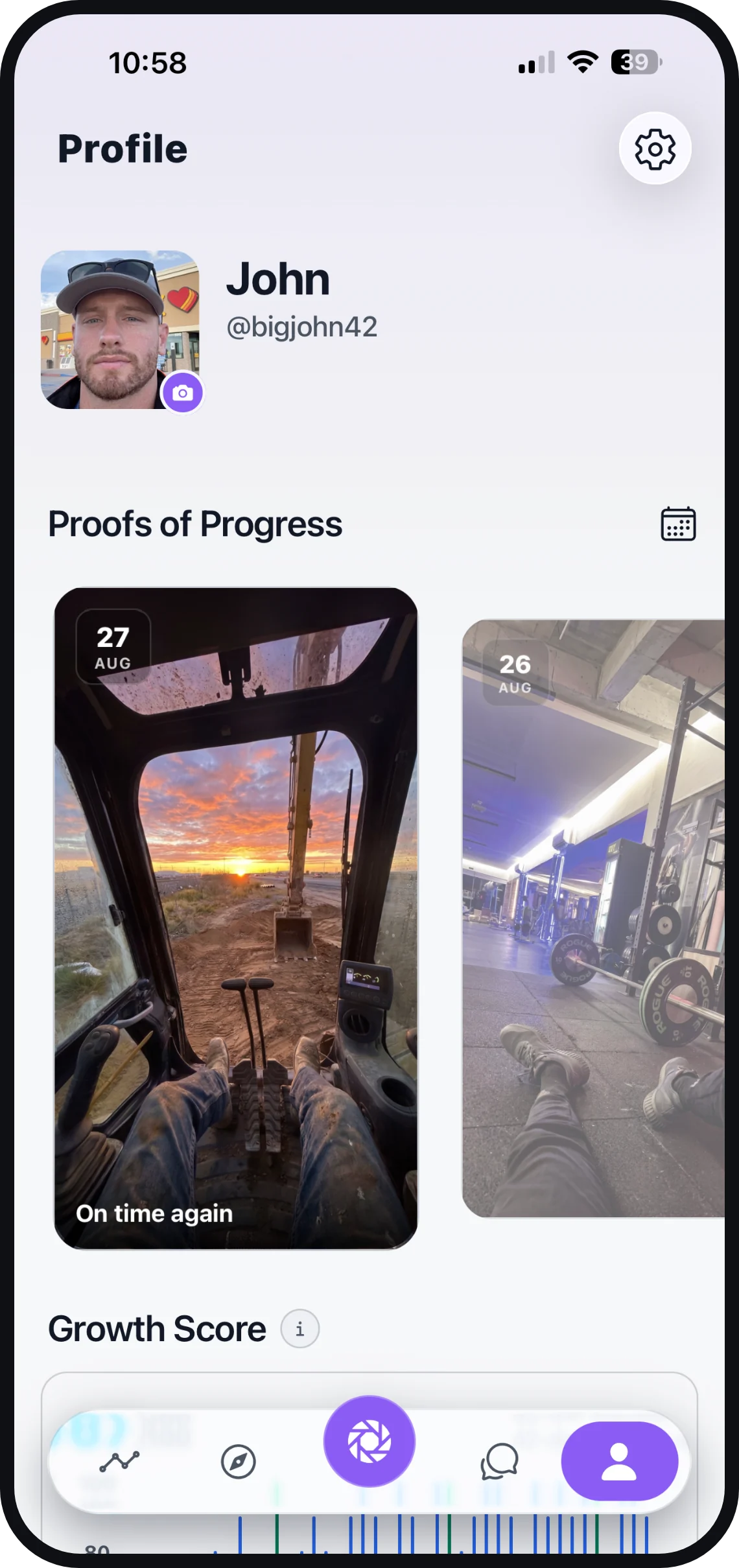
- Capture one Proof a day. A photo, a voice note, or a line of text, timestamped, so your effort turns into evidence you can scroll back through.
If you use cannabis to manage anxiety, depression, or chronic sleep problems, address the underlying issue too, ideally with a professional. Quitting is easier when the reason you started is no longer running unmanaged in the background.
Why does identity matter more than a streak?
Because abstinence alone is not enough. The reason people relapse is rarely a lack of information about the drug. It is that they still feel like the same person, just without the thing they leaned on. Lasting change requires that a new version of you actually exists, and becomes visible. This is the Door 24 wedge: progress is proof.
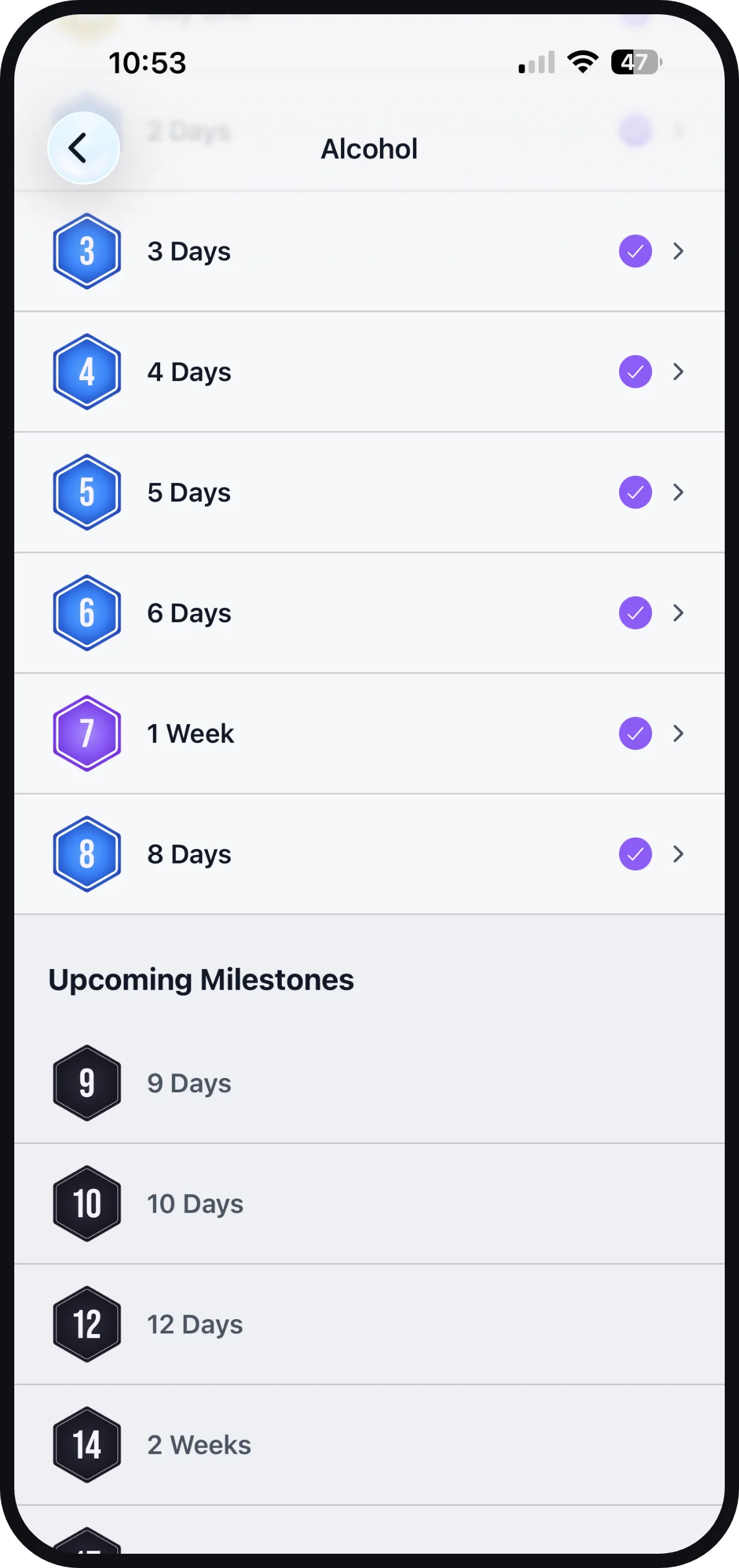
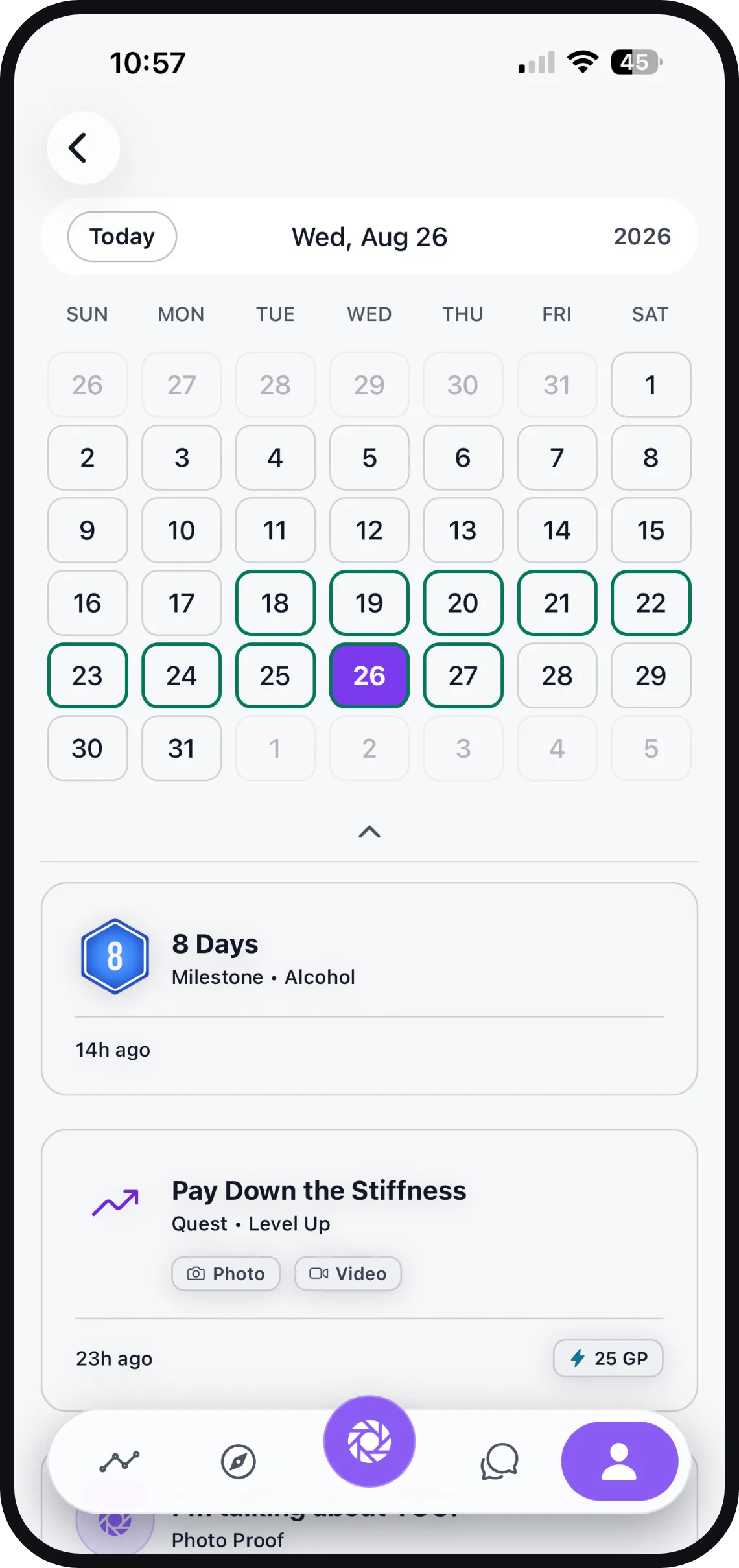
Instead of a day counter that resets to zero the moment you slip, Door 24 has you capture Proofs that stack on a dated timeline. Your Growth Score is a 42-day rolling average of consistency, so a bad day shifts the trend without erasing your work. You can scroll back to week one and see the person who was barely holding on, then look at week eight and notice something different in your own eyes. The grid becomes the receipt.
Weed is also rarely the only thing. Many people are quitting more than one habit at once, which is why Door 24 supports tracking up to 10 vices in one place, not just alcohol. And the Freedom Ledger shows the money and time you reclaim from the first day. If you want the science of what is happening as you quit, read what happens to your brain when you get sober. To prepare for the moments that pull you back, see the most common relapse triggers. And to sit with the deeper question underneath all of this, read how to rebuild your identity in recovery. For the product side, see how Door 24 handles quitting weed.
You do not quit a habit. You become someone who no longer needs it. Ready to open the door? Start here.
Sources
- Centers for Disease Control and Prevention (CDC), "Understanding Your Risk for Cannabis Use Disorder," 2024.
- National Institute on Drug Abuse (NIDA), "Is marijuana addictive?" Research Report.
- Bahji A, Stephenson C, Tyo R, Hawken ER, Seitz DP, "Prevalence of Cannabis Withdrawal Symptoms Among People With Regular or Dependent Use of Cannabinoids," JAMA Network Open, 2020;3(4):e202370.
Frequently asked
Is weed addictive?
Yes, cannabis can be addictive. The CDC reports that roughly 3 in 10 people who use cannabis develop cannabis use disorder, meaning they keep using even when it causes problems. The risk is higher for people who start young and use frequently. Being able to stop for a day does not mean there is no dependence.
How long does weed withdrawal last?
For most people, cannabis withdrawal starts within 1 to 3 days of quitting, peaks around days 2 to 6, and eases within 1 to 2 weeks. Sleep trouble and irritability are the most common symptoms. Some people notice lingering sleep changes for a few weeks. Withdrawal is uncomfortable, not dangerous.
Can I quit weed on my own?
Many people do. Cannabis withdrawal is not medically dangerous the way alcohol withdrawal can be, so most people quit without formal treatment. Withdrawal peaks in the first week and mostly clears within two, and the people who make it stick are the ones who plan for that week instead of white-knuckling it.