Identity & change
How do I find myself again after addiction?
Feeling lost after addiction is normal, and it is not a setback. The habit organized your time, your routines, and your social life. Remove it and there is a vacuum where a person used to be. Research shows lasting recovery is an act of identity construction. You do not find yourself by searching. You find yourself by building, one documented day at a time.
What does it mean to find yourself again after addiction?
Finding yourself again after addiction means building a new identity, not excavating an old one. The Substance Abuse and Mental Health Services Administration (SAMHSA) defined this in its 2012 working definition of recovery: "a process of change through which individuals improve their health and wellness, live self-directed lives, and strive to reach their full potential."
Notice what that definition does not say. It does not mention counting days. It does not promise you will get the old you back. It describes a process of change, and SAMHSA grounds that process in four dimensions: health, home, purpose, and community. All four are about who you are and how you live, not just what you avoid.
That is the core of it. Abstinence is not enough. You do not quit a habit. You become someone who no longer needs it.
Why do you feel lost when you get sober?
You feel lost because the habit was doing structural work in your life, and quitting removes the structure along with the harm. It decided your evenings, your weekends, your friendships, your coping. Sobriety clears the ground, and for a while the ground is just empty.
Research has mapped this. In a landmark 2000 study in Social Science & Medicine, James McIntosh and Neil McKeganey analyzed the stories of people recovering from drug dependence and found that lasting recovery ran through narrative work in three areas: reinterpreting the old lifestyle, reconstructing the sense of self, and building a convincing account of the change. In other words, the people who stayed free were the ones who authored a new story about who they were.
A 2015 review in Frontiers in Psychology by Genevieve Dingle and colleagues reached a similar conclusion from a social angle: recovery tends to succeed when a person's identity shifts from one organized around use to one organized around recovery, supported by new groups and relationships. Identity is not a bonus outcome of sobriety. It is the mechanism.
So the lost feeling is not a warning sign. It is the gap between the identity you dismantled and the one you have not built yet.
How do you rebuild your identity in recovery?
You rebuild identity the way you build anything: with small actions, repeated, and recorded. SAMHSA's four dimensions give you the blueprint, and each one becomes concrete the moment you capture evidence of it.
| SAMHSA dimension | What it looks like in practice | Proof to capture |
|---|---|---|
| Health | Sleep, movement, food, a clear morning | A photo of your morning walk, a voice note on day 40 energy |
| Home | A stable, safe place that supports you | A photo of the space you cleaned and reclaimed |
| Purpose | Work, learning, creating, helping | A journal entry on what you built today |
| Community | People who know the new you | A note after a real conversation, made sober |
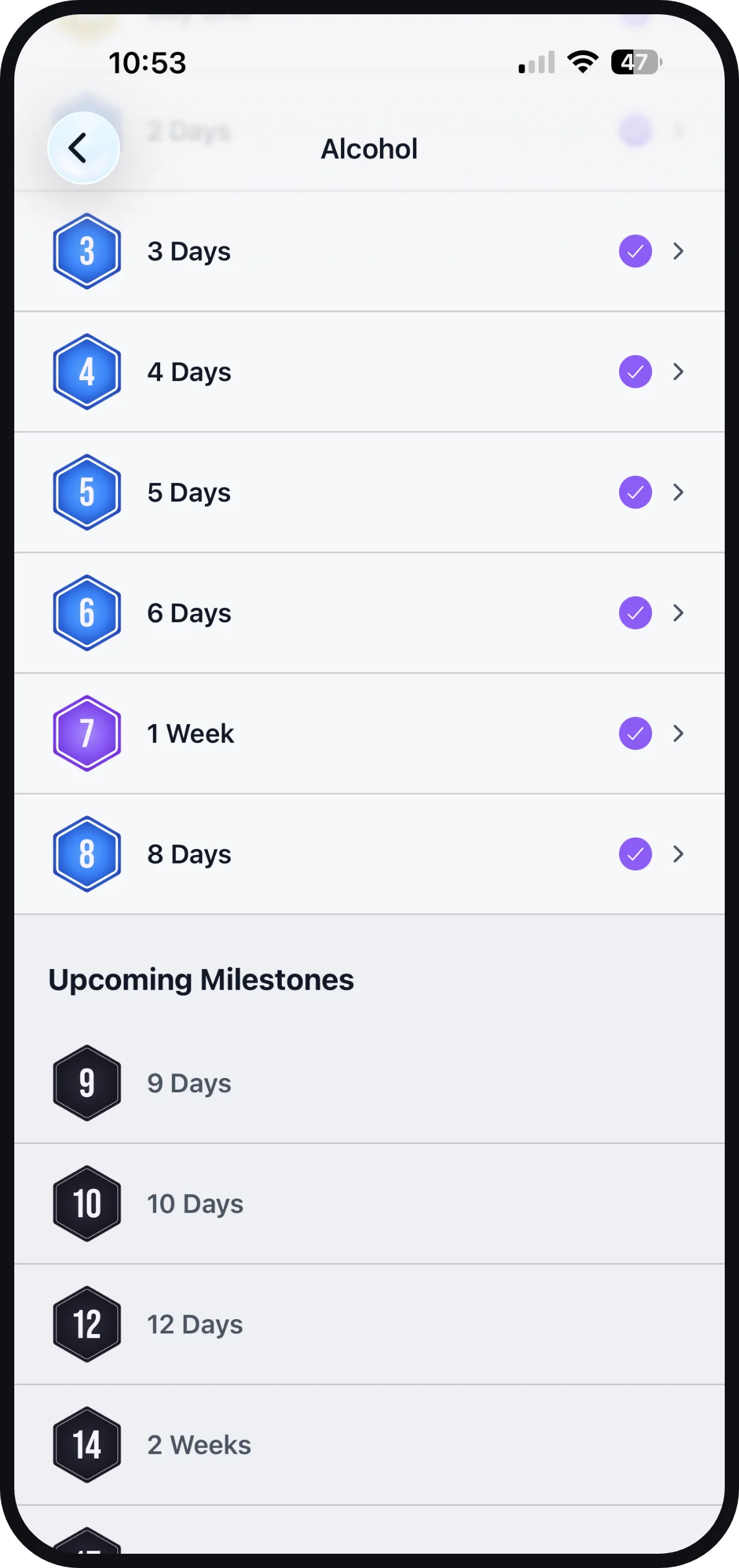
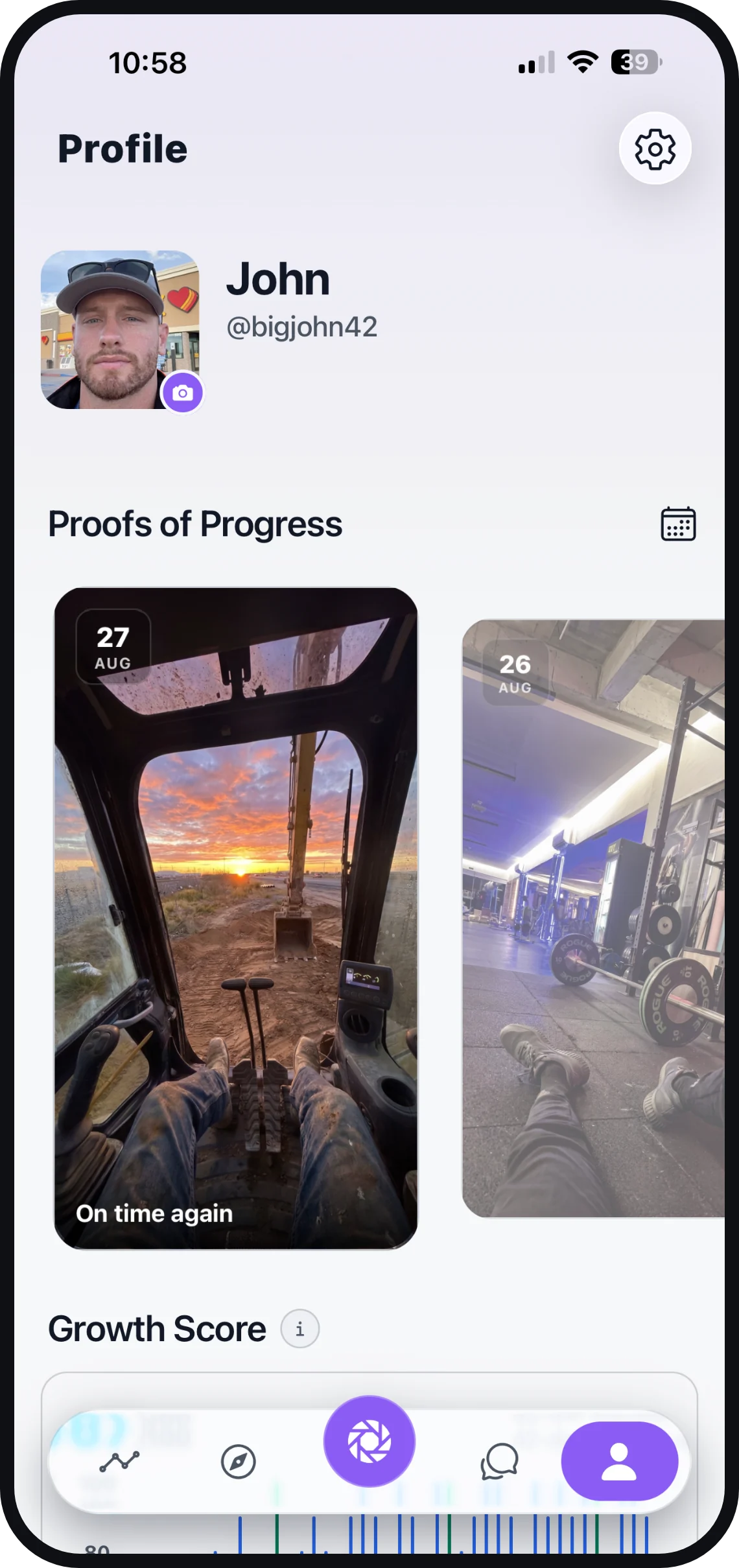
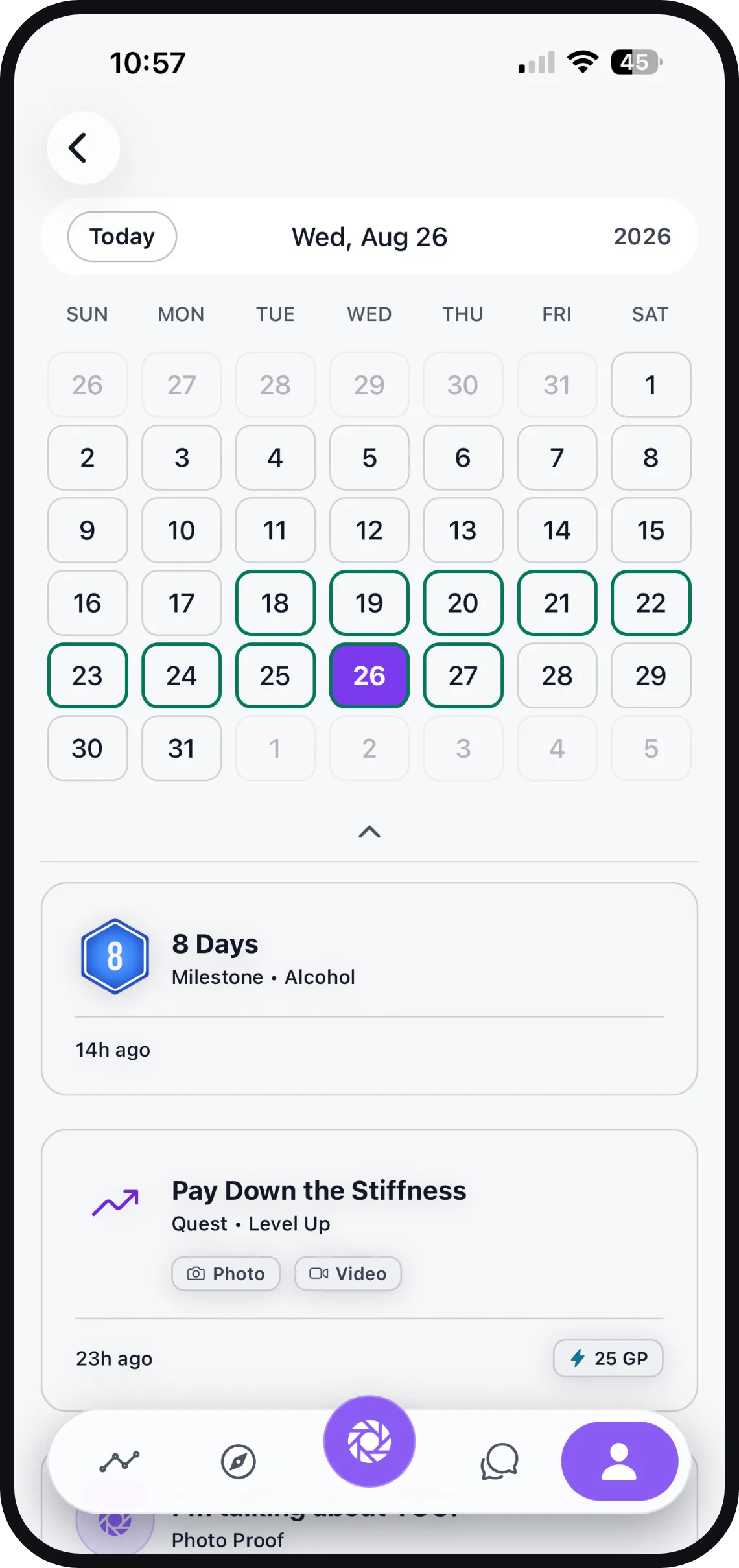
This is where documentation stops being a diary and starts being construction material. In Door 24, every one of those moments becomes a Proof, a dated photo, video, voice note, or journal entry on your timeline. Scroll back two months and the identity question stops being abstract. The evidence answers it for you.
The scale of what is possible here is worth saying plainly. A 2017 national study led by John F. Kelly of Harvard's Recovery Research Institute estimated that 22.35 million American adults, 9.1 percent, have resolved a significant alcohol or drug problem. Tens of millions of people built a new self. The blueprint works.
If you want to go deeper on the mechanics, start with how to rebuild your identity in recovery and the question underneath it, who am I without alcohol?
How long does it take to feel like yourself again?
There is no fixed date, and anyone who gives you one is guessing. Researchers at the National Institute on Alcohol Abuse and Alcoholism (NIAAA) define recovery as a process of improved functioning and wellbeing, with remission milestones marked at 3 months, 1 year, and 5 years rather than a single finish line. The identity work follows the same shape: gradual, cumulative, and uneven.
Expect the trend, not a straight line. NIDA reports relapse rates of 40 to 60 percent for substance use disorders, comparable to other chronic conditions like hypertension and asthma, and frames a setback as a signal to adjust the approach, not evidence that you failed. That is exactly why Door 24 tracks a Growth Score, a 42-day rolling average that moves with your trend instead of resetting to zero. A bad day shifts the trend. It does not erase the person you have been becoming, and it does not delete a single Proof you have captured.
Where do you start today?
Start with one piece of evidence. Write your Freedom Pledge, your own words on who you are becoming and why. Then capture one Proof before midnight: a photo, a voice note, one honest paragraph. Tomorrow, capture another. You are not waiting to find yourself. You are building the file that proves who you already are.
Counters reset. People don't. Get Door 24 and start stacking the evidence.
Sources
Frequently asked
Is it normal to feel lost after getting sober?
Yes. The substance structured your days, your coping, and often your social circle. When it goes, that structure goes with it. Researchers describe recovery as building a new identity, not recovering an old one, so feeling unformed early on is expected and temporary.
How long does it take to feel like yourself again?
There is no fixed timeline. NIAAA researchers define recovery as a process rather than a finish line, with remission milestones at 3 months, 1 year, and 5 years. Most people report identity shifts building gradually across the first year as new routines and relationships accumulate.
Do I go back to who I was before addiction?
Research says no, and that is good news. Studies of people in long-term recovery show they construct a new sense of self rather than restoring an old one. The person you are becoming can keep what was worth keeping and leave the rest.
What if I relapse while rebuilding my identity?
A slip does not erase who you have become. NIDA reports relapse rates of 40 to 60 percent, similar to other chronic conditions, and treats setbacks as a signal to adjust, not proof of failure. Evidence you captured on your best days is still yours on your worst ones.