Getting sober
Do you have to hit rock bottom to get sober?
No. You do not have to hit rock bottom to get sober. The idea that you must lose everything first is a myth, and a costly one. Research shows people resolve alcohol and drug problems at every level of severity, and most do it before a catastrophe. What actually predicts recovery is a decision, a plan, and support, not how far you fell.
Rock bottom is one of the most repeated ideas in recovery culture, and one of the least supported by evidence. You do not have to lose everything to earn the right to stop.
Do you have to hit rock bottom to get sober?
No. You do not have to hit rock bottom to get sober. The belief that change only comes after total collapse is a myth, and it keeps people drinking longer than they need to. In the largest national study of its kind, researchers found that 9.1 percent of American adults, about 22.35 million people, have resolved a significant problem with alcohol or other drugs. Roughly half did it without any formal treatment, according to the National Recovery Study published by the Recovery Research Institute. Recovery is common, and it does not wait for catastrophe.
What does the research say about who recovers?
People recover at every level of severity, not just the extreme end. Analysis of national survey data by the National Institute on Alcohol Abuse and Alcoholism found that among adults who were dependent on alcohol in a given year, about 36 percent were in recovery a year later, split between abstinence and low-risk drinking. Recovery is also the broad norm over time: national data compiled by SAMHSA show that most adults who ever had a problem with alcohol or drugs consider themselves recovered or in recovery. The pattern is clear. Most people who change their relationship with alcohol are not the last-call, lost-it-all stereotype.
As the researchers behind the National Recovery Study, led by John F. Kelly of Harvard Medical School, concluded in faithful summary, recovery is not a rare exception but a common outcome reached through many different pathways. There is no single door, and no required amount of suffering to walk through it.
Why is the rock bottom myth risky?
Waiting for rock bottom is a plan to let things get worse. The concept treats damage as a prerequisite, which quietly gives permission to keep going until the wreckage is undeniable. That is backward. Every heavy drinking day carries risk, and the consequences you are waiting for are not guaranteed to be survivable or reversible. Alcohol-related deaths in the United States remain far above pre-pandemic levels, a reminder that the stakes are real, per analysis from KFF.
The myth also hides a false promise: that pain will finally provide the motivation. For most people it does not work that way. Motivation is unreliable. What works is structure, support, and evidence you can see.
| The rock bottom myth | What the research shows |
|---|---|
| You must lose everything first | People recover at every level of severity |
| Change requires a crisis | A decision plus a plan predicts recovery |
| Recovery is rare and hard-won | Most who ever had a problem are in recovery |
| You need to earn the right to stop | You can start today, at any point |
How do you get sober before you lose everything?
You start now, with a plan built for the version of you that does not need the drink. The steps are the same whether you are three drinks a day or barely holding a routine together.
- Name your reason and write it down. A Freedom Pledge in your own words is harder to argue with at 6pm than a vague intention.
- Set a start date and clear your space of alcohol and its cues.
- Plan your two hardest moments each week before they arrive.
- Tell one person you trust, so a private choice becomes a shared one.
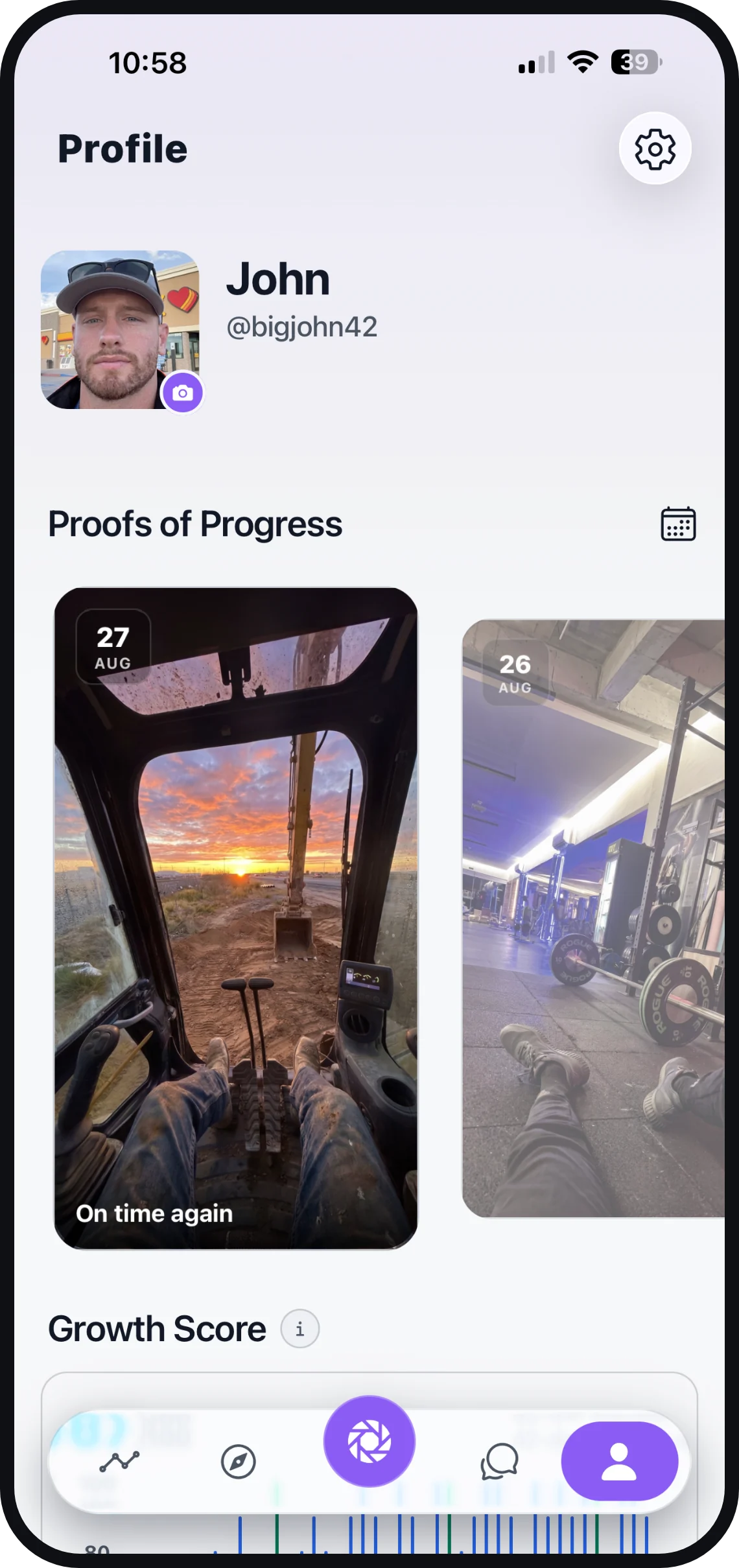
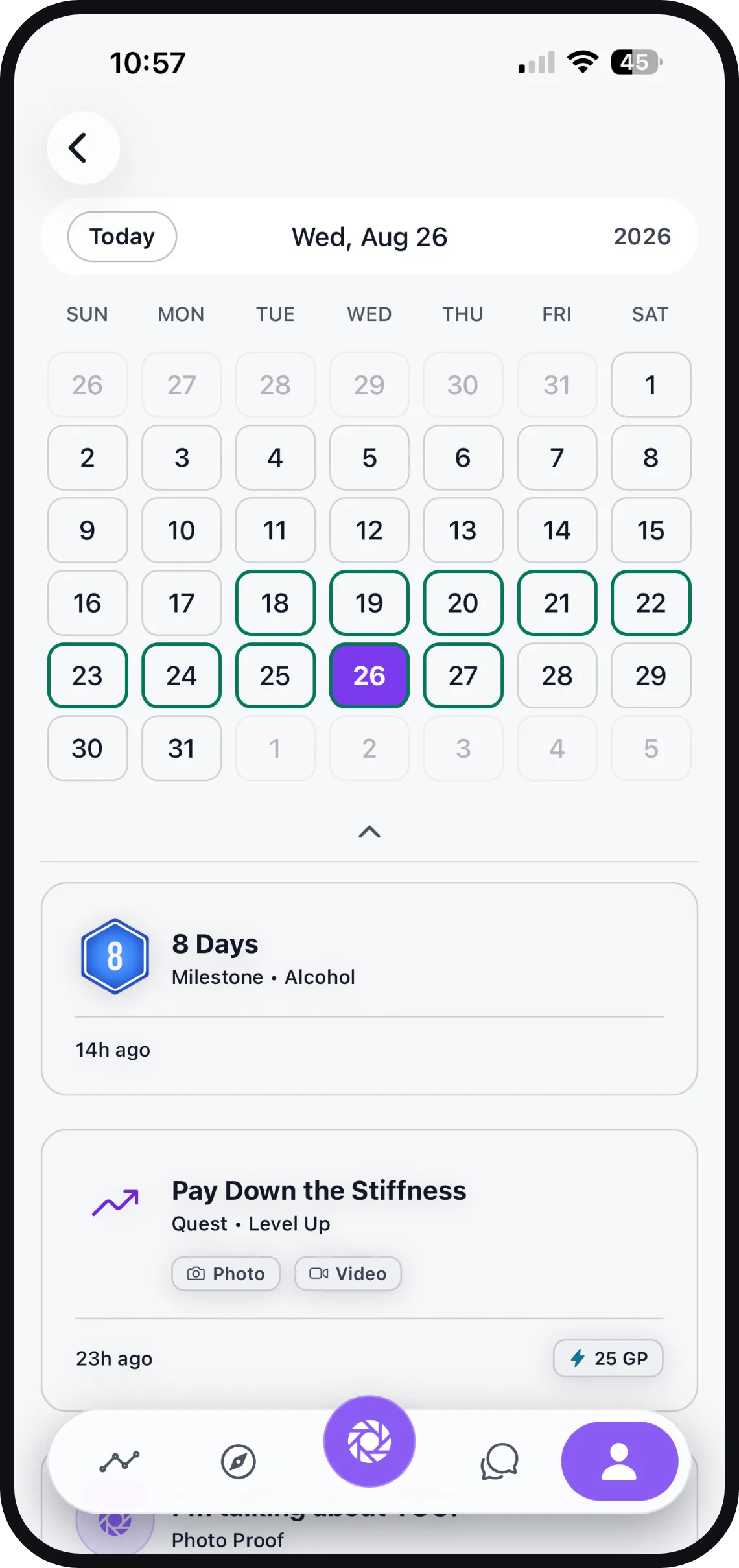
- Capture one Proof a day. A photo, a voice note, or a line of text, timestamped, so the days become evidence.
If you drink heavily every day, talk to a doctor before stopping suddenly, because withdrawal can be dangerous to manage alone. Getting help early is a strength, not a failure.
How do you make an early start count?
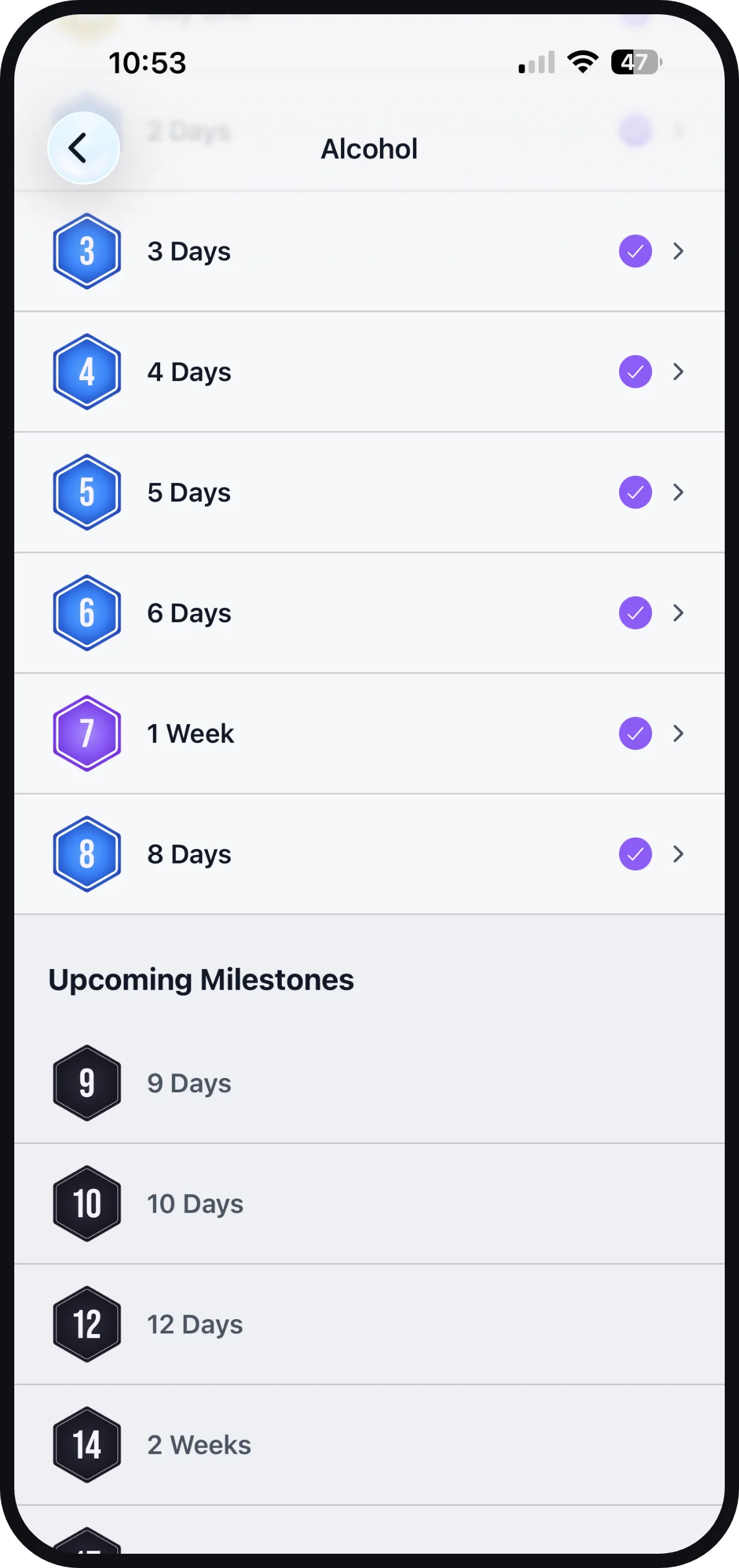
Motivation fades. Evidence does not. This is the idea behind Door 24: progress is proof. Instead of counting days on a streak that resets the moment you slip, you capture Proofs that stack on a dated timeline, and your Growth Score tracks the trend as a 42-day rolling average that moves with you and does not erase your work. Starting before rock bottom means you have more of your life intact to build on, and the Freedom Ledger shows the money and time you reclaim from day one.
The deeper point is the Door 24 wedge. Abstinence is not enough on its own. You are not just avoiding a drink, you are becoming someone who no longer needs it, and that person is easier to build when you start early. If you are new, read what the first 30 days of sobriety are like and how to stop drinking on your own. To sit with the identity question underneath all of this, see who am I without alcohol. Ready to open the door? Start here.
Sources
- Recovery Research Institute, "1 in 10 Americans Report Having Resolved a Significant Substance Use Problem" (National Recovery Study, Kelly et al.), 2017.
- National Institute on Alcohol Abuse and Alcoholism (NIAAA), "Alcohol Use Disorder," 2024.
- Substance Abuse and Mental Health Services Administration (SAMHSA), "Recovery and Support," 2024.
- KFF, "Alcohol Deaths: National Trends and Variation by Demographics and States," 2025.
Frequently asked
Is rock bottom necessary to quit drinking?
No. Rock bottom is a story people tell after the fact, not a requirement. Research on how people resolve alcohol problems shows recovery happens across every level of severity, and many people stop long before losing a job, a relationship, or their health. Waiting for a low point usually just makes the climb longer.
What if I do not feel like my drinking is bad enough yet?
That doubt is common and it does not disqualify you. You do not need permission or a disaster to change. If drinking is costing you more than it gives back, that is reason enough. Starting earlier means less damage to undo and more proof to stack.
Does quitting earlier actually make recovery easier?
Often, yes. Fewer consequences to repair and a stronger support network make the first weeks more manageable. The work is still real, but you are building from a steadier place. Progress is measured by the trend you build, not by how low you started.