Identity & change
How do I become someone who doesn't need to drink?
To become someone who doesn't need to drink, you change your identity, not just your behavior. Willpower resists the drink. Identity removes the wanting. Research on recovery shows lasting change comes from a shift in who you believe you are, backed by evidence you can see. You do not just quit. You become a person the old habit no longer fits.
To become someone who doesn't need to drink, you change your identity, not just your behavior. Willpower resists the drink. Identity removes the wanting. Research on recovery shows that lasting change comes from a shift in who you believe you are, backed by evidence you can see. You do not just quit. You become a person the old habit no longer fits.
What does it mean to become someone who doesn't need to drink?
Becoming someone who doesn't need to drink means changing your self-concept, not just removing the alcohol. Abstinence takes the drink away. Identity change removes the wanting. In the Social Identity Model of Recovery, a 2016 framework from David Best and colleagues published in Addiction Research & Theory, recovery is described as a process of moving from a using identity toward a recovery identity, supported by the people around you. You stop being a person who is resisting a drink and start being a person for whom the drink is simply not part of the story.
Psychologists Hazel Markus and Paula Nurius, in their 1986 paper "Possible Selves" in American Psychologist, wrote that "possible selves represent individuals' ideas of what they might become, what they would like to become, and what they are afraid of becoming." The version of you that doesn't need to drink is a possible self. Recovery is the work of making that self real. Sociologists John McIntosh and Neil McKeganey found the same thing in practice: in their 2000 study in Social Science & Medicine, people who left long-term drug use behind actively built a new, non-using identity and rewrote the story of who they were.
Why isn't willpower enough to quit drinking?
Willpower alone is not enough because it fights the habit without replacing the identity underneath it. The National Institute on Drug Abuse reports that 40 to 60 percent of people recovering from a substance use disorder return to use at least once, a relapse range similar to chronic conditions like hypertension and asthma. White-knuckling holds until you are tired, stressed, or celebrating. Then the old identity, the one that still believes it needs a drink, takes back over.
Identity change is different. When you genuinely become someone who doesn't drink, the decision is already made before the craving arrives. You are not resisting a hundred times a day. You are simply being someone who no longer does that. That is the Door 24 thesis in one line: you don't quit a habit, you become someone who no longer needs it.
How do you build the identity of someone who doesn't drink?
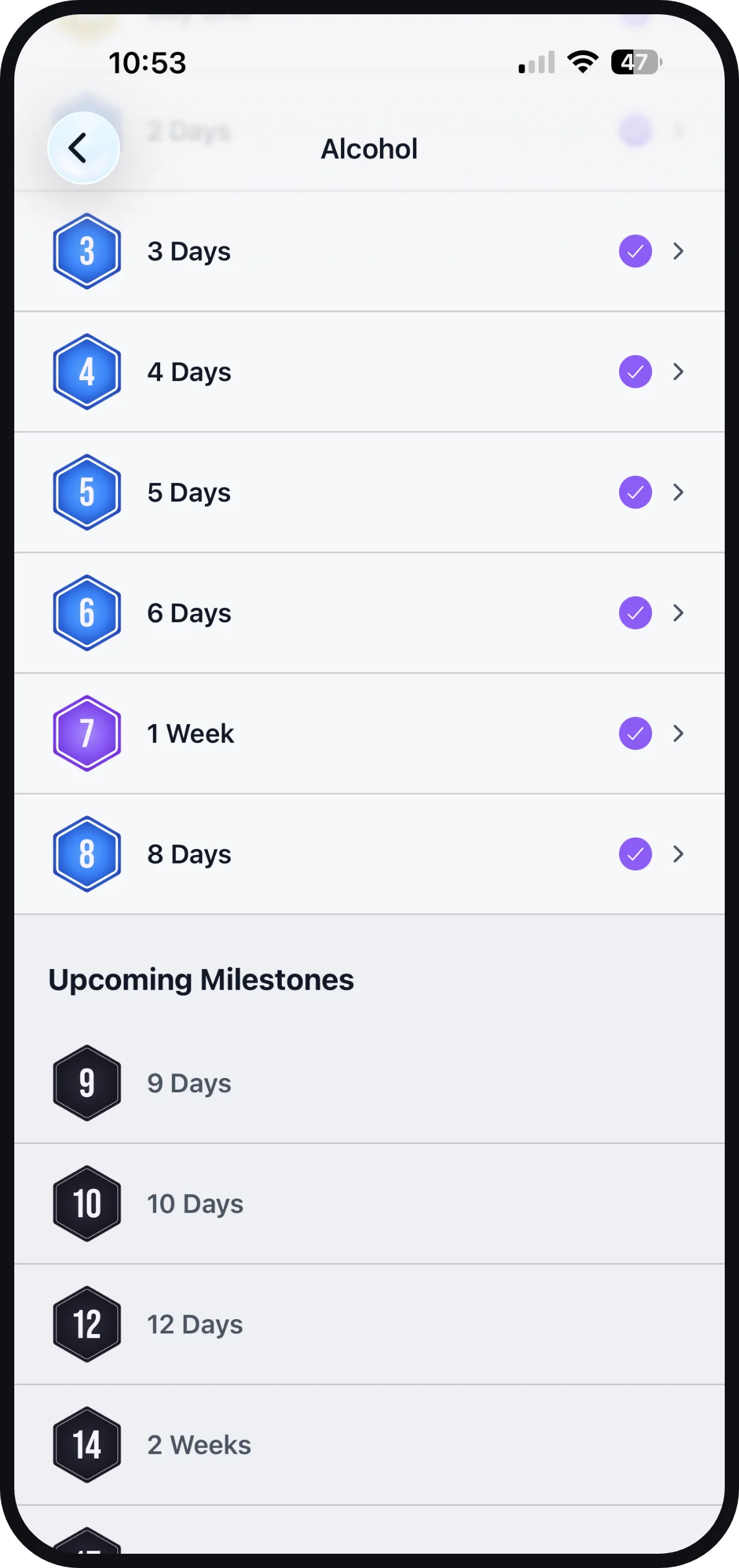
You build a new identity the same way you built the old one, through repeated evidence. Every sober day is one more piece of proof that the new person is real. SAMHSA defines recovery across four dimensions, health, home, purpose, and community, and identity is what ties them together. Here is how the shift works in practice, and how Door 24 makes each part visible:
| The old identity | The new identity | How Door 24 makes it visible |
|---|---|---|
| Drinks to cope with stress | Has other ways to reset | Run a Side Quest and capture a Proof when a craving hits |
| Defined by what you avoid | Defined by who you are becoming | Proofs stack on a dated timeline |
| A slip resets you to zero | A hard day shifts the trend | Growth Score is a 42-day rolling average |
| Counts money spent drinking | Redirects what you reclaim | Freedom Ledger tracks money and time saved |
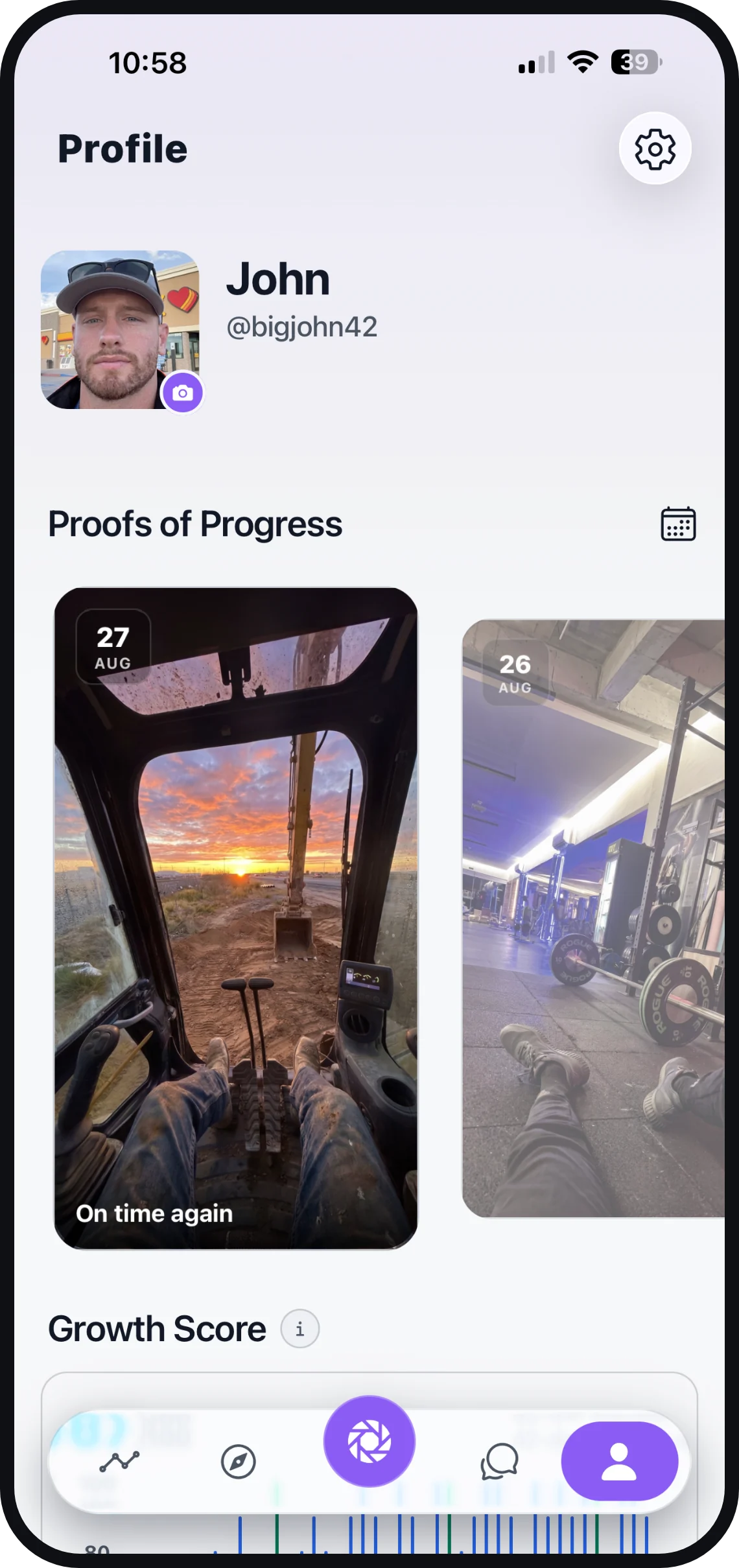
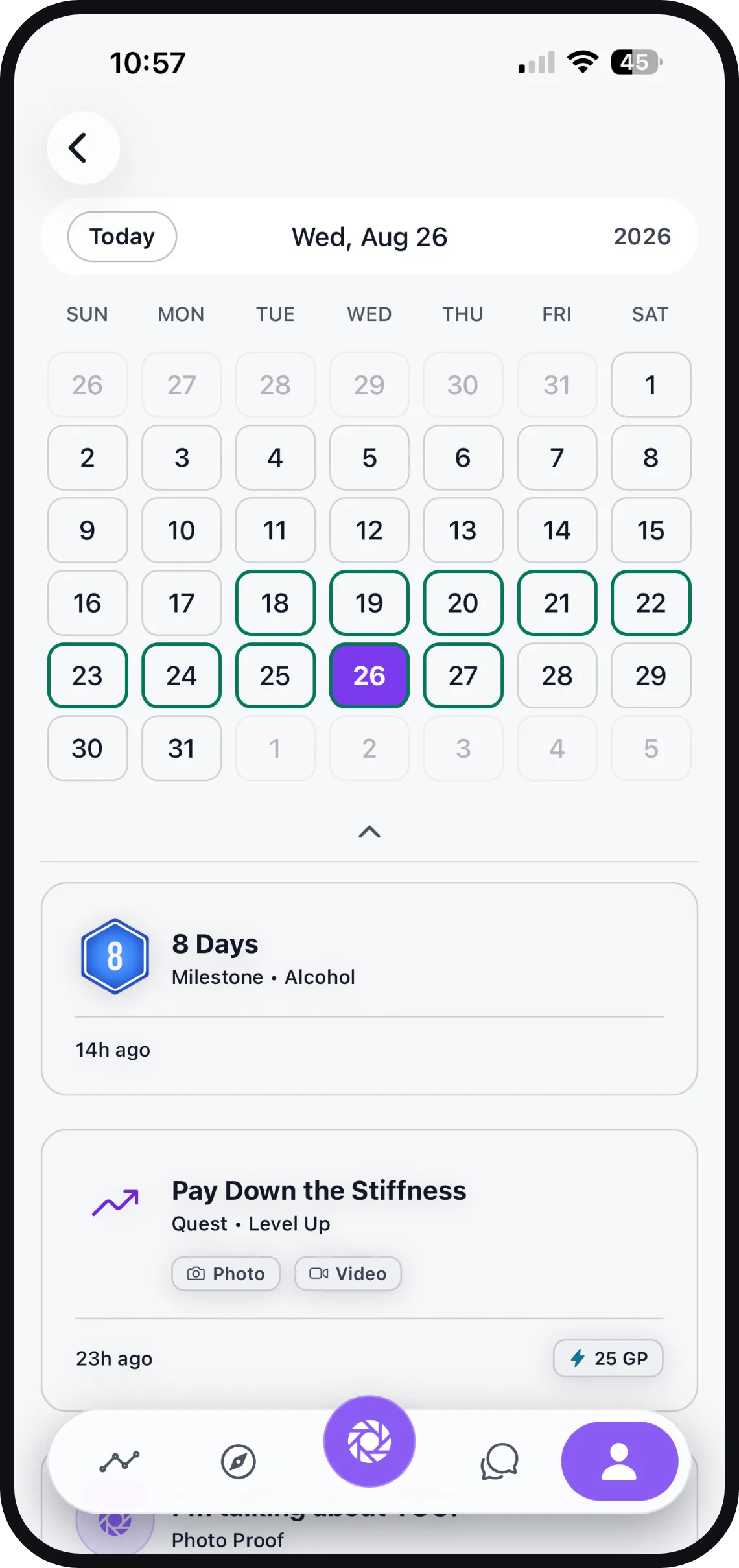
Name the person first. Write a Freedom Pledge, your commitment in your own words, so the new identity has a shape. Then feed it. Each Proof, a photo, a voice note, or a journal entry on a dated timeline, is evidence that the person you are becoming already exists. Your Growth Score, a 42-day rolling average of consistency, follows the trend instead of a fragile streak, so one hard day moves the line without erasing the work. Complete a Daily Quest, a single small action built for the person you are becoming, and the identity gets a little more real. This is the difference between counting days and making them count.
How long does it take to feel like a different person?
There is no fixed timeline, and anyone promising one is guessing. Identity change is gradual, then sudden. It compounds. What the research does show is that recovery is common and durable: a 2017 national study led by John F. Kelly found that 22.35 million American adults, about 9.1 percent, who once had a significant alcohol or drug problem now consider themselves recovered or in recovery. You are not attempting something rare. You are joining millions who became someone new.
The shift usually shows up in small moments before you can name it. A craving that passes faster. A Friday that no longer revolves around a drink. A photo from Day 60 where your eyes look different than they did on Day 12. That is the grid doing its job. The evidence accumulates until the new identity stops being a hope and becomes a fact you can scroll back through.
Becoming someone who doesn't need to drink is not a single decision. It is a stack of small proofs that the person already exists. Keep building it. To go deeper, read why abstinence alone is not enough, how to rebuild your identity in recovery, and who am I without alcohol. When you are ready to start capturing proof, open the door.
Sources
- National Institute on Drug Abuse, Treatment and Recovery (relapse 40 to 60 percent).
- SAMHSA, Recovery and Recovery Support (four dimensions of recovery).
- Best, D., et al. (2016), Social Identity Model of Recovery, Addiction Research & Theory.
- Markus, H., and Nurius, P. (1986), "Possible Selves," American Psychologist.
- McIntosh, J., and McKeganey, N. (2000), narratives of recovery and identity, Social Science & Medicine.
- Kelly, J. F., et al. (2017), National Recovery Study (22.35 million adults, 9.1 percent, in recovery).
Frequently asked
Can you really change your identity in recovery?
Yes. Identity change is one of the most durable predictors of lasting recovery. It happens gradually, through repeated evidence that the new version of you is real. You are not born a person who drinks or does not drink. You become one, day by day.
How long until I stop wanting to drink?
There is no fixed timeline, and anyone who promises one is guessing. Cravings usually get shorter and less frequent as the new identity takes hold. The shift compounds, then shows up in small moments before you can name it.
Do I have to change my friends to get sober?
Not necessarily, but your social circle matters. Research shows identity change in recovery is stronger when the people around you support the person you are becoming. You do not have to cut everyone off. You do need to protect the new identity while it is young.
Is willpower enough to quit drinking for good?
Rarely on its own. Willpower fights the habit without replacing the identity underneath it, which is why relapse is common. Becoming someone who no longer needs the drink means the decision is already made before the craving arrives.